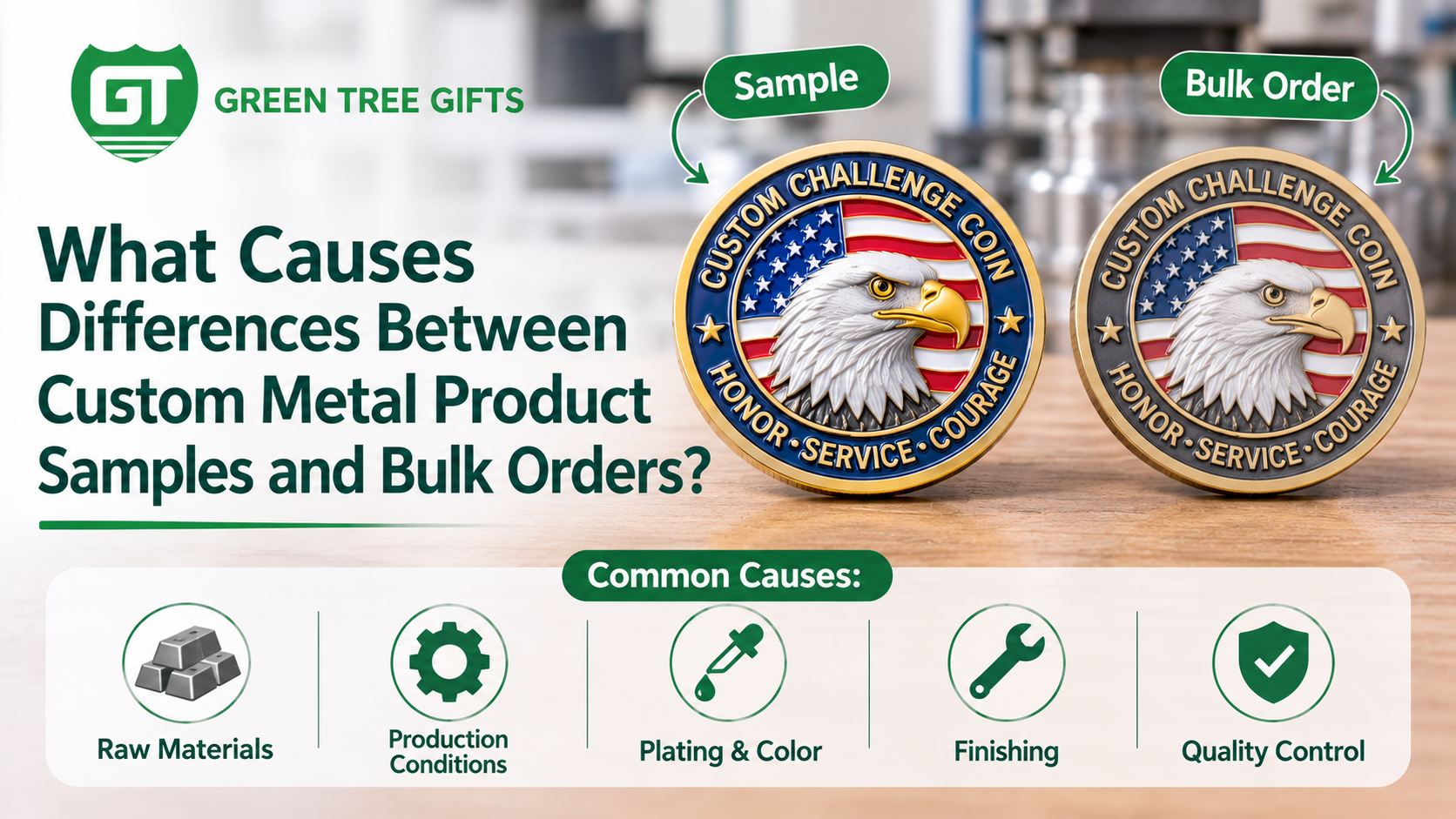
Differences between custom metal product samples and bulk orders can result from variations in raw materials, production conditions, plating, finishing, and quality inspection. Even when a sample has been approved, small inconsistencies may occur during large-scale manufacturing.
For custom challenge coins, lapel pins, medals, and metal badges, buyers should understand these factors before approving mass production.
Differences in Raw Materials
Changes in metal materials or material thickness can affect the final product’s weight, appearance, and dimensions.
For example, brass, iron, and zinc alloy have different physical properties and manufacturing requirements. Using a different material from the approved sample may result in noticeable differences.
Buyers should confirm the material type, thickness, and product specifications before production.
Variations in Production Conditions
Mass production involves repeated manufacturing operations. Differences in stamping pressure, mold condition, casting conditions, or production settings may affect product details.
Common variations include:
- Slight differences in dimensions or thickness
- Changes in raised and recessed details
- Uneven edges or surface textures
- Inconsistent relief depth
Proper production controls and regular equipment checks help maintain consistency across a batch.
Plating and Color Differences
Plating is another common source of variation. Differences in surface preparation, plating conditions, and coating thickness can affect the final metallic appearance.
Enamel colors may also vary slightly due to differences in color preparation and application.
Buyers should confirm plating finishes and enamel colors using an approved physical sample rather than relying only on digital images.
Manual Finishing and Assembly
Some production steps involve manual work, such as enamel filling, polishing, cleaning, and attachment assembly.
These operations may create small differences between individual products, especially when designs contain multiple colors or intricate details.
Consistent work instructions and finished-product inspections help reduce unwanted variation.
How Can Buyers Reduce Differences?
Before placing a bulk order, buyers should:
- Approve a physical production sample.
- Confirm material, dimensions, thickness, and plating finish.
- Check artwork, text, enamel colors, and attachment details.
- Establish acceptable quality standards and tolerances.
- Request inspection of finished products before shipment.
For repeat orders, keeping an approved reference sample and consistent specifications can help maintain product consistency.
FAQs
Why does the bulk order look different from the approved sample?
Differences may come from material variations, production conditions, plating, finishing, or inconsistent specifications.
Can buyers require bulk products to match the sample exactly?
Buyers can use an approved sample as the production reference and agree on acceptable tolerances. Minor variations may still occur depending on the materials and manufacturing processes.
Should buyers inspect samples before mass production?
Yes. Sample approval helps confirm the design, dimensions, colors, plating, and overall appearance before the manufacturer proceeds with the full order.