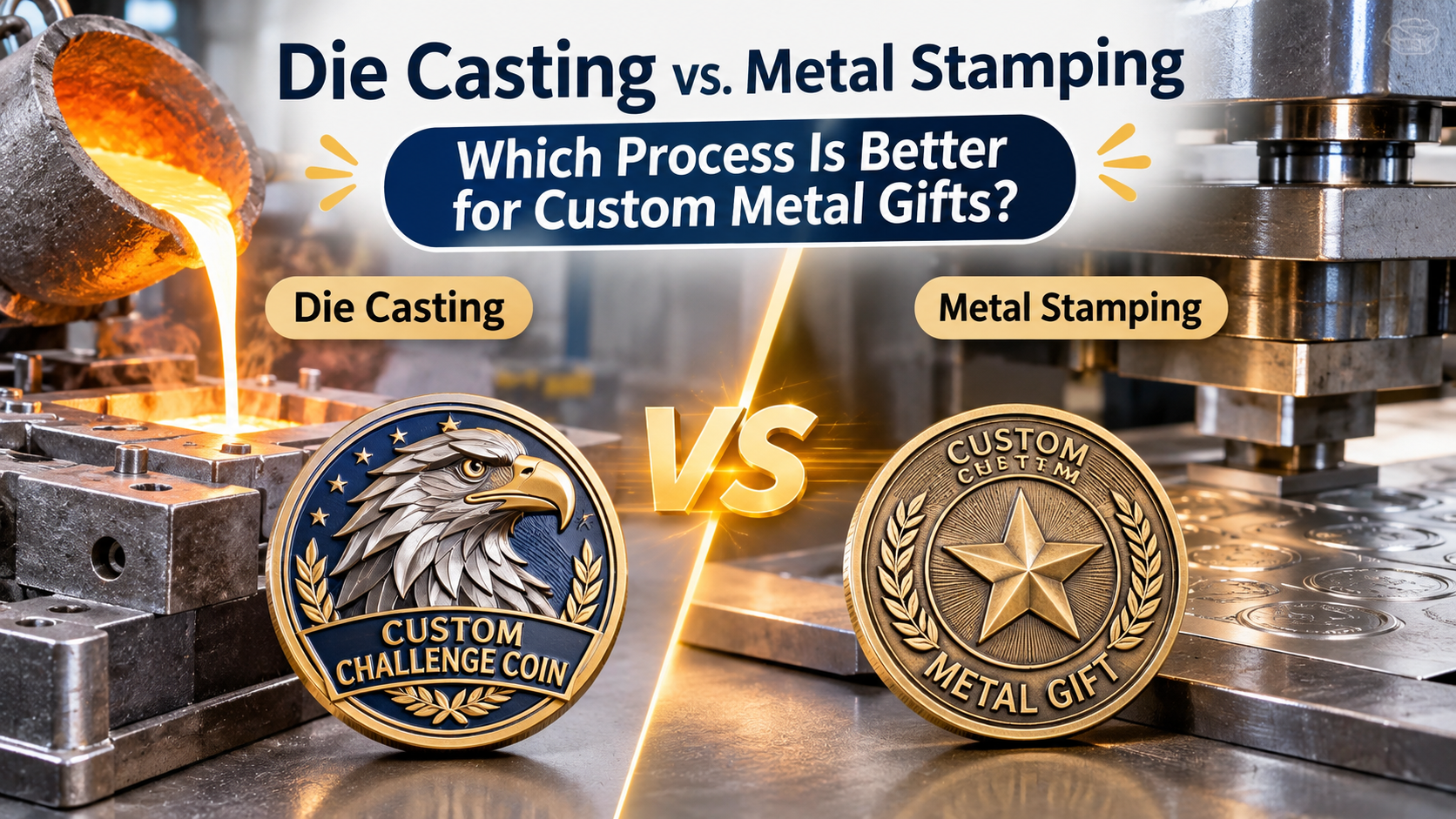
Die casting and metal stamping are two common manufacturing processes used to produce custom metal gifts, including challenge coins, lapel pins, badges, and medals. The main difference is how the metal takes shape: die casting uses molten metal injected into a mold, while metal stamping uses pressure to cut, shape, or form metal sheets.
Neither process is universally better. Die casting is generally suitable for complex shapes and dimensional designs, while metal stamping is often preferred for defined outlines, raised details, and relatively flat metal products. The right choice depends on the artwork, material, product structure, and production requirements.
What Is Die Casting?
Die casting is a manufacturing process in which molten metal is injected under pressure into a precision mold. After the metal cools and solidifies, the casting is removed and undergoes further finishing.
Zinc alloy is commonly used in custom metal gift production because it flows well into detailed molds and supports a variety of shapes and structures.
Key features of die casting:
- Suitable for complex shapes and three-dimensional designs.
- Can reproduce recessed areas, raised elements, and dimensional details.
- Works well for thicker products and sculptural designs.
- Supports various plating and surface-finishing options.
Die casting is commonly considered for 3D challenge coins, custom badges, decorative metal emblems, and products with intricate contours.
What Is Metal Stamping?
Metal stamping uses dies and mechanical or hydraulic pressure to cut, press, or form metal sheets into specific shapes. Depending on the design and production process, stamping can create outlines, raised details, recessed areas, and textured surfaces.
Brass, iron, and copper are among the metals used in different stamped promotional products.
Key features of metal stamping:
- Suitable for defined shapes and relatively flat designs.
- Can create clear raised and recessed details.
- Works well for traditional embossed or die-struck appearances.
- Offers a practical solution for many coins, pins, and metal badges.
For example, die-struck challenge coins often use stamping techniques to create lettering, logos, and relief details on metal surfaces.
Die Casting vs. Metal Stamping: Key Differences
| Comparison | Die Casting | Metal Stamping |
|---|---|---|
| Manufacturing method | Molten metal injected into a mold | Metal sheets cut or formed using dies and pressure |
| Common materials | Zinc alloy | Brass, iron, copper, depending on the process |
| Design style | Complex and three-dimensional | Flat, embossed, or relief-based |
| Shape flexibility | Suitable for complex contours | Suitable for defined outlines and formed details |
| Product structure | Can produce thicker, dimensional forms | Often used for thinner metal components |
| Typical applications | 3D coins, sculptural badges, metal emblems | Die-struck coins, lapel pins, flat metal badges |
| Main consideration | Mold design and casting complexity | Die design, metal thickness, and relief requirements |
The actual capabilities of either process depend on the tooling, material, equipment, and design specifications.
Which Process Is Better for Different Custom Metal Gifts?
The best manufacturing method depends on what the finished product needs to look like.
Custom Challenge Coins
Die casting is a suitable option for challenge coins featuring sculpted figures, deep relief, irregular shapes, or prominent three-dimensional elements. Metal stamping is often suitable for traditional challenge coins with clear lettering, logos, and raised or recessed surface details.
Custom Lapel Pins
Metal stamping works well for many traditional metal lapel pins with defined outlines and embossed details. Die casting may be considered when the pin requires a thicker structure or more dimensional features.
Custom Badges
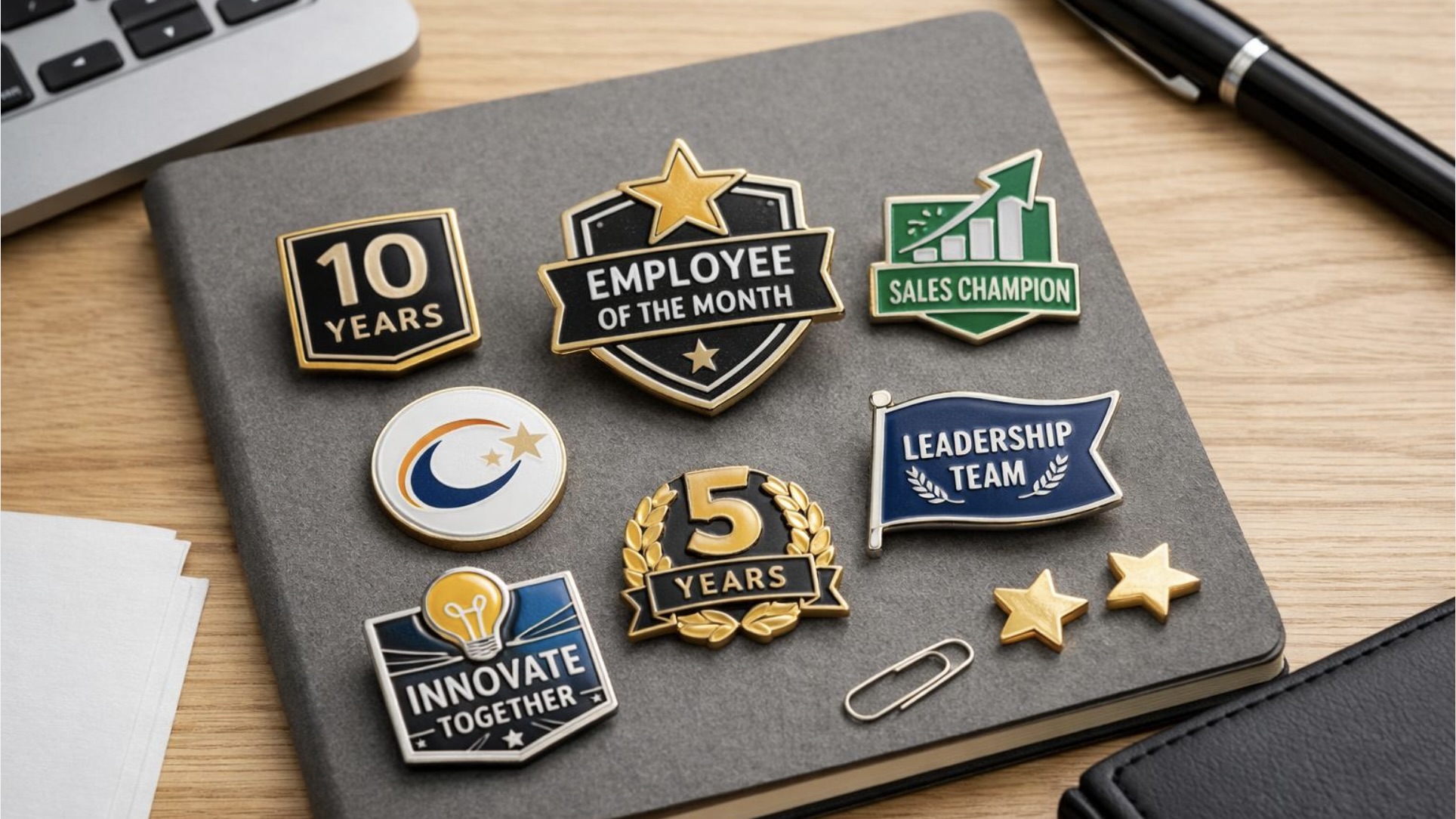
The choice depends on the badge design. Stamping can create traditional embossed details, while die casting can accommodate more complex shapes and dimensional structures.
Custom Medals
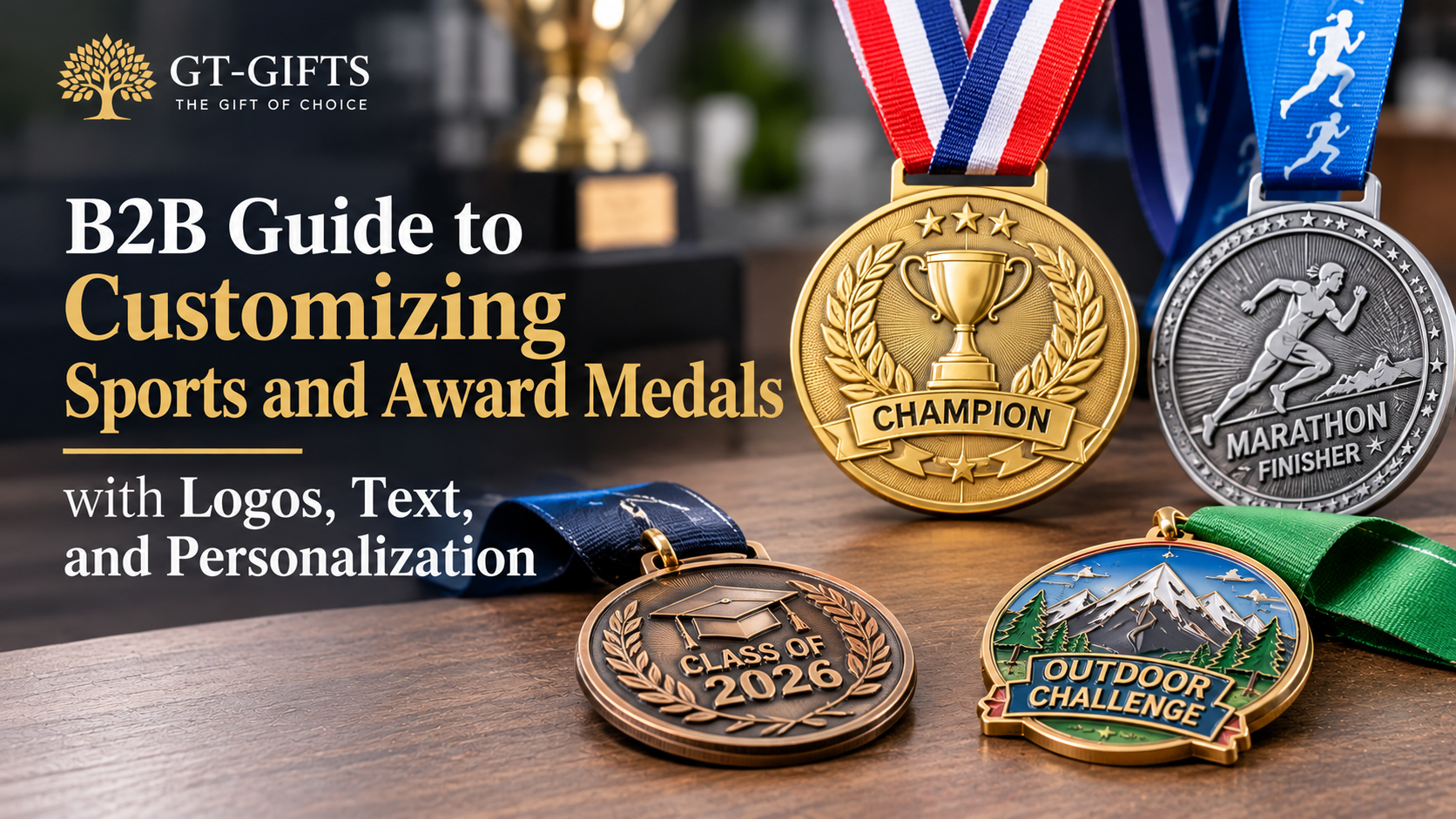
Both processes can be used for custom medals. Stamping is suitable for many conventional medal designs, while die casting offers additional possibilities for sculptural shapes and more complex relief.
How Should You Choose the Right Manufacturing Process?
Before selecting a process, consider these five factors:
- Design complexity: Does your artwork contain complex three-dimensional elements, or mainly flat lettering and raised details?
- Material requirements: Which metal is appropriate for the desired appearance, weight, and manufacturing method?
- Product thickness: Does the design require a thicker, more dimensional structure?
- Surface finish: Will the product use standard plating, antique finishes, enamel colors, or other decorative treatments?
- Order requirements: Consider production quantity, tooling requirements, budget, and delivery schedule.
Providing a clear design file or reference image helps manufacturers evaluate the most suitable production method before making a mold.
Can Die Casting and Metal Stamping Be Combined?
Some custom metal products can incorporate different manufacturing processes to achieve specific design effects.
For example, a product may use a stamped metal component together with additional cast or assembled elements. However, whether this approach is practical depends on the product structure, material compatibility, and assembly requirements.
It is important to confirm the proposed process with the manufacturer rather than assuming every design can combine both methods.
Custom Metal Gift Manufacturing at Green Tree Gifts
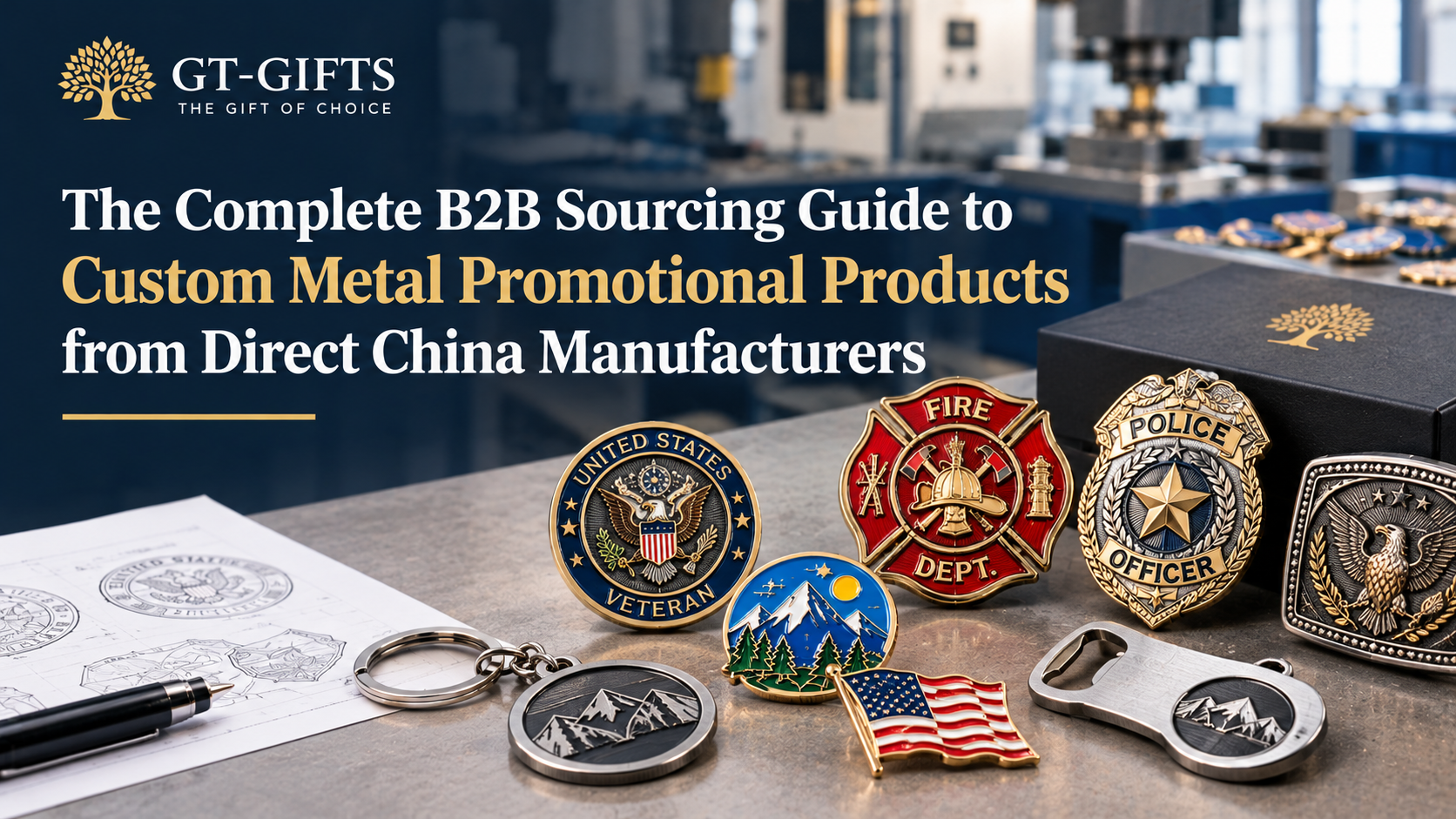
Green Tree Gifts specializes in custom challenge coins, lapel pins, medals, badges, patches, belt buckles, and other metal promotional products.
When developing a custom design, buyers should consider the intended appearance, material, dimensions, surface finish, and production requirements. These details help determine whether die casting, metal stamping, or another manufacturing technique is appropriate.
Green Tree Gifts is a China-based manufacturer specializing in custom challenge coins, lapel pins, medals, badges, patches, belt buckles and other metal promotional products.
Planning a custom metal gift project? Contact Green Tree Gifts to discuss your design and request a custom quote.
FAQs
Is die casting better than metal stamping for 3D challenge coins?
Die casting is generally more suitable for complex sculptural designs and pronounced three-dimensional details. However, the best process depends on the coin’s artwork and required relief.
What metals are commonly used in die casting and metal stamping?
Zinc alloy is commonly used for die-cast products. Brass, iron, and copper are frequently used in stamped metal products, although material selection varies by application.
Are die-cast products always more expensive than stamped products?
Not necessarily. Costs depend on material, mold complexity, product dimensions, order quantity, finishing, and additional processing. A manufacturer should evaluate the actual design before providing a quote.
Can both processes produce custom logos and lettering?
Yes. Both processes can reproduce logos and lettering, but the achievable detail and appearance depend on the design, tooling, material, and manufacturing specifications.