
Table of Contents
Trick-or-Treat for Grown-Ups: Why Adult Halloween Parties Now Have Coins
It happens around 10:40 p.m. — late enough that the playlist has looped twice, early enough that nobody has called a ride yet.
The host, dressed implausibly well as a 1970s game show host, taps a spoon against a glass and says two words half the room doesn’t recognize: “Coin check.”
Everyone who came last year knows what to do. They reach into a pocket, a purse, a costume that has no business having pockets, and put a two-inch disc of metal on the table. Four are from last year’s party. Two are from the year before. One came from a brewery in another state and has been carried daily for three years.
The four people who came empty-handed owe a round. That’s the rule, and it takes ninety seconds to teach.
That scene is playing out in backyards, taprooms, and rented lofts across the country this October, and there’s a reason it’s happening now. Halloween 2026 falls on a Saturday — the first time since 2020 — and the holiday’s center of gravity has shifted decisively toward adults. The people throwing these parties are no longer the ones holding the pillowcase.
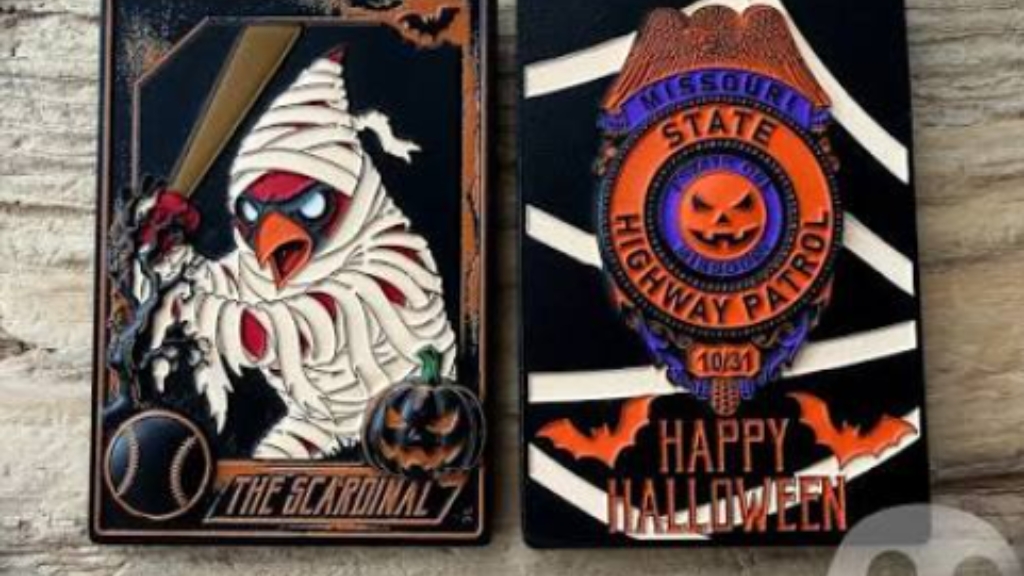
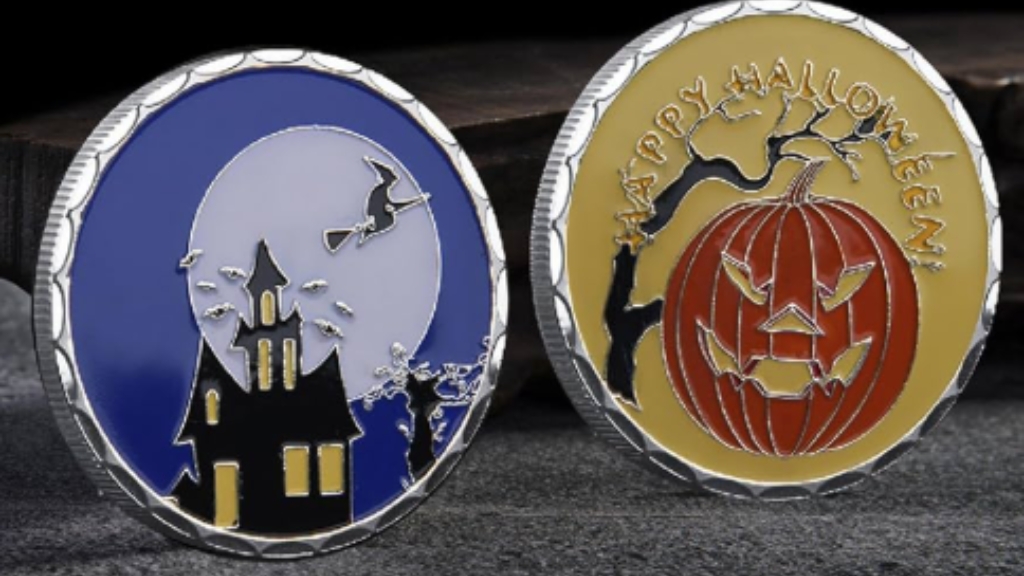
The Holiday Grew Up
Start with the money, because the money is unambiguous.
U.S. Halloween spending is projected to reach a record 13.1 billion** this year, with **73% of consumers** planning to celebrate and per-person spend at roughly **114.45. Costumes take 4.3 billion, decorations 4.2 billion, candy $3.9 billion.
But the interesting number isn’t the total. It’s who is spending it.
Adults aged 25 to 44 now post the highest participation rates of any age group. In the NRF’s activity breakdown, 66% of celebrants hand out candy, 51% dress up, and 51% decorate — decorating has climbed to a dead tie with costuming, which would have been unthinkable a decade ago. A survey of 2,000 U.S. adults by the financial firm Empower put average household Halloween spending at 296**, with **51 of that going to parties and entertainment — and millennials averaging $522, well above the national figure.
That same survey found 51% of adults call Halloween a favorite holiday, 57% say the memories they make on October 31 are “priceless,” and 40% look forward to Halloween shopping more than any other holiday — rising to 61% among millennials. Numerator’s 2026 holiday preview put it more bluntly: Halloween now ranks second only to Christmas for “all-out” effort and needs one to two months of planning, while most people still claim they’ll spend under $50 on it.
The summary is uncomfortable: Halloween is now planned like a wedding and budgeted like a Tuesday. Adults want a night that feels produced, and they’re doing the producing themselves.
What Adults Actually Missed
Here’s the part the retail forecasts keep missing.
Mars asked adults directly about the candy bowl, and the answers weren’t really about candy. 72% of U.S. adults agreed certain candy brands feel like Halloween and the holiday wouldn’t be the same without them. 75% said a shared candy bowl builds community. And 71% said the candy they hand out says something about them as a host.
Strip out the brand framing and what’s left is a finding about ritual: people want to hand something to another person and have it mean something. Children get a whole evening built around that instinct. Adults — who planned the party, bought the props, and mixed the punch — get to be the ones doing the giving, and then go home with nothing.
The events that have figured this out are the most reliably sold-out things in the Halloween economy. Disney’s Mickey’s Not-So-Scary Halloween Party runs more than a dozen trick-or-treat stops and advertises trick-or-treating “for children and adults alike” at 119 to 229 a ticket. Oogie Boogie Bash ran twelve treat trails in 2025 at 139 to 199 a head. At those prices the candy handoff isn’t a giveaway — it’s a load-bearing part of the product.
On the independent side, the Spooky Swap Meet at Heritage Square Museum has sold out every day since its 2021 debut, now running 65-plus vendors across three days with guests of all ages trick-or-treating at seven Victorian-era homes. Co-creator Claire Dunlap was blunt about the thesis: “If you have a ticket, you go trick or treating. It’s not for just the children. It is for adults… We all need to be able to trick or treat, not just kids.”
Adults don’t want the candy. They want the handoff. And a handoff needs an object.
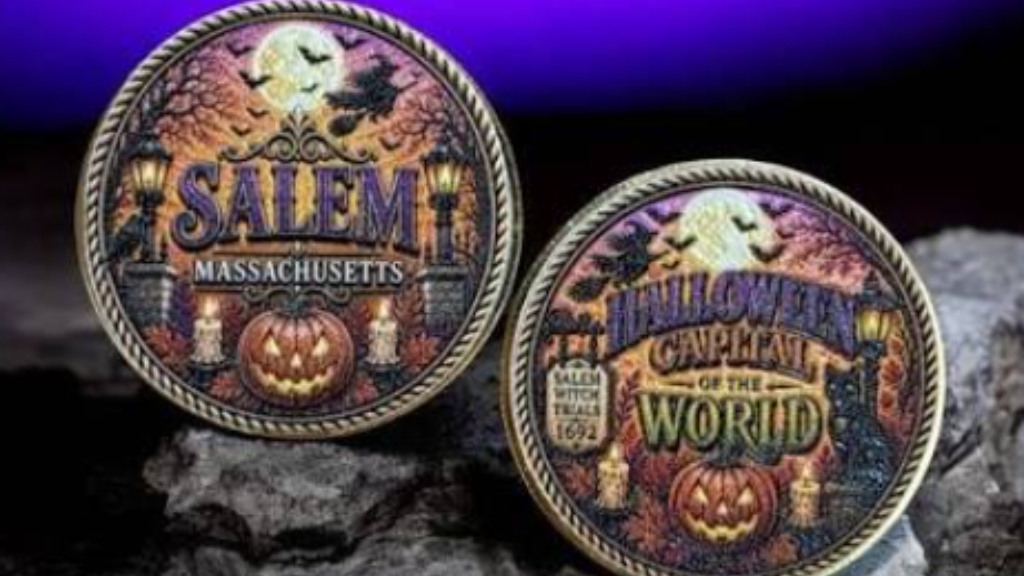
Everything Else in the Favor Bag Is Trash by Monday
Adult party favors are a graveyard category. Hosts buy them, guests accept them, and nobody can find theirs the next morning. Here’s how the usual suspects stack up.
Giveaway | Cost each | Still exists in November | Carries a rule or story |
Fun-size candy | 0.15–0.40 | No | No |
Plastic novelty (spider rings, etc.) | 0.20–0.80 | Technically | No |
Printed koozie | 1.50–4 | Yes, in a drawer | Weak |
Plastic shot glass | 1–3 | Yes | Implies drinking |
Temporary tattoo | 0.30–1 | No | No |
Custom coin | 2–8 (bulk) | Yes — for years | Yes — by default |
There’s a second problem specific to 2026 that favors can’t solve: you can’t build the night’s ritual around a drink.
Gallup’s July 2026 poll found 54% of U.S. adults drink alcohol — a record low, flat for a second year after falling from 62% in 2023. 51% now say one or two drinks a day is bad for health, the first time that view has held a majority. NielsenIQ, meanwhile, put U.S. non-alcoholic off-premise sales at $925 million, up 22% year over year, with online sales up 208% — and noted that 92% of non-alcoholic buyers also buy alcohol. The same guests drink both, on the same night.
So the object at the center of the party can’t be a shot. It has to be something a drinker and a non-drinker hold identically, with the same status. That is a very short list, and metal is on it.
Why a Coin, and Not Another Favor
The reason a coin outperforms a koozie has nothing to do with weight. It’s the rule attached to it.
Challenge coins come out of a military tradition with one non-negotiable principle: a coin is earned, never bought. You receive it from someone who saw what you did. Carrying it is proof you were there. And if someone calls a coin check, you’d better have it on you.
The important thing for party purposes is that this already made the jump into adult nightlife — through bars.
In 2012, brothers Bret and Tore Kragerud made a coin for a mixology event in Las Vegas: Fernet-Branca’s logo on one side, Nevada on the other, reading “Drinking Capital of the World.” Within two weeks bartenders were emailing: “Hey, I need a coin. I’m getting challenged, I can’t keep buying all these drinks.” Fernet-Branca began issuing official coins the following year — limited quantities per event, no design ever repeated.
That’s the blueprint, and it maps onto an adult Halloween party almost perfectly. A coin is the only party object with a game already installed, no host labor required, and more value the longer you’ve been showing up.
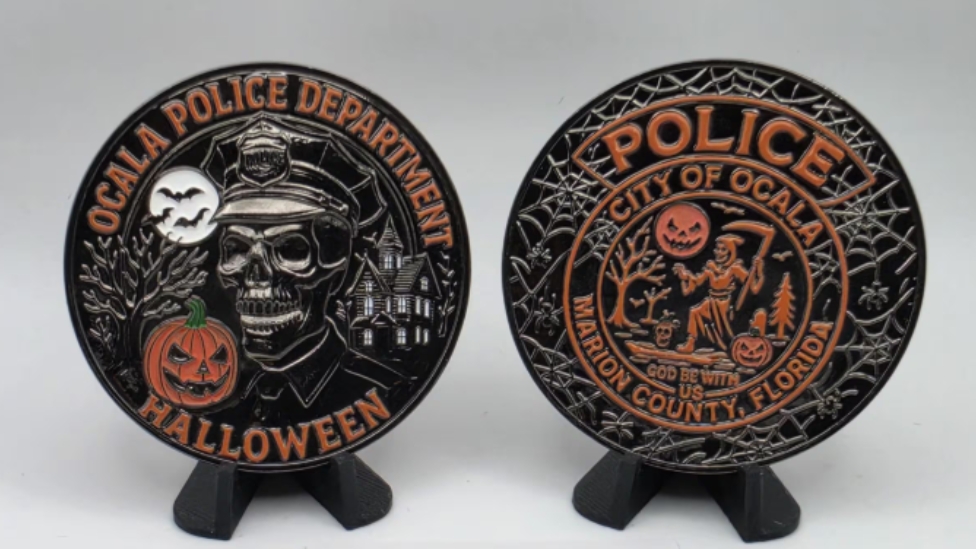
Six Ways an Adult Party Actually Uses One
- The invitation coin.Hand it over with the invite. Nothing guarantees a costume commitment like a physical object — adults dress up when they’re sure everyone else will.
- The door coin.Everyone gets one on arrival: this year’s edition, dated. It makes the party feel produced rather than assembled.
- The coin check.The 10:40 moment. One planned peak is the difference between a party people remember and one that stalls at the two-hour mark, right when the energy should crest. A coin check is ninety seconds of setup and runs itself.
- The costume contest prize.Announce categories on the invitation — scariest, best group, best last-minute effort — and put a coin on each.
- The drink token.For taprooms and bar crawls, a numbered metal token beats a paper punch card on every axis: it can’t be counterfeited with a home printer, and it ends the night in a pocket instead of a landfill.
- The annual series.This is the one that compounds. Run 100 numbered coins, date them, and next year’s party has a reason to happen before anyone’s thought of a theme. Whoever holds 003/100 this October will show up next October to see what 2027 looks like.
What an Adult Halloween Coin Should Look Like
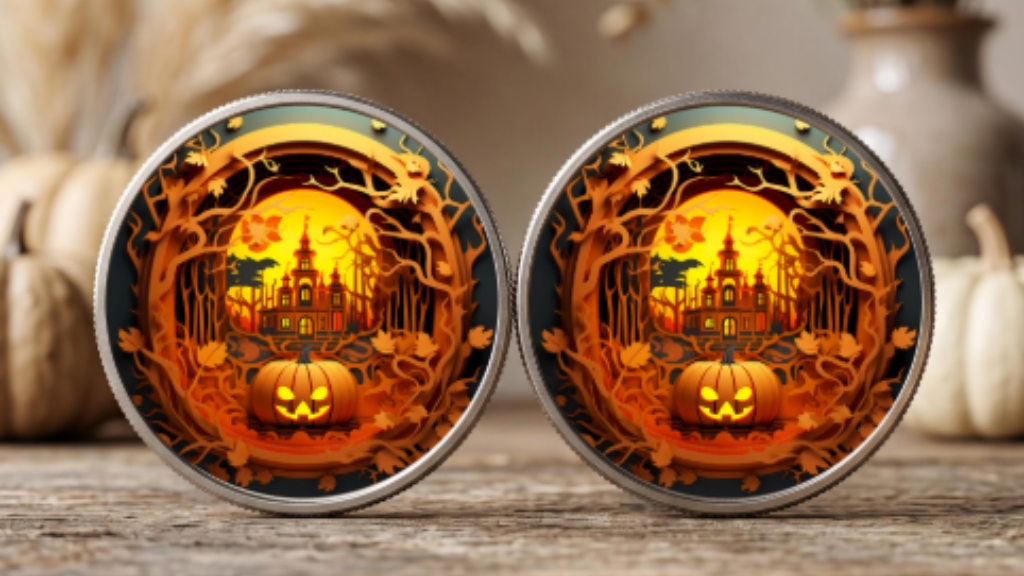
The most common first-timer mistake is treating an adult Halloween coin like a kid’s party favor: bright, flat, novelty-grade. The coins adults keep look like they cost more than they did — and don’t look like they came from a checkout aisle.
Design choice | Why it works for an adult crowd | Notes |
Matte black plating with antique copper or silver highlights | Gothic, grown-up, reads as premium in low light | The strongest combination of the last two seasons |
Glow-in-the-dark enamel | The holiday’s signature effect; works in photos and dark rooms | Use selectively — eyes, moon, lettering — never the whole face |
Deep 3D relief | Skulls, ravens, haunted houses need sculpting, not flat color | Deep-relief minting is the breakout premium format right now |
Bottle-opener edge | Turns a keepsake into a tool; the highest perceived value per dollar | Strongest option for bars, taprooms, and BYOB parties |
Spinning center | Fidget factor — adults play with it all night | Also makes the piece harder to copy |
Numbered edge | Scarcity drives next year’s attendance | e.g., 014/100 — the number becomes the story |
NFC or QR chip | Tap to load a playlist, a photo album, or next year’s date | Best for hosts who want the party to have a homepage |
Size 1.75–2 inches | Big enough to feel substantial, small enough for a pocket | 1.5 inches reads as a kid’s handout |
Two warnings. First, stay out of licensed territory — no movie characters or studio logos on a coin you’re selling or using commercially; original art is the safe lane. Second, pick one aesthetic lane. Halloween taste has split into camps — fall-forward, haunted-house, and classic each pull roughly 24% of shoppers — and a coin that tries to be all three looks like clip art.
You Have Forty Days
Here’s the uncomfortable arithmetic. It’s late September. Halloween is Saturday, October 31 — about forty days out — and standard production for custom coins runs four to six weeks including artwork, molding, production, and shipping.
The comfortable window closes this week. After that you’re into express production, where UV-printed coins ship in as little as 1–3 days — a lifeline for whoever realizes on October 20 that forty people are coming and there’s nothing to hand them. But express limits your finish options, and air freight on a rush order can cost more than the coins do.
When | What to do |
Now (40 days out) | Lock the concept and the quantity. Decide whether this is one party or year one of an annual series — the answer changes the design. |
5 weeks out | Request artwork. Most suppliers provide free design proofs; budget two revision rounds. |
4 weeks out | Approve the final design and place the order. Confirm the mold fee is one-time so next year’s dated variant reuses it. |
2 weeks out | Coins arrive. If it’s numbered, put the low numbers where people will see them. |
Halloween week | Hand them out, run the check, and photograph it. The best marketing asset for your 2027 coin is a photo of someone holding this year’s. |
One bonus detail worth planning around: clocks go back on Sunday, November 1. The party gets an extra hour, and almost nobody plans for it. A coin check at 10:40 hits differently when 10:40 is really 9:40.
The Object That Makes the Night
Think about what an adult Halloween party produces. The decorations come down. The punch is gone. The costume goes back in the bag. The photos live on a phone nobody scrolls back to. By Monday, a $200 night has left behind almost nothing you can hold.
A coin is the one thing that survives it — and unlike a souvenir, it does something while it survives. It sits on a desk or in a pocket for eleven months, and then one day in September someone texts: what’s the theme this year?
Traditions don’t start with a budget or a plan. They start with one object that felt worth keeping, handed to someone on a night built for remembering. Adults spent a decade turning Halloween into the best-dressed night of the year. In 2026 they’re starting to give each other something to take home from it.