
Political Campaign Lapel Pins: Effective Strategies for Voter Outreach
If you’ve volunteered on a political campaign, you know the grind: long days knocking on doors, flyers that end up in the trash, and struggling to connect with voters. In an era of digital ads, social media noise, and endless campaign emails, it’s easy to overlook political campaign lapel pins—tiny, tangible accessories often dismissed as “just swag.” Yet these pins have been a staple of political outreach for over a century because they work: unlike fleeting flyers or social posts, they’re wearable, displayable, and turn voters into walking advocates. Not all lapel pin strategies succeed, though. To leverage them effectively, you need a strategic approach that ties the pin to your campaign’s message, connects emotionally with voters, and turns passive recipients into active supporters. This blog breaks down proven strategies, drawing on real stories, history, and on-the-ground tips.
Why Lapel Pins Still Matter in Modern Political Campaigns
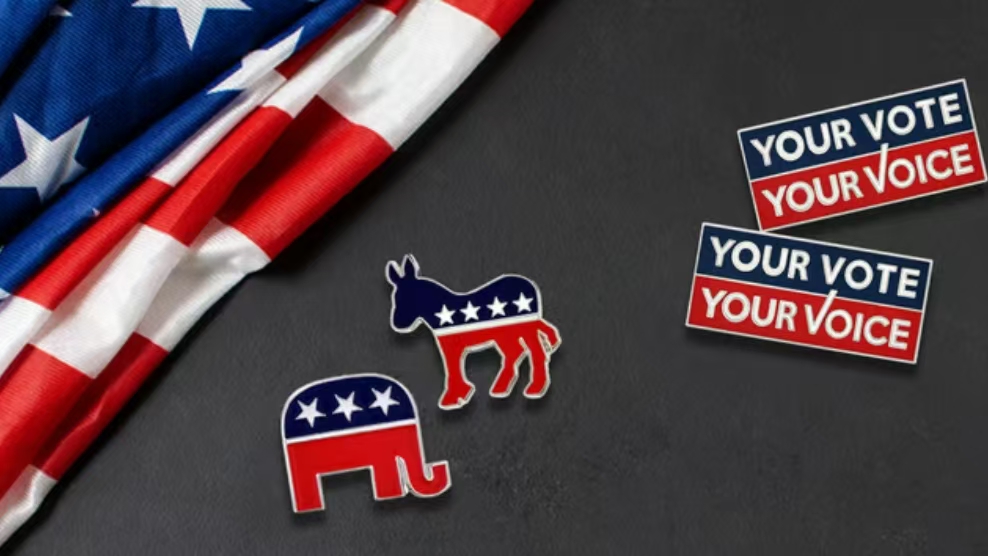
Let’s start with the basics: in a world where campaigns are dominated by digital noise, why should you invest time and money into lapel pins? The answer is simple: they’re human. Digital ads can feel impersonal, like a message shouted into a crowd. Flyers get crumpled, lost, or thrown away. But a lapel pin? It’s a physical token—a small, meaningful gesture that says, “We see you, and we value your support.” For voters, wearing a lapel pin isn’t just a way to show allegiance; it’s a way to be part of something bigger. It’s a conversation starter, a symbol of community, and a reminder of the campaign’s values every time they glance in the mirror or feel it on their jacket.
Political lapel pins have deep roots in American politics, dating back to the 19th century—long before social media, TV ads, or even radio campaigns.
Abraham Lincoln’s 1860 presidential campaign used simple metal pins featuring his portrait and a short slogan, a revolutionary way to spread his message to a largely illiterate population at the time. Since then, every major political campaign—from local school board races to presidential elections—has used lapel pins to build support. Richard Nixon popularized the practice of wearing flag lapel pins in the 1970s, a tradition that continues today as a symbol of patriotism and unity. Even modern candidates like Barack Obama and Donald Trump have leaned on lapel pins, with designs ranging from simple flag pins to bold, slogan-driven designs that capture their campaign’s core message.
But lapel pins aren’t just a relic of the past. They’re more relevant than ever in 2026, and here’s why: they cut through the digital clutter. Think about it: the average voter is bombarded with dozens of campaign messages every day—emails, text messages, social media posts, TV ads. Most of these messages are forgotten within minutes. A lapel pin, though, is a physical reminder that stays with the voter long after the campaign volunteer has moved on. It’s a form of “slow marketing” in a fast-paced world, and it works because it’s personal. When a volunteer hands a voter a lapel pin, they’re not just giving them a trinket—they’re having a face-to-face conversation, making eye contact, and building a connection that digital tools can’t replicate.
Another reason lapel pins are so effective: they’re cost-effective.
The Psychology Behind Lapel Pins: Why They Drive Engagement
To truly understand why lapel pins work for voter outreach, you need to look at the psychology behind them. Humans are wired to value tangible objects—things we can touch, hold, and display. A lapel pin is a physical representation of a voter’s support for your candidate, and that physicality matters. When a voter puts on your campaign’s lapel pin, they’re not just expressing support—they’re making a public commitment. Studies have shown that people are more likely to follow through on a commitment when it’s visible to others. So, a voter who wears your lapel pin is more likely to vote for your candidate, volunteer for your campaign, and even encourage their friends and family to support you too.
Lapel pins also tap into the human desire for belonging. When a voter sees others wearing your campaign’s lapel pin, they feel part of a community—a group of like-minded people who share their values. This sense of belonging is powerful. It turns passive voters into active supporters, because they don’t want to be left out of the movement.
Finally, lapel pins evoke emotion. A well-designed pin can tap into a voter’s hopes, fears, and values—something that digital ads often fail to do. For example, a candidate running on a platform of environmental justice might design a lapel pin featuring a small tree or a green heart, evoking feelings of hope and responsibility. A candidate focused on supporting veterans might use a lapel pin with a military insignia, honoring their service and tapping into voters’ gratitude. These emotional connections are what make lapel pins more than just swag—they make them a powerful tool for persuasion.
Designing Lapel Pins That Resonate: Tips for Success
The first step to leveraging lapel pins for voter outreach is designing a pin that voters actually want to wear. A poorly designed pin—one that’s ugly, generic, or hard to read—will end up in a drawer, not on a voter’s lapel. But a well-designed pin? It will be worn with pride, shared with others, and become a symbol of your campaign. Here are the key tips for designing lapel pins that resonate with voters:
Keep It Simple, But Meaningful
The best political lapel pins are simple, clean, and easy to understand at a glance. Remember: a lapel pin is small—usually 1–2 inches in diameter—so you don’t have room for cluttered designs or long slogans. Stick to 1–2 key elements: your candidate’s name, a short slogan, and a symbol that represents your campaign’s core message. For example, Allyson Y. Schwartz’s 2004 congressional campaign used a simple, bright blue lapel pin with her name—so recognizable that it became known as “Schwartz blue” among her supporters. Jesse Jackson’s 1984 presidential campaign used a round pin featuring his portrait, with “Jesse Jackson” in gold lettering on a red background and “For President in ’84” on a blue background—simple, bold, and instantly recognizable.
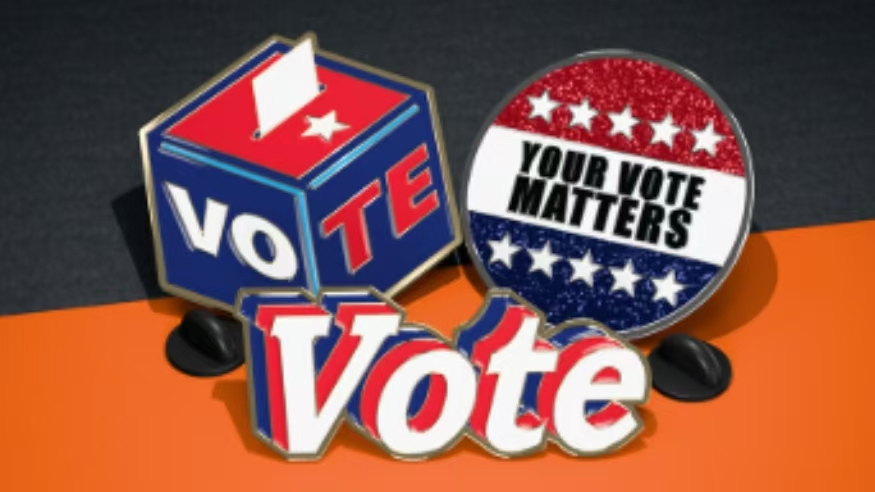
Avoid overcrowding the pin with too many colors, images, or text. If a voter has to squint to read your candidate’s name or understand your message, the pin will fail. Instead, focus on clarity and simplicity. Use high-contrast colors to make the text and symbols stand out—for example, white text on a dark background or black text on a light background. And choose a symbol that’s easy to recognize: a flag for patriotism, a heart for community, a checkmark for progress. The goal is to create a pin that voters can identify in a split second—and want to wear.
Align the Design With Your Campaign’s Message
Your lapel pin should be a reflection of your campaign’s core message. If your candidate is running on a platform of “Putting People First,” your pin should convey that—maybe with a simple image of a group of people or the words “People First” in bold lettering. If your campaign is focused on fiscal responsibility, a pin with a dollar sign or the word “Accountable” might be more appropriate. The key is to make sure the pin tells a story—one that aligns with what your candidate stands for.
Choose Quality Over Quantity
It’s tempting to cut corners and order cheap, low-quality lapel pins to save money—but that’s a mistake. A flimsy, poorly made pin will break easily, fade quickly, and send the message that your campaign doesn’t care about quality. Voters are more likely to wear a high-quality pin—one made from solid metal or enamel, with a smooth finish and clear engravings—because it feels valuable. Remember: the pin is a representation of your campaign. If it’s cheap and shoddy, voters will assume your candidate is too.
Invest in high-quality materials like hard enamel (which has a smooth, durable finish) or soft enamel (which has a slightly textured finish and is more affordable). Choose a secure backing—like a butterfly clutch or a magnetic backing—to ensure the pin stays on the voter’s lapel without falling off. And work with a reputable manufacturer—preferably one that’s veteran-owned or locally sourced—to ensure your pins are well-made and ethically produced. investment for your campaign.
Add a Personal Touch
One of the biggest mistakes campaigns make with lapel pins is treating them as generic swag. To make your pins effective for voter outreach, you need to add a personal touch. For example, you could engrave the voter’s name on the back of the pin, or include a handwritten note with the pin. During a recent local mayoral campaign in a small town in Ohio, the candidate’s team handed out lapel pins with the voter’s name engraved on the back, along with a note that said, “Thank you for being part of our community—we couldn’t do this without you.” The response was overwhelming: voters wore the pins with pride, and many shared photos of their personalized pins on social media, generating free buzz for the campaign.
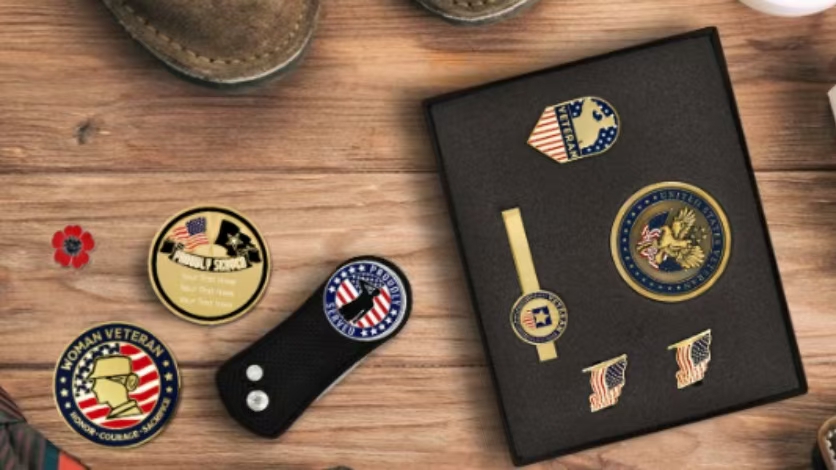
You can also customize pins for specific voter groups. For example, if you’re campaigning in a community with a large veteran population, you could design a special lapel pin featuring a military insignia and hand them out at veterans’ events. If you’re targeting young voters, you could design a more modern, trendy pin—maybe with a minimalist design or a pop of color—that appeals to their style. By tailoring your pins to specific voter groups, you show that your campaign understands their needs and values—and that goes a long way in building trust.
Strategic Distribution: Getting Lapel Pins Into the Right Hands
Designing a great lapel pin is only half the battle. To leverage it for voter outreach, you need to distribute it strategically—getting it into the hands of the right voters, at the right time, in the right way. Randomly handing out pins to anyone who walks by won’t yield results. Instead, you need to target your distribution to voters who are most likely to support your campaign, engage with your message, and become active advocates. Here’s how to do it:
Target Key Voter Demographics
Start by identifying your campaign’s key voter demographics—those who are most likely to vote for your candidate. This could be based on age, gender, location, income, or shared values. For example, if your candidate is running for a state senate seat and your key demographic is working-class families in suburban areas, you should focus on distributing pins at events where those families gather: PTA meetings, local fairs, farmers’ markets, and community cookouts. If your key demographic is young voters, you should distribute pins at college campuses, music festivals, and youth events.
Use Lapel Pins as a Conversation Starter (Not Just a Handout)
The biggest mistake campaigns make when distributing lapel pins is handing them out without saying a word. A lapel pin is a tool for engagement—not just a free gift. When a volunteer hands a voter a pin, they should use it as an opportunity to start a conversation about your campaign. For example, they could say, “This pin represents our candidate’s commitment to affordable healthcare—something we know is important to you. Would you be willing to wear it to show your support?” Or, “We’re handing out these pins to people who believe in putting our community first. Do you share that value?”
This conversation is key. It turns a passive handout into an active engagement, and it gives the volunteer a chance to share your campaign’s message, answer the voter’s questions, and build a connection. During a recent city council campaign in Florida, the candidate’s volunteers were trained to use lapel pins as a conversation starter. They would hand a voter a pin, ask them about their top issues, and then tie the pin’s design to the candidate’s plan to address those issues. For example, if a voter mentioned education, the volunteer would say, “This pin has a graduation cap on it because our candidate is committed to funding local schools and helping every child succeed.” This approach not only got more voters to wear the pins but also increased their understanding of the candidate’s platform.
Distribute Pins at High-Impact Events
There are certain events where distributing lapel pins will have a bigger impact than others. Focus on events where voters are already engaged with politics or community issues—events where they’re more likely to care about your campaign and wear your pin. These events include:
Campaign rallies and speeches: This is a no-brainer—attendees are already supporters, so they’ll be eager to wear your pin and show their allegiance. You can even have a “pin ceremony” at the rally, where the candidate hands out pins to key supporters or volunteers.
Voter forums and debates: These events attract undecided voters who are actively seeking information about the candidates. Handing out a lapel pin can help your campaign stand out, and it gives volunteers a chance to engage with undecided voters after the event.
Community events: Local fairs, parades, farmers’ markets, and PTA meetings are great places to distribute pins. These events attract a diverse group of voters, and they’re more likely to be receptive to a friendly conversation and a free pin.
Veterans’ events and first responder gatherings: These events attract voters who value service and patriotism—values that many political campaigns emphasize. A lapel pin featuring a military or first responder symbol will resonate with these voters.
Promotional Partners Inc. notes that lapel pins are ideal for political rallies and local events, as they’re cost-effective and easy to distribute to attendees who are already engaged with the campaign. For example, during a 2024 gubernatorial campaign in Texas, the candidate’s team distributed lapel pins at a state fair, where they talked to hundreds of voters about the candidate’s plan to improve education. The pins were a hit—voters wore them throughout the fair, and many stopped by the campaign booth to learn more.
Use Lapel Pins to Reward Supporters and Volunteers
Lapel pins aren’t just for undecided voters—they’re also a great way to reward your existing supporters and volunteers. When you give a volunteer a lapel pin, you’re recognizing their hard work and showing them that their contributions matter. This can boost morale and encourage them to keep volunteering. You can also use lapel pins as a way to incentivize supporters to take action—for example, “Wear this pin to the polls on election day, and you’ll be entered into a raffle for a chance to meet the candidate.”
Lapel Pins as a Cornerstone of Voter Outreach
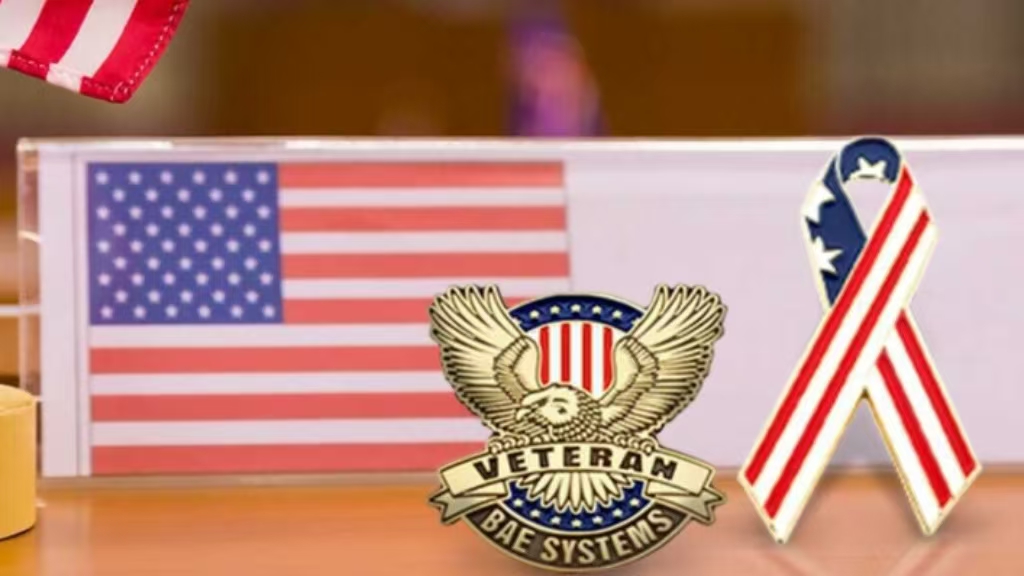
In a world of digital noise and generic campaign tactics, political campaign lapel pins stand out as a simple, effective, and personal tool for voter outreach. They’re not just swag—they’re symbols of community, commitment, and hope. When designed strategically, distributed thoughtfully, and used to build connections, lapel pins can turn passive voters into active supporters, spread your campaign’s message, and even help you win elections.
The key to success with lapel pins is to be intentional. Don’t just order a generic pin and hand it out randomly. Instead, design a pin that reflects your campaign’s message, distribute it to key voters, use it as a conversation starter, and encourage pin wearers to become advocates. Remember: the best lapel pins aren’t just objects—they’re stories. They tell the story of your candidate, your campaign, and the community you’re fighting for.