
Table of Contents
"More Than a Pin: Why Limited-Edition Enamel Collectibles Are the New Trading Card"
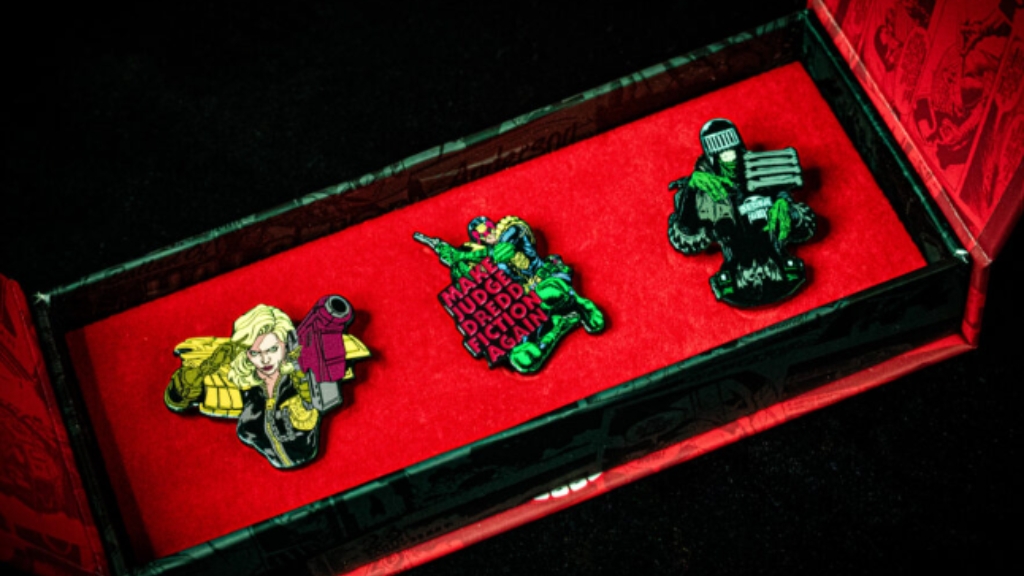
Walk into any major convention in 2026 — Comic-Con, PAX, Gen Con, a DECA international conference — and you’ll notice something that wasn’t there five years ago. Alongside the vendor tables stacked with booster packs and card sleeves, there’s a growing wall of velvet-backed display boards covered in enamel pins. Attendees hover over them with the intensity of a card collector cracking a fresh pack, scanning for chase variants, low-numbered editions, and artist exclusives. Some walk away triumphant. Others pull out their phones and head to Discord to arrange trades before the day is over.
This isn’t casual souvenir shopping. This is a collector economy — and enamel pins are operating inside it with the same scarcity mechanics, secondary market dynamics, and community-driven valuation models that built the $9.2 billion trading card industry.
The pin has grown up. And in 2026, it’s no longer just an accessory. It’s an asset class.
The Market Convergence: Two Worlds Colliding
The comparison between enamel pins and trading cards isn’t a stretch. It’s backed by parallel market trajectories that are converging in real time.
The global trading card games market reached **9.2 billion in 2026**, up from 8.4 billion in 2025, and is projected to hit 16.9 billion by 2035** at a 6.9% CAGR (Global Market Insights, 2025). Pokémon leads with over 12% market share, followed by Magic: The Gathering and Bandai Namco’s anime titles. The market is fueled by adult collectors aged 25–45 who treat cards as alternative investments, third-party grading services that have created standardized valuation frameworks, and record-breaking headline sales — including Logan Paul’s Pikachu Illustrator card that sold for **16.49 million at Goldin Auctions in February 2026.
Meanwhile, the enamel pin market — a segment of the broader 2 billion lapel pin industry — has seen search interest climb **roughly 53% in six months** and 34% over two years (SaleHoo, 2026). Etsy alone processes over **5 million monthly searches** for “enamel pins,” and top independent shops generate 5,000–$20,000 per month. The customization segment is growing at an estimated 15% annually, driven by artist-driven limited editions, convention exclusives, and community-traded series.
These aren’t isolated trends. They’re symptoms of the same cultural force: a generation that craves tangible, collectible artifacts in an increasingly digital world — and that has brought trading card logic to every collectible category it touches.
Why Enamel Pins Are Becoming the New Trading Card
Five structural parallels explain why enamel pins are following the same trajectory as trading cards — and in some ways, improving on the model.
1. Scarcity Is Engineered, Not Accidental
Trading cards built their value on print runs and pull rates — the odds of pulling a rare holographic card from a booster pack. Enamel pins have adopted the same principle through Limited Edition (LE) numbering. A pin stamped “LE 100” on the back carries the same psychological weight as a card marked “1/1 Superfractor.” The lower the number, the higher the prestige. Artist Proofs (AP) and Pre-Production samples (PP) function as the pin world’s equivalent of promo cards and error cards — the rarest of the rare, coveted by serious collectors.
2. Serialization Creates Market Transparency
In 2026, leading pin producers laser-etch unique serial numbers on the back of every limited-edition piece. Combined with digital Certificates of Authenticity (COAs) and QR-code verification, this creates a provenance trail that trading cards only achieved through third-party graders like PSA and Beckett. The pin industry is building authentication directly into the product — a structural advantage over cards, where 43% of buyers still worry about counterfeits.
3. The Secondary Market Is Mature
The pin secondary market has moved well beyond casual eBay listings. Dedicated trading apps, Discord “Vault” servers, and Facebook trading groups now host real-time price discovery. Rare Disney pins trade for 700–11,000+. Convention-exclusive pins given away free at events like PAX West have appreciated to 50–150 on resale platforms within weeks. The infrastructure mirrors what trading card collectors built over decades — but compressed into years, accelerated by social media.
4. Community Drives Valuation
Trading card values are set by tournament results, meta shifts, and set rotations. Pin values are set by community consensus — which artists are hot, which fandoms are surging, which convention drops sold out fastest. Both systems are fundamentally social, and both reward collectors who are plugged into the community. The difference is that pin communities are younger, more digitally native, and more active on visual platforms like Instagram and TikTok, where a pin’s aesthetics drive demand in ways that card stats never could.
5. The Format Is More Expressive
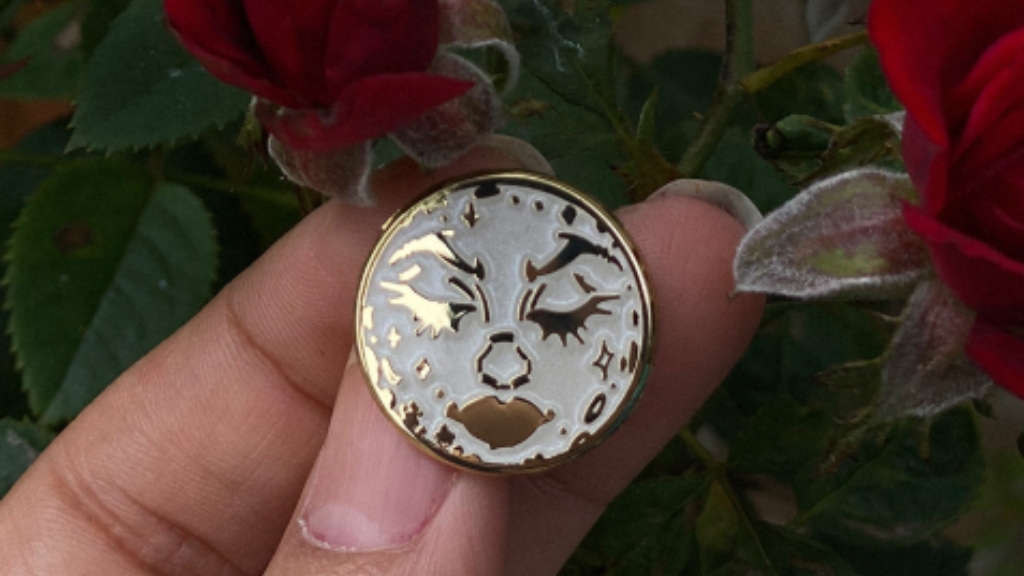
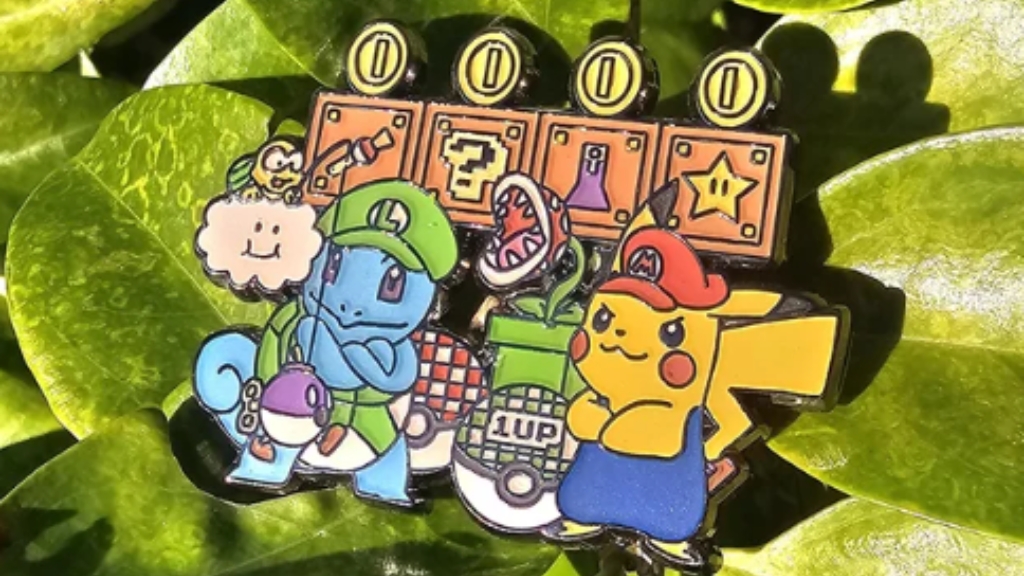
A trading card is a rectangle with a picture and stats. An enamel pin is a three-dimensional metal object with sculpted relief, layered enamel, custom shapes, moving parts, glow-in-the-dark elements, and dual-tone plating. The creative ceiling is dramatically higher — which means the ceiling for perceived value is higher too. A beautifully executed pin feels like art in a way that a card, by its nature, cannot.
The Rarity Framework: How Pin Collectors Read Value
Understanding the enamel pin collector economy requires fluency in the same rarity language that trading card collectors use. The table below maps the pin world’s rarity tiers to their trading card equivalents.
Table 1: Enamel Pin Rarity Tiers vs. Trading Card Equivalents
Rarity Tier | Pin Market Definition | Trading Card Equivalent | Typical Secondary Market Behavior |
Open Edition (OE) | Unlimited production; always available | Common base set cards | Minimal premium; steady retail price |
Limited Edition (LE) | Fixed production run (e.g., LE 100, LE 500); serial-numbered | Set collection rare / holo cards | 20–100% premium over retail; appreciates as supply diminishes |
Artist Proof (AP) | Pre-production samples used for color/quality approval; typically 5–20 pieces | Promo cards / error cards | 200–500% premium; among the most coveted pieces in any collection |
Pre-Production (PP) | Earliest manufacturing samples; often differ slightly from final run | Pre-release promos / test prints | Highest tier; traded almost exclusively among elite collectors |
Convention Exclusive | Available only at a specific event; often unnumbered but inherently scarce | Event-exclusive promos / stamped cards | 50–200% premium post-event; driven by event nostalgia |
Chase Variant | Blind box release with ultra-rare alternate design | Chase cards / secret rares | Frenzy on social media; can command 300%+ premiums |
Collaboration / Co-Branded | Limited run from artist × brand or franchise crossover | Collaboration sets (e.g., Pokémon × artist) | Premium driven by both artist reputation and IP strength |
What’s striking is how closely the two ecosystems mirror each other. A pin collector hunting an AP from a favorite artist is executing the same collecting behavior as a card collector chasing a 1/1 Superfractor. The psychology is identical; the medium is different.
What's Driving the Shift in 2026
Several converging forces are accelerating the transformation of enamel pins from fashion accessory to collectible asset.
The Blind Box Revolution
The biggest trend in pin collecting in 2026 is the blind box drop — a sealed mystery pack containing one pin from a themed set, with rarity tiers ranging from common to ultra-rare chase variants. This format borrows directly from trading card booster pack mechanics and has proven equally effective at driving repeat purchases, community trading, and social media unboxing content. Collectors buy multiple boxes to complete sets, trade duplicates in Discord servers, and post their pulls on TikTok — generating the same hype cycle that has fueled the trading card industry for three decades.
Artist-Driven Drops
Independent artists have become the pin world’s equivalent of card set designers. A drop from a well-known artist sells out in minutes, creates instant secondary market activity, and builds long-term value based on the artist’s reputation and career trajectory. Collectors follow artists the way card collectors follow specific illustrators — and complete artist collections command significant premiums over individual pin values.
Digital-Physical Integration
NFC chips and QR codes embedded in pins are becoming standard for premium editions. Tapping a pin against a phone can verify authenticity, unlock exclusive digital content, or access private community channels. This “phygital” approach gives pins a functionality that trading cards are still struggling to replicate — and it appeals directly to a generation that expects digital layers behind every physical product.
Convention Culture as Market Engine
Pins have become the lingua franca of convention trading floors. At events like PAX, Comic-Con, and DECA’s International Career Development Conference (ICDC), pin trading has evolved into a sophisticated barter economy where certain designs command 5-to-1 trades. State-specific pins, LED-embedded designs, and event exclusives become legendary within their communities — the same dynamics that make convention-exclusive trading cards so valuable.
The Economics: Pricing and Edition Strategy
For artists, brands, and organizations looking to enter the enamel pin collectible market, edition strategy is the single most important decision. The table below outlines the pricing and market dynamics across different edition types, based on 2026 market data.
Table 2: Limited-Edition Enamel Pin Edition Strategy & Pricing
Edition Type | Typical Run Size | Production Cost/Unit | Retail Price Range | Secondary Market Premium | Target Collector |
Open Edition Retail | Unlimited | 1.50–2.50 | 8–15 | Minimal; steady availability | Casual buyers, fashion accessorizers |
Standard Limited Edition | 250–1,000 | 2.00–3.00 | 12–25 | 20–50% premium post sellout | Beginning to mid-level collectors |
Convention Exclusive | 100–500 | 2.50–3.50 | 15–30 | 50–150% premium within 3 months | Event attendees, convention collectors |
Artist Signature Series | 50–250 | 3.00–4.00 | 25–50 | 100–300% premium; driven by artist brand | Dedicated artist followers, serious collectors |
Blind Box Chase Set | 500–2,000 (per set) | 1.50–2.50 | 8–12 per box | Chase variants command 300%+ premium | Set completists, social media-driven buyers |
Grail / AP Edition | 5–20 | 3.50–5.00 | 40–80+ (if sold) | 200–500%+ premium; rarely resold | Elite collectors, long-term holders |
The profit margins in this market are striking. Even at the high end, production costs rarely exceed 5 per unit, while retail prices for limited editions routinely hit 25–$50. Gross margins of 75–86% are standard — comparable to or exceeding the margins in the trading card booster pack business, where manufacturing costs are similarly low relative to retail price.
Designing for Collectors: What Separates a Pin From a Collectible
Not every enamel pin becomes a collectible. The difference between a pin that sells and a pin that appreciates comes down to design choices that signal value to the collector community.
Back-stamp everything. Every limited-edition pin should carry a back-stamp with the edition size, serial number, artist name, and copyright mark. This is the pin equivalent of a card’s set symbol and print run information — it’s how collectors verify authenticity and establish provenance.
Number with intention. Laser-etched serial numbers on the back (“047/250”) transform a product into a collectible. Lower numbers in a series often command premium prices, mirroring the “low pop” dynamics in card grading.
Invest in finish quality. Collectors inspect pins with jeweler’s loupes. Crisp metal lines, flawless enamel fill, and consistent plating are non-negotiable. A pin with visible manufacturing defects won’t trade — no matter how limited the run.
Design for display. Collectors display pins on boards, in frames, and in custom cases. Consider how a pin looks in a collection context — color compatibility across a series, consistent sizing for display grids, and backing card design that looks good on a wall.
Build the story. Every valuable pin has a narrative: the artist, the event, the collaboration, the fandom moment it captures. Trading cards derive value from stats and tournament play; pins derive value from story and aesthetics. The stronger the narrative, the more durable the value.
The Bottom Line
The trading card industry spent three decades building the infrastructure of modern collecting: scarcity mechanics, serialization, grading, secondary markets, and community-driven valuation. Enamel pins are inheriting that infrastructure — and in some ways, improving on it.
Pins are more tactile than cards. More expressive. More wearable. More shareable on visual social platforms. They carry authentication built into the product itself. And they appeal to a demographic that is younger, more diverse, and more digitally native than the traditional trading card collector base.
The global enamel pin market has already surpassed **500 million** and is growing at double-digit rates. Convention trading floors are seeing 5-to-1 trades for coveted designs. Rare pieces appreciate from 0 to $150 in weeks. Artist drops sell out in minutes. Discord servers host real-time price discovery. The parallels to the early days of the trading card boom are unmistakable — and this time, the medium is more suited to the moment.
For artists, brands, and organizations watching this space, the opportunity is clear. The collectors are here. The community infrastructure is built. The market dynamics are proven. The question isn’t whether limited-edition enamel pins are the new trading card. The question is whether you’re going to be part of the drop — or part of the waitlist.