What is the best way to start a challenge coin design?
Start by writing a one-sentence design brief. It should identify who will receive the coin, what event or achievement it represents, and what the recipient should remember when they hold it. This sentence prevents the artwork from becoming a collection of unrelated symbols.
For example, a retirement coin may prioritize a unit emblem, years of service, and a personal motto. A conference coin may use an event mark, location, and date. A nonprofit recognition coin may focus on mission, volunteer contribution, and community. Once the purpose is fixed, every visual element can be judged by whether it supports that message.
Which information belongs on the front and back?
The front should carry the strongest identity element: a logo, emblem, mascot, or central symbol. The back can hold supporting information such as a motto, date, location, serial number, or secondary artwork. Trying to give every element equal importance usually makes a coin hard to read.
A practical hierarchy is one dominant symbol, one short line of text, and a small number of secondary details per side. Keep lettering away from the outer edge and avoid very thin strokes. If a design contains a long message, consider reducing the copy or moving it to a presentation card rather than shrinking it until it is illegible.
How do size, thickness, and shape affect the result?
Common challenge coins are compact enough to carry but large enough to show recognizable detail. Larger diameters create room for complex crests, multiple colors, or layered 3D relief. Smaller coins feel convenient and economical but require simpler art. Thickness changes perceived weight and can support edge lettering or a more substantial presentation.
Round coins are efficient and traditional. Custom die-cut shapes can make a campaign more distinctive, especially when the outline is essential to the concept. However, narrow points and deep cutouts may affect durability, packaging, and cost. Ask for a production-ready outline before approving an unusual shape.
Which metal finish should you choose?
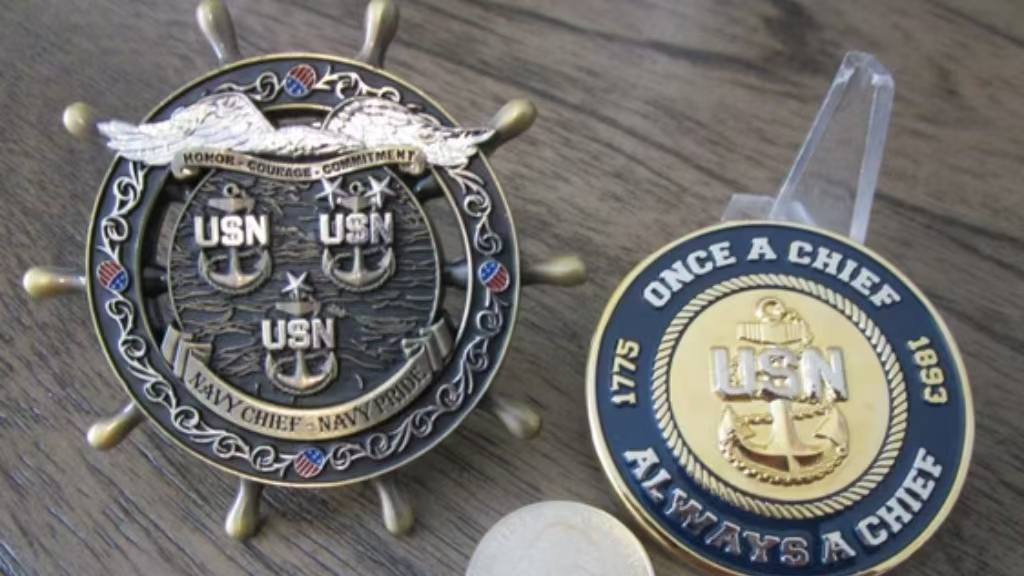
Polished gold and silver create a bright formal appearance. Antique gold, antique silver, and antique copper emphasize recessed details and often suit heritage, military-inspired, or commemorative artwork. Black nickel produces a modern high-contrast base for vivid enamel. Dual plating can separate important areas, but it works best when the design has a clear reason for using two finishes.
The finish should support the message rather than follow a trend. A ceremonial award may call for polished metal, while a historical anniversary may look stronger in an antique finish. Request a digital proof that shows both plating and enamel because the same colors can appear different against different metals.
When should a coin use 2D, 3D, or enamel color?
Two-dimensional relief uses raised and recessed metal at defined levels. It is suitable for lettering, logos, borders, and graphic symbols. Three-dimensional relief creates gradual sculpted depth and is useful for portraits, architecture, animals, and organic forms. Enamel adds brand color and improves recognition from a distance.
These methods can be combined. A coin might use 3D relief for a central figure, 2D lettering around the border, and enamel for a small accent. The most effective designs leave some exposed metal so that color, relief, and finish can contrast with one another.
What should be checked before production?
Review the final proof at actual size, not only enlarged on a screen. Confirm the overall dimensions, thickness, front and back orientation, plating, enamel colors, text, dates, numbering, edge treatment, and packaging. Make sure the artwork does not reproduce protected emblems or third-party trademarks without authorization.
Also confirm the quantity and delivery deadline before tooling. If the coin is tied to an event, build in time for proof revisions, production, inspection, and shipping. A clear approval process is one of the best ways to prevent avoidable delays.
How can packaging improve a custom coin project?
A clear capsule protects the surface while keeping the coin visible. A velvet pouch is compact and suitable for distribution. An acrylic case or presentation box makes the item feel more ceremonial and can support retail display or executive gifting. Packaging should match how the coin will be presented, stored, and transported.
For a quote, state whether coins will be handed out individually, mailed, sold at an event, or presented on stage. That context helps determine whether simple protection or premium presentation offers better value.
Frequently asked questions
Can a manufacturer create artwork from a rough sketch?
Yes. A clear sketch, logo file, reference colors, and written notes are usually enough to begin a digital proof. The buyer remains responsible for approving the final design and confirming rights to use all artwork.
What file formats are useful for custom coin artwork?
Vector files such as AI, EPS, SVG, or editable PDF are ideal. High-resolution PNG or layered source files can also help when vector artwork is unavailable.
Should every challenge coin include enamel?
No. All-metal coins can look refined and timeless. Enamel is most useful when brand colors, flags, or small visual accents are important to recognition.
What details are needed for an accurate quote?
Provide quantity, size, thickness, shape, plating, color count, edge option, packaging, delivery country, deadline, and the best available artwork.