
Table of Contents
Hard Enamel vs Soft Enamel Challenge Coins: Full Feature Comparison
Custom challenge coins are timeless symbols of honor, teamwork, commemoration, and legacy, widely used for military recognition, corporate awards, sports team honors, veteran tributes, and milestone celebrations. When designing custom challenge coins, one of the most critical decisions every wholesale buyer and designer faces is choosing between hard enamel and soft enamel finishes. These two classic enamel techniques define a coin’s final texture, color vibrancy, durability, aesthetic grade, production cost, and long-term collectible value.
Many first-time custom buyers mistakenly believe hard enamel and soft enamel are nearly identical, differing only in minor surface details. In reality, they feature completely different manufacturing workflows, tactile experiences, visual styles, wear resistance, and scenario adaptability. Choosing the wrong enamel finish can lead to mismatched product positioning, wasted budget, faded colors, unsatisfactory texture, or reduced commemorative value for your bulk coin orders.
To help global B-end purchasers, brand organizers, and coin collectors make precise, cost-effective customization decisions, this blog delivers a full, in-depth comparison of hard enamel and soft enamel challenge coins. We break down their production principles, core features, pros and cons, pricing differences, and ideal application scenarios, paired with a detailed comparison table and practical selection tips to eliminate all customization confusion.
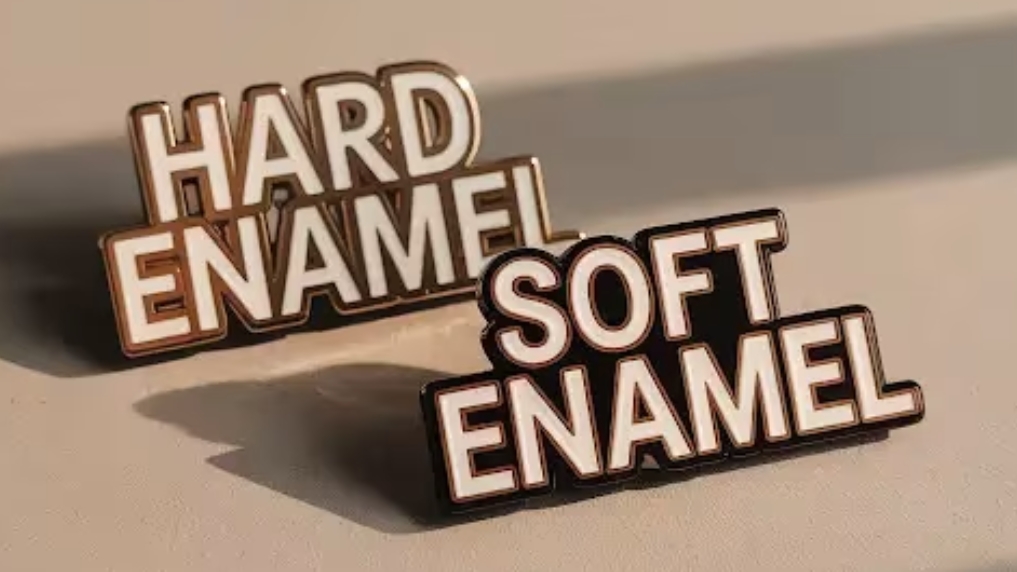
What Are Hard Enamel & Soft Enamel Challenge Coins?
Before diving into detailed differences, it is essential to understand the core definitions and production logic behind these two mainstream enamel crafts, as their manufacturing processes fundamentally determine all subsequent performance and aesthetic gaps.
Soft Enamel Challenge Coins
Soft enamel is the most popular, cost-effective, and versatile enamel craft for custom challenge coins, favored by most wholesale buyers for its flexible design and rich color performance. After metal stamping and molding, raised metal dividing lines form independent color grooves on the coin surface. Liquid soft enamel pigments are filled into these recessed grooves and cured at low natural temperature without repeated polishing. The final finished surface presents an obvious concave-convex layered texture: metal lines stand raised, while colored enamel areas sink slightly. This craft retains distinct tactile layering, supports complex color matching and delicate pattern details, and features a fast production cycle with low production loss.
Hard Enamel Challenge Coins
Also known as cloisonné enamel, hard enamel is recognized as the high-end collectible-grade craft for challenge coins. Its production process is far more rigorous and complex than soft enamel. After filling high-purity hard enamel pigments into the metal grooves, the coins undergo multiple high-temperature firing, repeated color supplementation, and precise manual grinding and polishing. The enamel material is fully leveled to be completely flush with the raised metal lines, forming an ultra-smooth, porcelain-like flat surface. With high density and strong molecular stability, hard enamel boasts excellent compression resistance, scratch resistance, and oxidation resistance, serving as the preferred craft for formal, high-standard commemorative coins.
Core Differences Between Hard Enamel & Soft Enamel Challenge Coins
The differences between the two enamel crafts cover six core dimensions: surface texture, color performance, durability, production cycle, pricing, and design tolerance. Each dimension directly affects the final quality and practical value of custom challenge coins. Below is a comprehensive detailed analysis of their respective advantages and characteristics.
1. Surface Texture & Visual Aesthetics
Texture is the most intuitive distinguishing feature. Soft enamel coins feature a clear three-dimensional concave-convex layering. The raised metal borders outline every pattern and text independently, with vivid layered contrast that delivers a strong craft sense and dynamic visual effect. The uneven surface creates a unique tactile experience, making every pattern touchable and vivid.
Hard enamel coins present a perfectly flat, flawless porcelain surface with zero height difference between enamel areas and metal lines. The overall texture is delicate, neat, and low-key luxurious, with uniform and stable luster. Without concave and convex undulations, the surface is smooth enough to rival high-end jewelry, showcasing a formal, solemn, and premium temperament suitable for high-grade commemorative scenarios.
2. Color Performance & Restoration Ability
Soft enamel adopts high-saturation liquid pigments with strong color ductility, supporting gradient colors, multi-color splicing, and complex cartoon or pattern color transitions. It can highly restore creative designs with rich color layers and diverse tone changes, presenting bright, vivid, and lively visual effects. It has extremely high tolerance for complex and fancy custom designs.
Hard enamel pigments are dense solid color materials with pure, uniform, and stable color tones, no color overflow or color difference. Due to the limitations of high-temperature firing and polishing processes, hard enamel is more suitable for solid color matching and simple color layering, with weaker performance in gradient and complex color transitions. However, its color fixation is extremely stable, with no fading or color darkening for decades.
3. Durability, Scratch & Wear Resistance
Soft enamel is air-dried and cured with relatively loose molecular structure. Although it meets daily use standards, the recessed enamel layer is slightly vulnerable to hard object scratches and long-term friction. After years of carrying and storage, minor wear and slight color fading may occur on the surface. For long-term collection and high-frequency use scenarios, its durability has certain limitations.
Hard enamel undergoes repeated high-temperature firing and compression polishing, forming an ultra-dense protective color layer. Its surface hardness is far higher than soft enamel, delivering excellent scratch resistance, friction resistance, and anti-oxidation performance. It can resist daily collision, long-term hand touch, and environmental erosion, maintaining a brand-new flat surface and pure color for decades, making it ideal for permanent collection and inheritance.
4. Production Difficulty & Lead Time
Soft enamel features a simple production process, fewer operational steps, and low technical difficulty. It does not require repeated firing and manual polishing, with low production defect rate and fast mass production speed. It can efficiently complete large-batch wholesale orders and meet urgent delivery needs for events and promotions.
Hard enamel requires multiple rounds of color filling, high-temperature firing, cooling shaping, and precision manual polishing. The production process is cumbersome, the technical threshold is high, and the production loss rate is relatively high. The whole production cycle is longer, requiring more time and labor costs for fine processing and quality control.
5. Custom Cost & Budget Adaptability
Thanks to simple craftsmanship, low labor cost, and high yield rate, soft enamel has obvious cost advantages. It is highly cost-effective for large-batch customized orders, perfectly matching the budget demands of promotional gifts, event souvenirs, and team bulk awards.
The complex multi-process production of hard enamel leads to higher labor and time costs, with a higher unit price than soft enamel. It is more suitable for small-batch, high-standard, high-value customized projects that pursue ultimate quality and collection value.
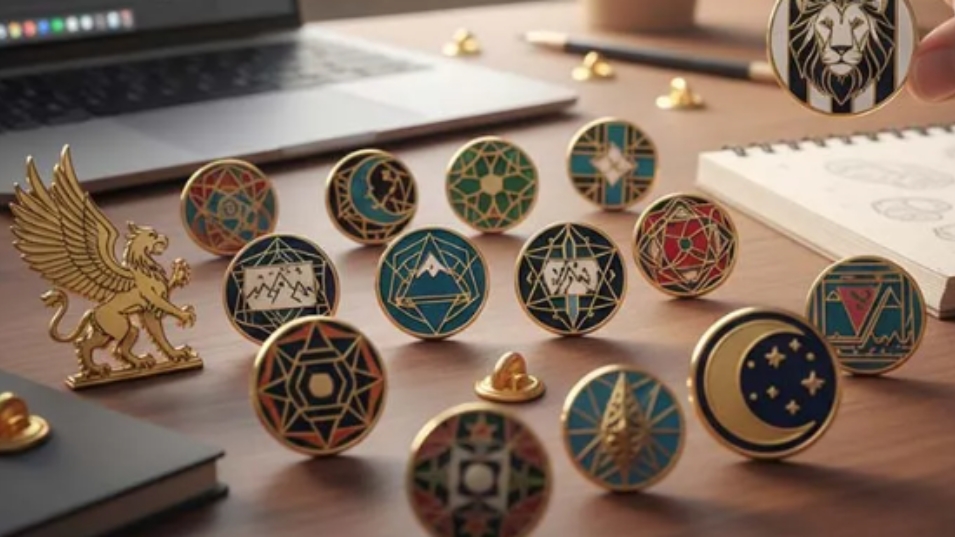
Hard Enamel vs Soft Enamel: Full Feature Comparison Table
To help you quickly and intuitively compare the core advantages and applicable scenarios of the two enamel crafts, we have sorted out a comprehensive feature comparison table covering texture, color, durability, cost, cycle, and applicable scenarios, providing an authoritative reference for your bulk customization decisions.
Comparison Dimension | Soft Enamel Challenge Coins | Hard Enamel Challenge Coins |
Surface Texture | Concave-convex 3D layered texture, raised metal lines, distinct tactile layering | Completely flat porcelain-like surface, flush enamel & metal lines, smooth jewelry-grade finish |
Color Performance | High saturation, vivid and lively colors, supports gradient & complex multi-color designs | Pure, uniform, stable solid colors, no color difference, weak gradient adaptation |
Durability & Wear Resistance | Good for daily use, slight wear may appear after long-term friction | Excellent scratch & oxidation resistance, decades-long color retention, permanent preservation |
Production Process | Low-temperature curing, one-time color filling, simple process, low defect rate | Multiple high-temperature firing, repeated color filling & manual polishing, rigorous process |
Production Lead Time | Short cycle, fast mass production, supports urgent bulk orders | Long cycle, fine processing, suitable for non-urgent high-quality customized projects |
Custom Cost | Cost-effective, low unit price, friendly for large-batch wholesale | Higher unit price, premium positioning, high cost performance for small-batch high-end customization |
Design Adaptability | Strong tolerance, suitable for complex patterns, cartoons, gradients, and detailed designs | Best for minimalist, solemn, solid-color designs with neat lines and simple layering |
Core Application Scenarios | Sports team souvenirs, corporate promotional gifts, event giveaways, retail collectibles, large-batch team awards | Military honor coins, veteran commemorative coins, corporate high-end business gifts, official ceremonial awards, collection-grade coins |
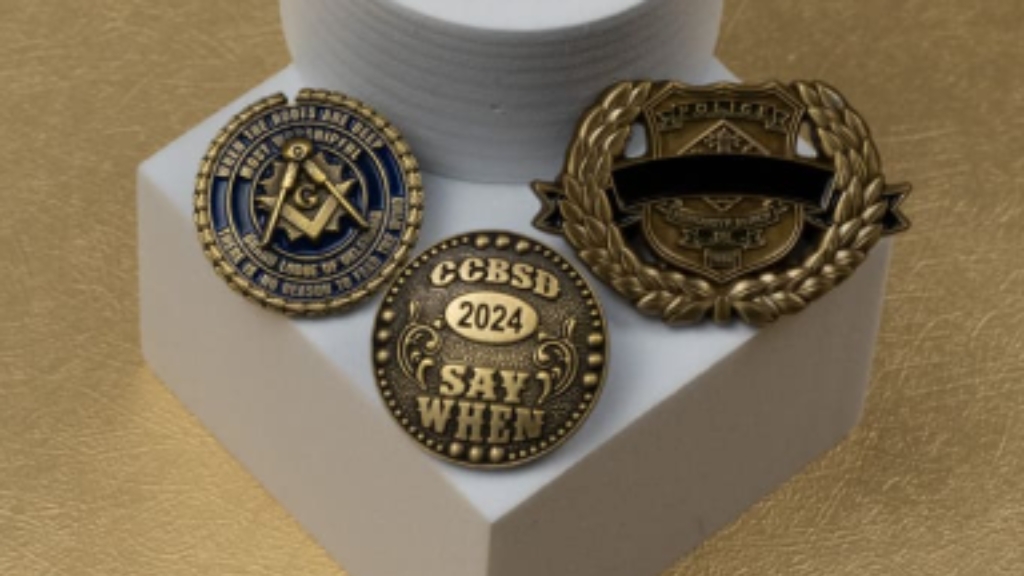
Pros & Cons of Soft Enamel Challenge Coins
Advantages
Rich and bright color performance, perfectly restoring complex creative designs and gradient color effects
Unique 3D concave-convex texture, strong tactile and visual layering, highly ornamental
Affordable pricing and high cost performance, ideal for large-volume wholesale bulk orders
Fast production speed, stable mass production quality, low batch color difference rate
High design flexibility, compatible with cartoon, trendy, creative, and personalized custom styles
Disadvantages
Relatively weaker surface hardness, prone to minor scratches after long-term high-frequency friction
Color durability is slightly inferior to hard enamel, with subtle color fading after long-term storage
The uneven surface is not suitable for ultra-high-end formal ceremonial and collection scenarios
Pros & Cons of Hard Enamel Challenge Coins
Advantages
Ultra-smooth porcelain flat surface, low-key luxurious texture, formal and solemn visual effect
Industry-leading durability, scratch-proof, wear-resistant, anti-oxidation, permanent color retention
Zero color difference and pure color tone, high-end and neat overall presentation
High collection and inheritance value, recognized as premium craft in the numismatic industry
Suitable for long-term display, collection, and high-standard honorary award scenarios
Disadvantages
Higher customization cost, not suitable for low-budget large-batch orders
Poor adaptability for complex gradient colors and ultra-fine layered patterns
Longer production cycle, unable to meet super urgent delivery demands
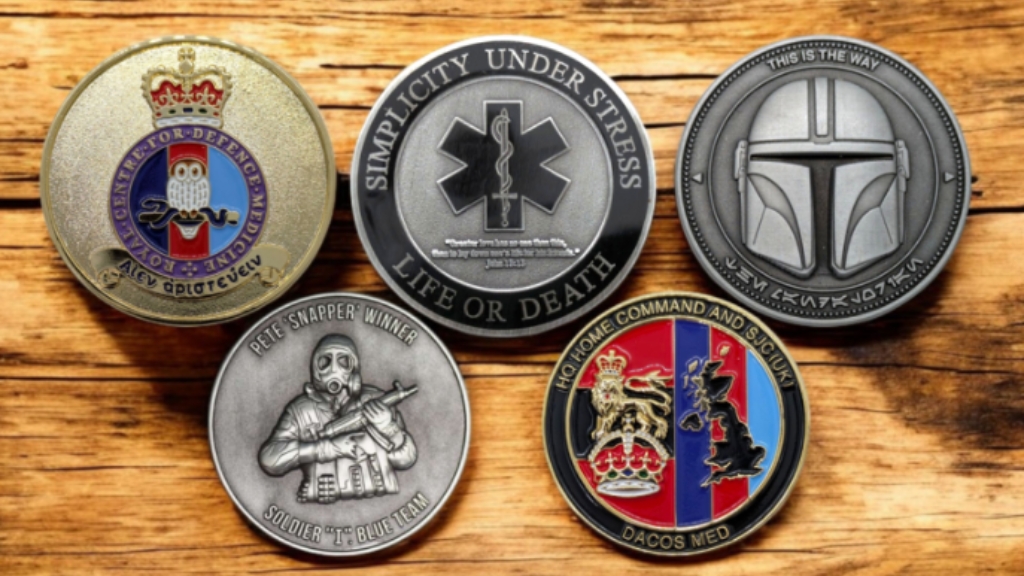
How to Choose: Hard Enamel or Soft Enamel for Your Project?
There is no absolute “better” between hard enamel and soft enamel — the best choice depends entirely on yourcustom purpose, budget, design style, and usage scenarios. We have summarized targeted selection suggestions for mainstream bulk customization needs to help you avoid wrong choices:
Choose Soft Enamel If: You need large-batch wholesale coins for events, promotions, and team souvenirs; your design contains complex patterns, gradient colors, and trendy creative elements; you have a limited budget and pursue high cost performance; you need fast delivery for urgent projects.
Choose Hard Enamel If: You are customizing military honors, veteran tributes, official ceremonial awards, and high-end business gifts; you need coins for long-term collection and family inheritance; your design is minimalist, solemn, and dominated by solid colors; you pursue ultimate durability and premium product grade.
Bonus: Imitation Hard Enamel — The Perfect Middle Choice
For buyers who want the flat texture of hard enamel and the cost performance of soft enamel, modern manufacturing technology offers an optimal alternative: imitation hard enamel (flat soft enamel). This craft adopts soft enamel coloring technology and adds professional surface leveling and sealing treatment, presenting a flat surface similar to hard enamel. It retains the rich color advantages of soft enamel while avoiding high hard enamel costs, becoming the most popular transitional craft for mid-to-high-end bulk custom orders in 2026.
Hard enamel and soft enamel are two irreplaceable core crafts in the custom challenge coin industry, each with unique positioning and exclusive advantages. Soft enamel wins the market with rich creativity, cost performance, and diverse design adaptability, suitable for most daily customized bulk orders. Hard enamel dominates high-end collection and formal honor scenarios with its ultra-durable performance, premium flat texture, and permanent color stability.
Understanding the full differences between the two enamel crafts is the first step to creating high-quality custom challenge coins. By matching the right enamel process according to your design style, budget, and usage scenarios, you can maximize product value, avoid customization pitfalls, and create challenge coins that perfectly balance aesthetics, durability, and commemorative significance.