Table of Contents
Custom Halloween Challenge Coins & Lapel Pins: Design Ideas, Finishes and Manufacturing Guide
Add Your Heading Text Here
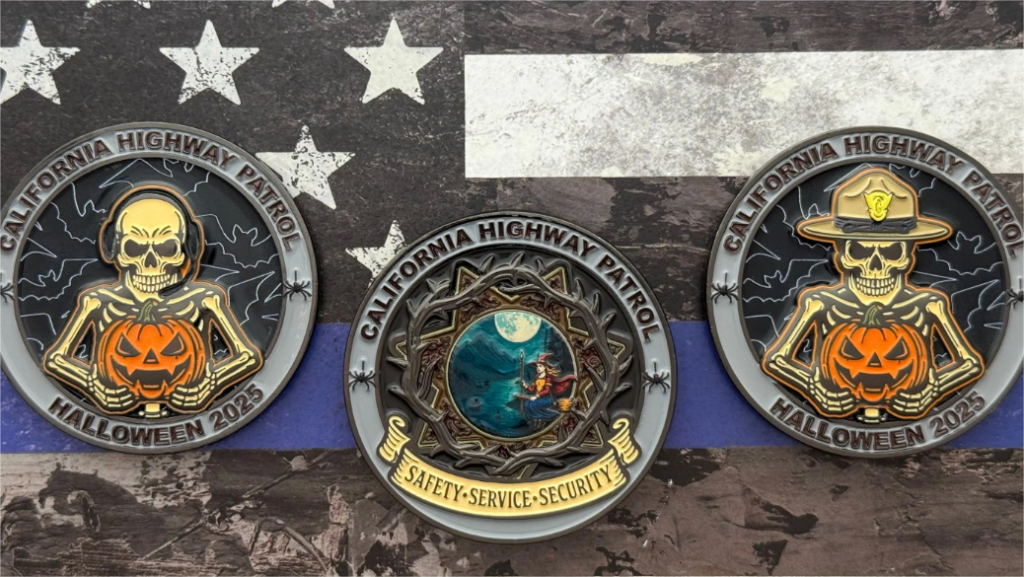
Halloween is full of symbols that are instantly recognizable: ghosts, black cats, bats, pumpkins, skeletons, haunted houses, witches, and crescent moons.
But creating a memorable Halloween coin or lapel pin takes more than putting one of these symbols on a piece of metal.
The right combination of artwork, relief, enamel, plating, size, and finish can completely change the character of a design. A black cat can look playful in soft enamel, mysterious in antique silver, or bold and contemporary with black nickel plating. A haunted house can remain relatively simple in 2D, or become much more dramatic with 3D relief.
For anyone planning a custom Halloween collection, the real question is not simply what to design, but how to manufacture the design so that the finished piece matches the idea.
Why Halloween Works So Well for Custom Coins and Pins
Halloween offers unusual freedom when it comes to visual design. A collection can be cute, gothic, vintage, mysterious, or deliberately dark without losing its connection to the holiday.
That makes challenge coins and lapel pins particularly useful for Halloween-themed collections. A coin can establish the main setting—a haunted mansion, cemetery, or mysterious emblem—while smaller pins introduce the characters and symbols within that world.
The same idea can also be developed across different years. One Halloween collection might feature a haunted house in 2026, a black cat in 2027, and a witch’s workshop in 2028 while keeping the same overall visual language.
The key is to give each piece a clear identity while making the collection feel connected.
Challenge Coins vs. Lapel Pins
Challenge coins and lapel pins can share the same artwork, but they are not interchangeable formats.
Feature | Challenge Coin | Lapel Pin |
Format | Two-sided metal piece | Compact wearable piece |
Design space | Front and back | Usually one main face |
Best for | Scenes, emblems, detailed concepts | Characters, icons, simple symbols |
Visual character | Substantial and commemorative | Compact and expressive |
Typical display | Desk, shelf, collection box | Jacket, bag, hat, pin board |
Design advantage | More room for storytelling | Strong visual impact at a small size |
A challenge coin has the advantage of two sides. The front can introduce the main Halloween scene, while the reverse can carry a date, motto, secondary image, or collection number.
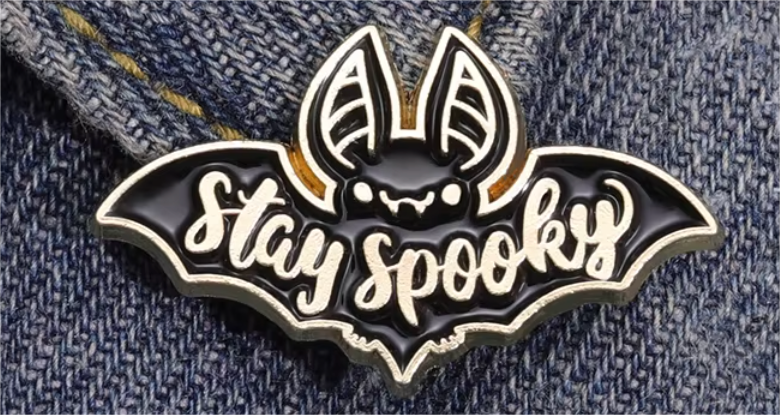
A lapel pin works best when the idea can be understood quickly. A ghost, black cat, bat, skull, or witch’s hat can become a complete design without needing a large amount of detail.
Using the two formats together can make a collection feel much richer than producing the same artwork in two different sizes.
Custom Halloween Manufacturing Techniques
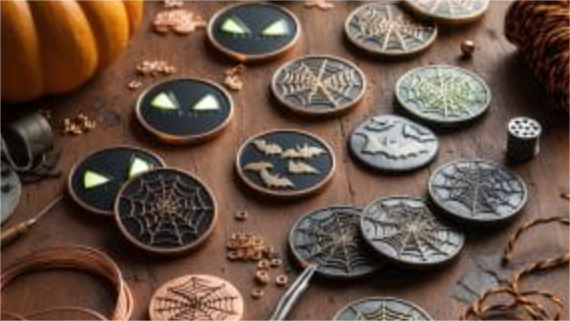
The manufacturing technique has a direct effect on how a Halloween design looks and feels. The most common options for this type of collection include Soft Enamel, Hard Enamel, Die Struck, 2D Relief, and 3D Relief.
Technique | Surface / Appearance | Good For |
Soft Enamel | Recessed color with raised metal lines and a textured feel | Colorful Halloween characters and bold graphics |
Hard Enamel | Smooth, polished surface with enamel flush to the metal | Premium, clean, detailed designs |
Die Struck | No enamel; design relies on raised and recessed metal | Vintage, classic, metallic designs |
2D Relief | Flat raised and recessed levels | Logos, lettering, icons, and simpler illustrations |
3D Relief | Sculpted, dimensional surface | Haunted houses, skulls, faces, characters, detailed scenes |
Soft Enamel is particularly useful when color is an important part of the Halloween design. The recessed enamel and raised metal outlines create a tactile surface that works well with ghosts, pumpkins, bats, and character-based artwork.
Hard Enamel creates a much smoother surface because the enamel is polished flush with the metal. It can give a Halloween coin or pin a cleaner, more refined appearance.
Die Struck designs use metal itself as the visual element rather than relying on enamel color. This works especially well with vintage Halloween emblems, lettering, skulls, and gothic designs.
For relief, 2D is generally better suited to flatter artwork and clear graphic shapes, while 3D relief can add depth to sculptural elements such as haunted buildings, skulls, or character faces.
Choosing the Right Metal and Finish
The base metal and surface finish can change the mood of exactly the same artwork.
For custom coins and pins, common base materials include options such as zinc alloy and brass, while the visible finish may be gold, silver, antique gold, antique silver, or black nickel. The base metal and plating should therefore be considered separately when planning a product specification.
Finish | Visual Character | Halloween Design Direction |
Antique Silver | Aged, darker, traditional | Gothic, vintage, haunted themes |
Antique Gold | Warm and aged | Vintage Halloween, classic emblems |
Black Nickel | Dark and contemporary | Horror, gothic, modern designs |
Gold | Bright and decorative | Premium or commemorative collections |
Silver / Nickel | Clean and bright | Modern, colorful designs |
Antique Silver is especially effective when the design depends on shadows and recessed details. The darker areas can emphasize relief and give a coin an older, more established appearance.
Antique Gold creates a warmer vintage effect and works naturally with old-fashioned lettering, haunted houses, keys, moons, and other traditional Halloween imagery.
Black Nickel takes the design in a darker direction. It can create strong contrast with bright enamel colors and is particularly suitable for gothic or horror-inspired collections.
The finish should therefore be treated as part of the artwork rather than something selected at the very end.
Choosing the Right Size and Relief
Size affects both appearance and practicality.
A small lapel pin needs a design that remains recognizable at a glance. If the artwork contains too many tiny lines or words, those details may become difficult to reproduce clearly.
For challenge coins, a larger format gives more room for lettering, borders, relief, and secondary imagery. It also makes two-sided storytelling easier.
A useful way to think about size is to start with the artwork rather than forcing every design into the same dimensions.
Product | Design Consideration | Suitable Direction |
Small Lapel Pin | Strong silhouette, limited detail | Ghost, bat, black cat |
Medium Lapel Pin | Character + supporting details | Witch, skull, haunted window |
Standard Challenge Coin | Main image + lettering | Haunted house, emblem, scene |
Larger Challenge Coin | More complex composition | 3D relief, detailed collection centerpiece |
Relief should follow the artwork as well. A flat bat silhouette may not need 3D treatment, while a sculpted skull or haunted mansion can benefit from additional depth.
For 3D designs, the sculpted areas themselves create the dimensional effect, while enamel is generally more suitable for recessed 2D areas around them.
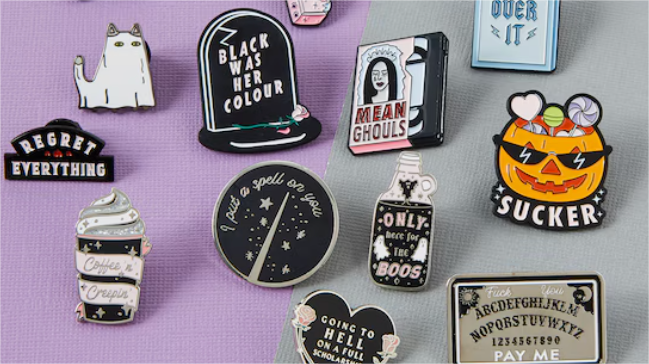
A Simple Halloween Coin and Pin Specification Guide
Before requesting a quote, it helps to prepare the basic specifications in advance.
Specification | Questions to Decide |
Product | Challenge coin, lapel pin, or both? |
Size | How large should the finished piece be? |
Material | Which base material fits the design and budget? |
Technique | Soft Enamel, Hard Enamel, Die Struck, 2D or 3D Relief? |
Finish | Antique Silver, Antique Gold, Black Nickel, Gold, Silver, etc.? |
Artwork | What appears on the front, back, or pin face? |
Quantity | How many pieces are required? |
Application | Collection, event, retail, award, or promotional use? |
Deadline | When must the finished products arrive? |
Having these decisions ready makes the quotation process much clearer. It also allows the manufacturer to recommend a production method based on the actual artwork instead of choosing a technique in isolation.
FAQ About Custom Halloween Challenge Coins and Lapel Pins
What is the difference between Soft Enamel and Hard Enamel?
Soft Enamel leaves the color slightly recessed below the raised metal lines, creating a textured surface. Hard Enamel is polished smooth so that the enamel and metal are much closer to the same surface level. The choice is mainly about the desired appearance, feel, and design style.
What is the difference between 2D and 3D Relief?
2D relief uses relatively flat raised and recessed levels and works well for logos, lettering, and graphic artwork. 3D relief adds sculpted depth and is better suited to designs that benefit from rounded or dimensional forms.
Which finish works well for gothic Halloween designs?
Antique Silver and Black Nickel are natural options for darker Halloween aesthetics. Antique Silver emphasizes recessed details and an aged appearance, while Black Nickel creates a darker, more contemporary contrast.
Can a challenge coin have different artwork on the front and back?
Yes. The two-sided format is one of the main advantages of a challenge coin. The front and reverse can carry related but different artwork, such as a haunted mansion on one side and a motto, date, or secondary emblem on the other.
Can coins and pins be designed as one collection?
Absolutely. A common approach is to use the challenge coin as the centerpiece and create several smaller pins around the same theme. Consistent typography, colors, finishes, or recurring symbols can make the pieces feel connected without making them identical.
How long does custom production take?
Production time varies according to quantity, artwork complexity, tooling, finishing, sampling, and shipping. Because custom orders involve multiple stages, it is safer to plan several weeks ahead rather than relying on a last-minute production schedule.
What should I prepare before requesting a quote?
At minimum, prepare your artwork or concept, preferred product, approximate size, quantity, desired technique, finish, and delivery deadline. If you are unsure between options such as Soft Enamel, Hard Enamel, Die Struck, 2D, or 3D Relief, the artwork can be reviewed first to determine which production method fits it best.
Create a Halloween Collection That Feels Designed, Not Generic
A custom Halloween coin or lapel pin does not have to use complicated artwork to stand out.
Sometimes the strongest design is a simple black cat with the right finish. Sometimes it is an antique silver haunted house with deep relief. A small ghost pin can work on its own, while a larger challenge coin can provide the story that connects an entire collection.
The important part is making the design, manufacturing technique, finish, and intended use work together.
Choose the Halloween world first. Then decide which pieces belong in it, how much detail each piece needs, and which combination of enamel, relief, metal, and finish will bring that idea to life.
That is what turns a seasonal Halloween product into something people actually want to keep.