
Table of Contents
Chief's Last Coin: Designing Retirement Tokens for Fire, Police, and EMS Legends
There is a moment every chief dreads and quietly looks forward to in equal measure. The moment the bag comes down from the locker, the name tape gets cut off, the boots get polished one last time, and the family sits in the front row of a station house or a banquet hall. It is the end of a career, often 25, 30, even 35 years long, and the room is full of people who know the chief better than the chief’s own children do.
A plaque is fine. A shadow box is fine. But in the last 20 years, departments across the United States, Canada, the UK, and Australia have added one more ritual. They hand the chief a coin.
Not a coin to spend, but a coin that will sit on a desk or in a pocket for the next 30 years. The kind of coin that, when the grandkids ask what it means, the chief will hold up and tell a story about a fire that stayed quiet for years, a domestic call that ended in both handcuffs and a hug, a blizzard shift where the coffee was burnt and the patient still survived.
This is the chief’s last coin. And it is the hardest coin in public service to design.
If you are a department admin, a family member, a vendor, or a chief planning your own send-off, this guide is for you.
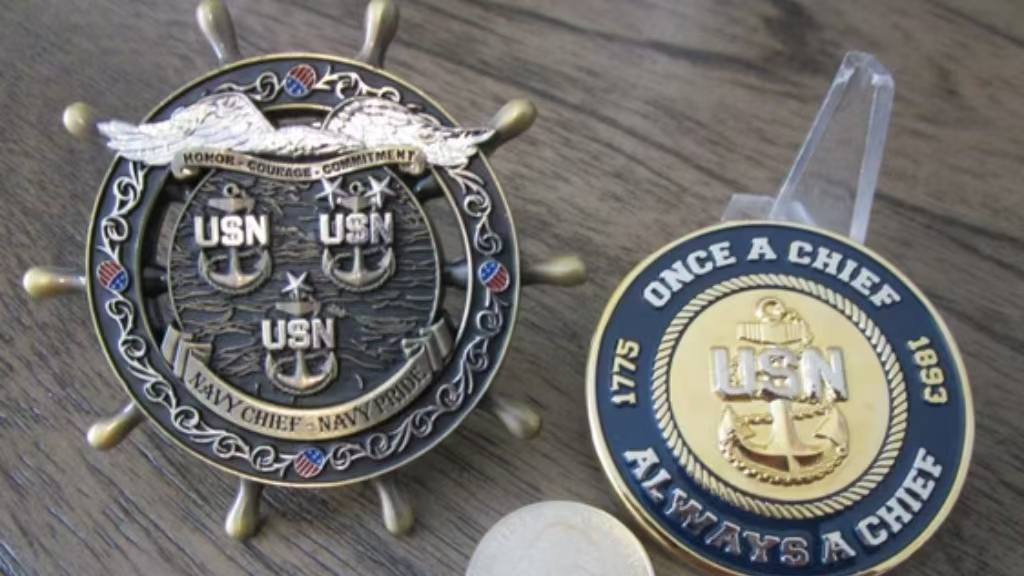
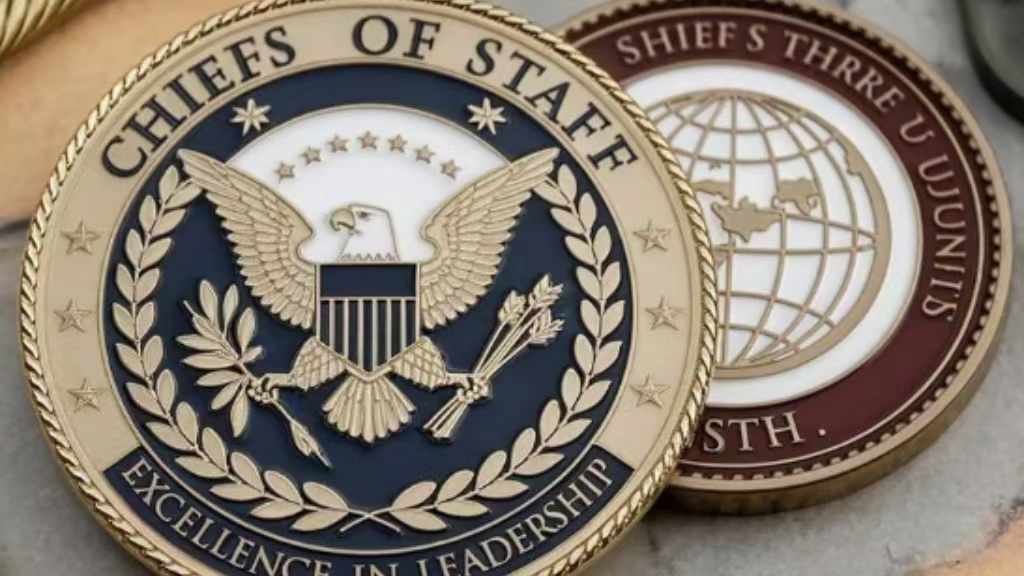
Why a retirement coin is not a unit coin
Most challenge coins are produced in runs of 100, 500, or 1,000. They are social objects: handed out, packed, tossed, collected. Their job is to spark a story in the moment.
A retirement coin is the opposite. It is usually produced in a run of one, maybe a small handful for a spouse, a mentor, or an adult child. It memorializes one specific human life in uniform. That single fact changes everything.
Dimension | Standard unit coin | Chief’s retirement coin |
Quantity per order | 100 – 1,000+ | 1 – 5 typical |
Audience | Unit members, sister agencies, media | One retiree plus immediate family |
Theme | Unit history, badge, motto | Personal career timeline, signature calls, personal motto |
Craft | Soft or hard enamel common | High-relief, dual plating, UV print, presentation box |
Packaging | Polybag or foam wrap | Hardwood or velvet box, certificate, brass plate |
Expected lifespan | 5 – 10 years of daily carry | 30+ years on a desk or in a will |
Wholesale unit price | 3 – 5 | 8 – 15 |
Typical retail price | 12 – 25 | 25 – 60 |
Wholesale retirement coins typically run 8 to 15 per unit, with retail pricing reaching 25 to 60 depending on the complexity and box. That is roughly 3 to 4 times the wholesale price of a standard department coin: the mold, design, and packaging are amortized across a tiny run.
Corporate challenge coin programs grew roughly 34% between 2023 and 2025 according to PPAI industry data, and first-responder departments are following the same curve — but at higher per-unit spend and lower volume per order. “Milestone coins” for career endings, leadership transitions, and key anniversaries are also expanding across public-sector gifting guides.
The anatomy of a chief's last coin
Think of a retirement coin as having three rings of meaning. The center is the person. The middle ring is the career. The outer ring is the family and the people who carried the chief through it.
Center: the person
At the literal center of the obverse side, you almost always want three things.
First, the chief’s full name, rank, and badge or shield number. Not the agency name — that goes on the outer ring. The name belongs at the center, because the entire coin is about this one human.
Second, the years of service. Most chiefs retire between 25 and 35 years. A 30-year fire chief is not unusual. A 35-year police chief is a small-town legend. The dates are usually rendered as “1991 – 2026” or “1990 – 2025” depending on when the ceremony lands.
Third, a personal symbol. This is where most coin projects go wrong, because vendors tend to default to a generic eagle, Maltese cross, or five-point star. The personal symbol is whatever the chief has quietly cared about for 30 years. For one police chief in Ohio, it was a chess king — he had taught cadets to think three moves ahead on every domestic call. For a fire chief in British Columbia, it was a coffee cup with steam curling into a pine tree, because the joke at the station was that he could not start a fire without a cup in his hand. The personal symbol is what turns the coin from a logo into a life.
Middle ring: the career
Around the center, you tell the story of the career. Put the agency seal, rank insignia, and badge number here. On the reverse, list three to six milestone events: the calls, fires, and incidents the chief has talked about for decades.
Role | Typical milestone events to engrave |
Fire chief | Major structure fire with year; line-of-duty death response; wildland deployment; accreditation or training award |
Police chief | Landmark case or operation; community program launch; crisis response such as riot, hurricane, or mass-casualty event |
EMS director | High-casualty incident like a bus crash or nightclub fire; notable cardiac-arrest save; system-wide protocol change |
Three to five events is plenty. Anything more and the coin becomes a print piece, not a coin.
Outer ring: the family
This is the most overlooked ring. Family members will sometimes see the coin before they ever see the chief wearing it. They will hold it. They will read the edge. They will notice whether the spouse’s name is on the coin.
If the chief consents, including the spouse’s name, the wedding date, or a short line such as “None of this without you” makes the coin into a marriage keepsake, not just a career keepsake. The same applies to children, mentors, and even the station dog if the chief had one for 12 years.
The most common mistake vendors make here is leaving the outer ring blank or stuffing it with stock decoration. The outer ring is where the chief’s humanity lives.
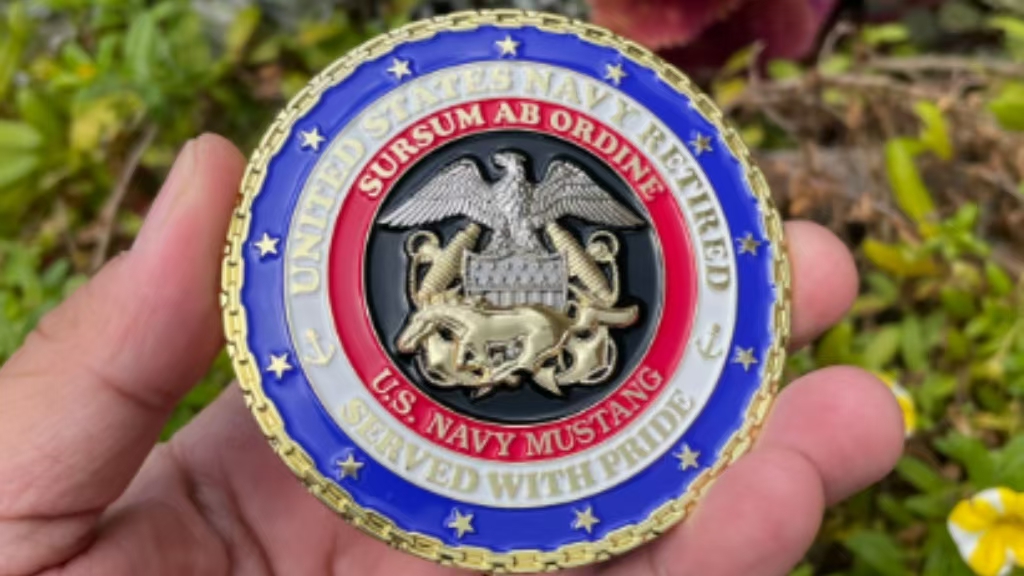
The craft upgrades that are worth paying for
Because the run is small, you can afford to push the craft harder than for a unit coin. Four upgrades worth the money:
- High-relief 3D sculpting.The badge, seal, or vehicle should be raised at least 1.5 mm above the field. High relief makes the coin feel like a medal, not a souvenir.
- Dual-tone plating.Polished gold center, antique silver outer ring is the classic retirement combination. Antique copper for fire, polished silver for EMS, and a thin blue line accent in nickel for police are common variations.
- Edge engraving.The cheapest upgrade with the biggest payoff. A line like “Still here. Still serving. Just differently.” turns the coin into a pocket piece the chief can carry without looking at it.
- Presentation box.A velvet or hardwood box with felt lining, the chief’s name on a brass plate, and a slot for the coin and perhaps a folded flag or service pin. Packaging alone can lift perceived coin value by roughly 40% in wholesale surveys.
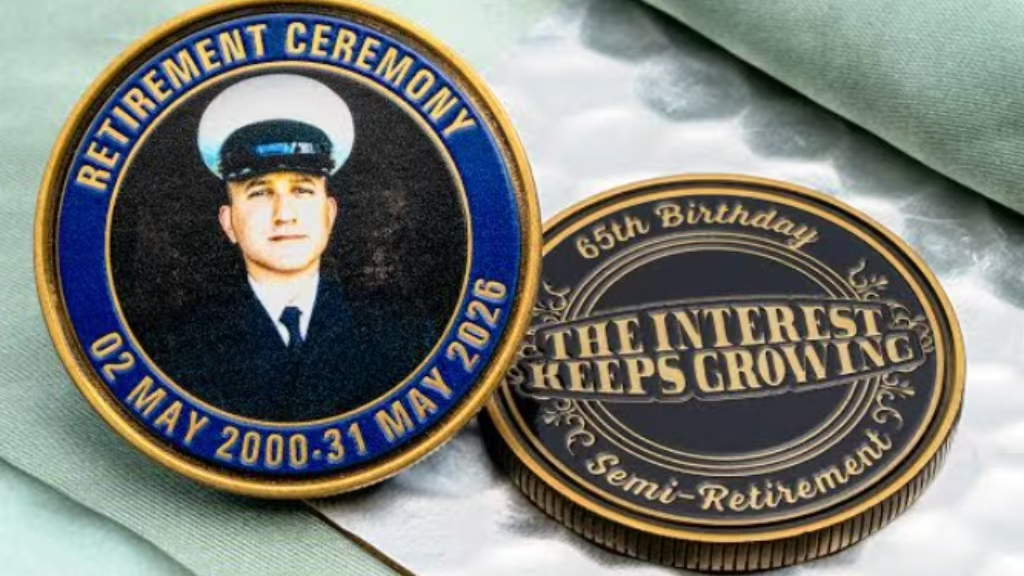
Optional upgrades: glow-in-the-dark enamel on a helmet cross or EMS lantern; a spinner insert; a hidden bottle opener (popular with fire chiefs); or a UV-printed portrait for the obverse.
Five mistakes that ruin a retirement coin
These come up over and over, and the coin is a one-time order. There is no second run.
Mistake 1: Approving on screen only. Retirement coins almost always look better in a mock-up than in metal. Insist on a pre-production sample. A 1.75-inch disc with 1.5 mm relief behaves very differently from a JPEG.
Mistake 2: Leaving family out of the loop. This coin will outlive the chief. If the spouse would be hurt by an inside joke, leave it out. If a line of recognition would mean something, put it in.
Mistake 3: Putting too much text on the obverse. More than 35 words on a 1.75-inch coin is unreadable. Push long text to the reverse or to an accompanying certificate.
Mistake 4: Using a generic “thank you for your service” template. A 30-year career deserves its own words.
Mistake 5: Forgetting the proof. This is the most photographed coin in a chief’s life. It will appear on the department page, in the local paper, and in an obituary. Check every name and date twice. Typos on retirement coins are forever.
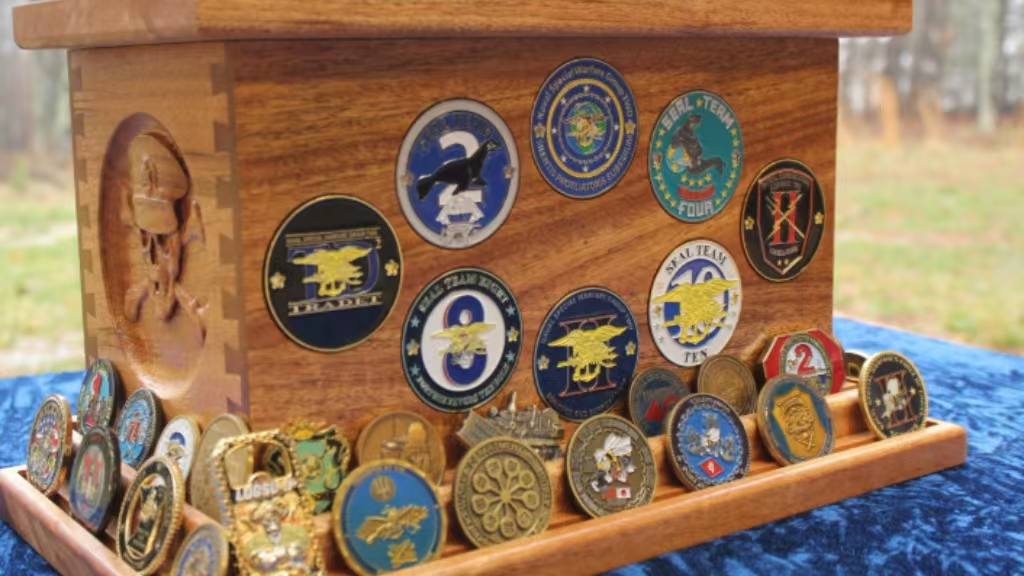
A brief template you can copy and send to a vendor
Send this checklist to the manufacturer and ask for a first proof. Vendors who know retirement coins will turn it around in 3 to 5 business days.
- Full name, final rank, badge/shield number.
- Hire date and retirement date.
- Agency seal or badge file (vector preferred, high-res PNG acceptable).
- Three to five milestone events with year.
- One personal symbol with a 1 to 2 sentence explanation.
- Spouse name and wedding date, if desired.
- Personal motto or short quote (max 12 words).
- Metal: zinc alloy, brass, or copper.
- Size: 1.75″ (standard), 2.0″ (premium), 2.5″ (medal).
- Plating: polished/ antique gold or silver, antique copper, black nickel, or dual-tone.
- Edge: smooth, rope, reeded, diamond cut, or engraved.
- Presentation: velvet pouch, velour box, or hardwood box with brass plate.
- Quantity: 1 for the chief, plus 1 to 4 keepsakes.
- Hard deadline: ceremony date plus 4 weeks.
- Budget per coin.
Timing and rush options
For a standard 1.75-inch dual-tone coin with a velvet box, allow 4 to 5 weeks from approved artwork to delivery. For a 2.0 or 2.5 inch high-relief coin with custom engraving, hardwood box, and UV-printed portrait, allow 6 to 8 weeks.
Most reputable manufacturers offer rush production in 7 to 10 business days at a 20% to 30% premium. For a chief’s retirement, plan the rush. The chief only retires once.
How departments budget for retirement coins in 2026
Set a target per-coin spend and work backward:
Budget tier | Per-coin spend (wholesale) | What you get |
Standard | 8 – 12 | 1.75″ dual-tone, soft enamel, velvet pouch, 4-week lead time |
Premium | 15 – 25 | 2.0″ high-relief, dual plating, edge engraving, velvet box with brass plate |
Heirloom | 30 – 45 | 2.0 – 2.25″ high-relief, UV portrait, hardwood box, certificate, gold or rose-gold accent |
A typical mid-size department will spend 300 to 1,200 on a full retirement coin package. The cost is small compared to a plaque or shadow box — and it lasts longer than both.