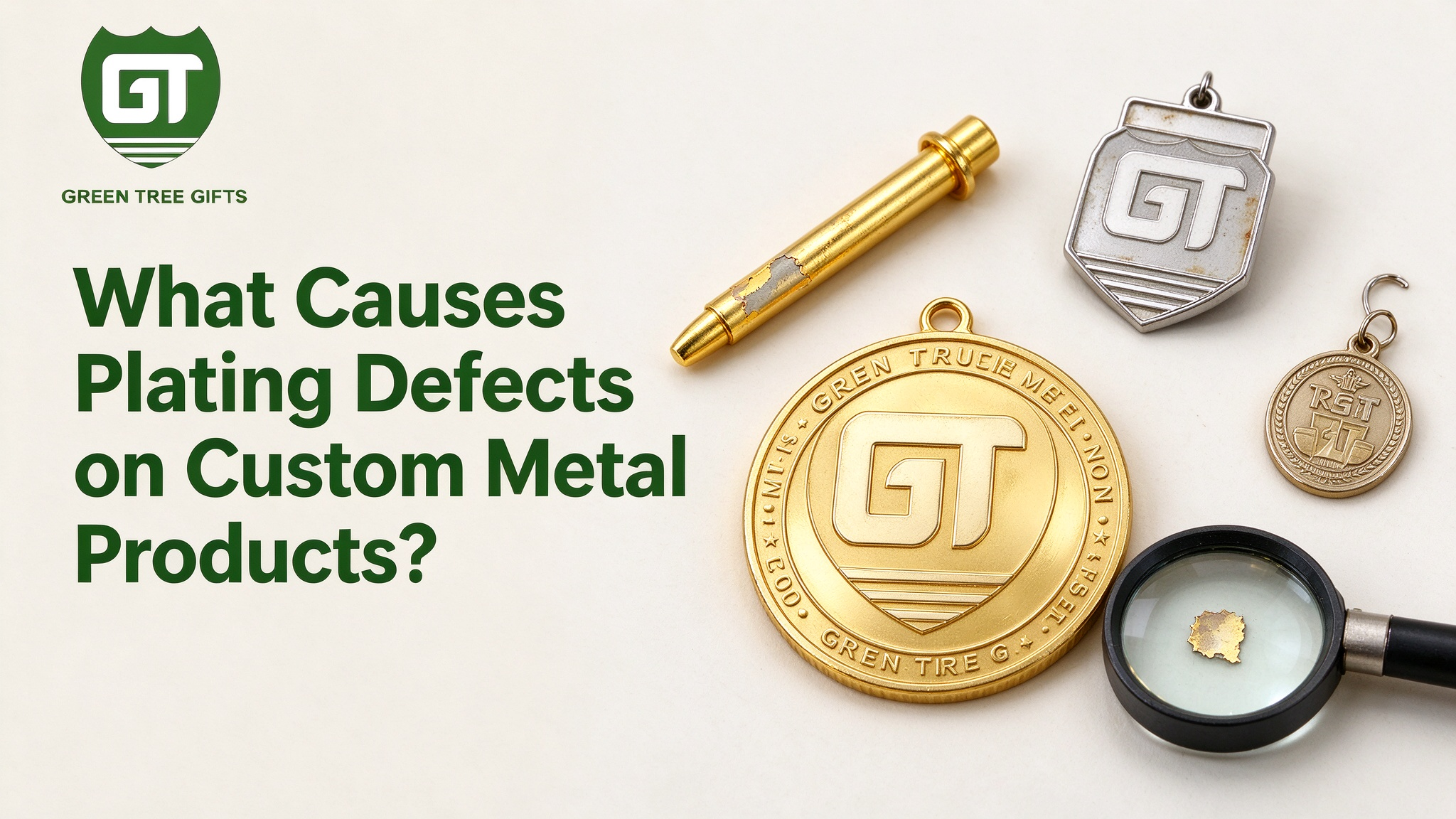
Plating defects on custom metal products are often caused by poor surface preparation, contaminated plating solutions, incorrect production parameters, or inadequate quality control. These problems can lead to uneven colors, rough surfaces, peeling, stains, and inconsistent finishes.
For custom challenge coins, lapel pins, medals, badges, and other metal products, understanding the causes of plating defects helps buyers evaluate product quality and communicate requirements with manufacturers.
Poor Surface Preparation
Surface preparation is one of the most important steps before electroplating. Oil, dust, oxidation, and other contaminants can prevent the plating layer from bonding properly with the base metal.
Common results include:
- Peeling or flaking plating
- Uneven metallic color
- Small spots or stains
- Poor coating adhesion
Cleaning and pretreatment should be completed carefully before the plating process begins.
Incorrect Plating Conditions
Electroplating requires controlled production conditions. Variations in current density, temperature, plating time, or solution composition can affect coating quality.
| Production Issue | Possible Defect |
|---|---|
| Incorrect current density | Uneven or rough coating |
| Unstable bath temperature | Inconsistent plating results |
| Poor solution composition | Discoloration or weak coating |
| Insufficient plating time | Thin or uneven coating |
| Excessive plating conditions | Rough or burnt areas |
Maintaining stable process parameters helps improve plating consistency.
Contaminated Plating Solutions
Plating solutions can become contaminated during production. Impurities, accumulated residues, or incorrect chemical balance may affect how metal deposits on the product surface.
Possible defects include rough textures, dark spots, discoloration, and inconsistent coating thickness.
Regular bath maintenance and solution monitoring are important for maintaining stable results.
Poor Rinsing and Post-Treatment
After electroplating, products need appropriate rinsing and drying. If chemical residues remain on the surface, they may cause stains, watermarks, or discoloration.
Handling also matters. Contact with dirty gloves, tools, or unsuitable packaging can leave fingerprints and scratches on finished products.
Proper rinsing, drying, handling, and packaging help protect the plated surface.
How Can Buyers Identify Plating Problems?
Before approving a bulk order, buyers should inspect the following:
- Color consistency: Check whether plating colors are uniform across the product and batch.
- Surface appearance: Look for scratches, stains, dark spots, and rough areas.
- Coating adhesion: Check for visible peeling or flaking.
- Design details: Inspect raised edges, recessed areas, and fine lettering.
- Sample consistency: Compare bulk production with the approved physical sample.
For products requiring specific durability standards, buyers can also discuss suitable coating thickness measurements or adhesion tests with the manufacturer.
FAQs
Why does plating peel off custom metal products?
Peeling is often related to inadequate surface cleaning, poor pretreatment, or insufficient adhesion between the plating layer and base material.
Why do some plated products have uneven colors?
Uneven colors may result from inconsistent surface preparation, unstable plating conditions, or differences in coating thickness.
Can plating defects be repaired?
Some surface defects can be reworked, depending on their type and severity. However, products with serious adhesion or coating problems may require replating or replacement.