
Custom Enamel Pins for Employee Recognition:
Service Awards, Milestones, and Team Achievements
Employee recognition is an important part of building a positive workplace culture. Companies use different ways to recognize employees for their contributions, from service anniversary gifts and performance awards to professional development milestones and team achievements.
Custom enamel pins offer a compact and practical way to make these moments memorable. They can display a company logo, an achievement symbol, a service year, or a specific department identity. Unlike certificates that are usually stored away, lapel pins can be worn on uniforms, jackets, lanyards, or bags, allowing employees to carry a visible reminder of their achievements.
For businesses planning an employee recognition program, custom enamel pins can be designed as individual awards or as part of a consistent series. The following guide explores their common applications, design options, manufacturing considerations, and ordering requirements.
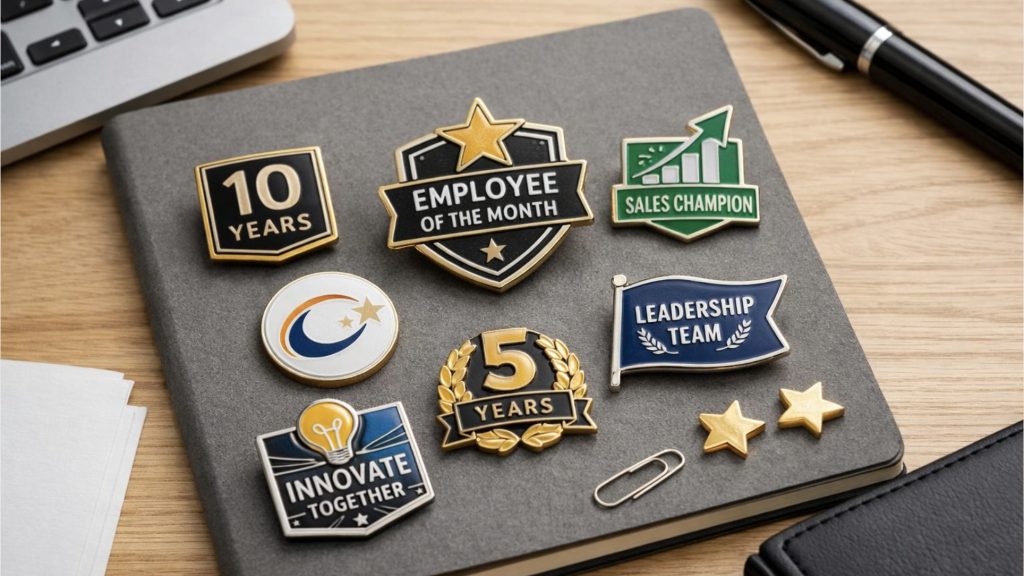
Why Companies Use Enamel Pins for Employee Recognition
Employee recognition pins provide a physical symbol of appreciation. They are small enough for regular use but can be customized with details that make each award meaningful.
Compared with general promotional merchandise, recognition pins are usually connected to a specific achievement, milestone, or organizational role. A pin marking five years of service, for example, communicates something different from one awarded for completing a professional training program.
Companies may use them for several purposes:
Visible recognition: Employees can wear their pins at work, company events, or professional gatherings.
Milestone commemoration: A pin can mark an employment anniversary, promotion, or completed achievement.
Organizational identity: Consistent designs help reinforce company branding and team belonging.
Long-term collections: Different designs can be issued over time, encouraging employees to collect pins as they progress through an organization.
The value of a recognition pin comes not only from its appearance but also from the meaning attached to it. A thoughtful design and a clearly defined award program can make a small metal item feel like a meaningful keepsake.
Common Employee Recognition Pin Programs
Designing Pins for Different Recognition Levels
The design of an employee recognition pin should reflect the reason it is being awarded. Different programs may require different symbols, wording, colors, and levels of distinction.
| Recognition Program | Typical Pin Details | Purpose |
|---|---|---|
| Years of Service Awards | Numbers such as 1, 5, 10, or 20; anniversary dates | Recognize employee loyalty and long-term service |
| Employee Achievement Awards | Stars, trophies, company symbols, award titles | Celebrate outstanding performance or contributions |
| Training and Certification | Skill-related icons, qualification names, completion years | Mark completed training or professional development |
| Safety Milestones | Safety symbols, dates, milestone numbers | Recognize workplace safety achievements |
| Team and Leadership Recognition | Department logos, role titles, leadership symbols | Identify team contributions and organizational roles |
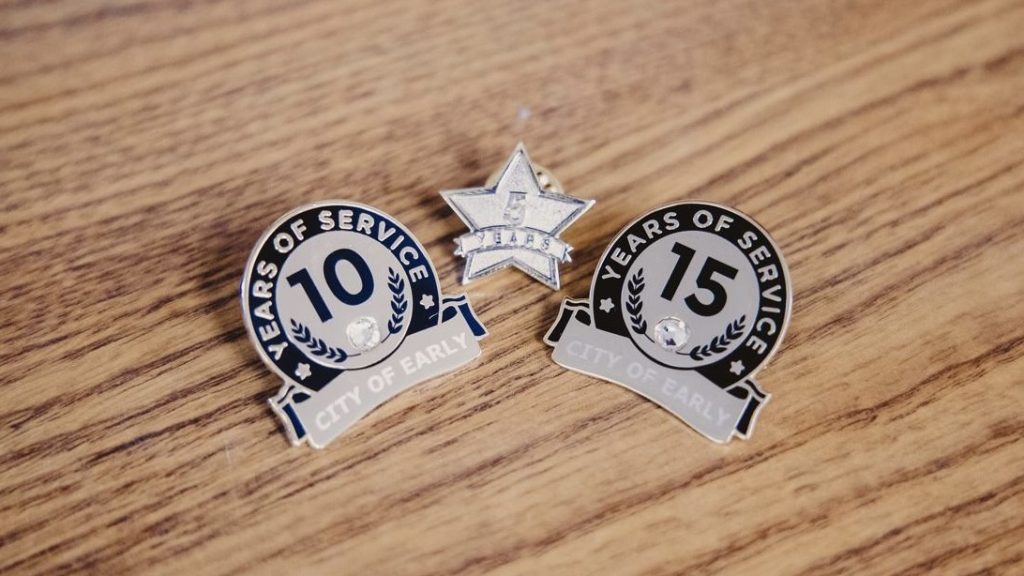
Years of service pins are particularly suitable for a continuing recognition program. A company can create a consistent design and change the number, color, or small details for each service milestone. Employees receiving a 5-year pin and a 10-year pin can immediately recognize that they belong to the same award series.
Achievement pins can be designed around specific company values or performance goals. For example, a star may represent outstanding performance, while a custom symbol can be used for innovation, customer service, or project completion.
Training and certification pins can mark the completion of internal training or professional development programs. They can also help distinguish employees who have completed particular courses or qualifications.
For safety recognition, pins may commemorate a team reaching a safety milestone or completing a designated period without a recorded incident. The wording and award criteria should match the company’s actual program.
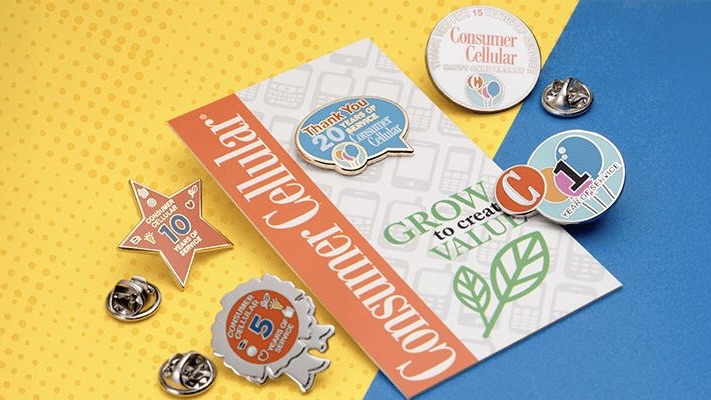
When a company plans to issue recognition pins regularly, it is useful to establish a consistent visual system before producing individual designs.
A common approach is to retain the same basic logo, shape, and border while changing selected elements to represent different award levels.
For example:
| Award Level | Possible Design Elements |
|---|---|
| 1-Year Service | Company logo with a small “1 Year” marking |
| 5-Year Service | Updated number with a different enamel color |
| 10-Year Service | Additional border detail or anniversary symbol |
| 20-Year Service | Distinctive metallic finish or more elaborate design |
Color can also help distinguish different departments, award categories, or achievement levels. However, too many colors and visual elements can make a small pin difficult to read.
A strong design should prioritize the most important information:
Company logo or organizational symbol
Award name or service milestone
Year or number, when relevant
A simple graphic that communicates the achievement
Small lettering deserves particular attention. If the pin is only around one inch wide, long award titles may not remain clear. Short wording, simplified symbols, and appropriate letter spacing generally work better than trying to fit every detail into a limited area.
For a multi-year program, companies should keep the original artwork and production specifications. This makes future additions easier and helps maintain consistency across different production batches.
Choosing the Right Enamel Pin Style
The manufacturing method influences the appearance, surface texture, and level of detail of an enamel pin. The most suitable option depends on the artwork, desired finish, and project requirements.
| Pin Type | Main Characteristics | Suitable Applications |
|---|---|---|
| Soft Enamel Pins | Recessed colored areas and raised metal outlines; textured surface | General employee awards and colorful company designs |
| Hard Enamel Pins | Smooth, polished surface with enamel filled to the level of the metal borders | Premium recognition gifts and anniversary awards |
| Die-Struck Metal Pins | Raised and recessed metal details without enamel color filling | Classic, understated, or metallic award designs |
| Printed Metal Pins | Printed graphics on a metal surface | Designs with gradients, photographs, or complex color details |
Soft enamel pins are a versatile option for designs with clearly separated colors and visible metal outlines. The recessed enamel areas create a textured appearance, making the different sections easy to distinguish.
Hard enamel pins have a smoother surface. They are often considered for recognition gifts where a polished and refined appearance is preferred.
Die-struck pins rely on raised and recessed metal details rather than filled enamel colors. They can work well for simple logos, text, and traditional award designs.
Printed pins may be considered when the artwork contains gradients or details that are difficult to reproduce through traditional enamel filling.
There is no single best option for every employee recognition program. Companies should compare the artwork, intended appearance, budget, and quantity before choosing a production method.
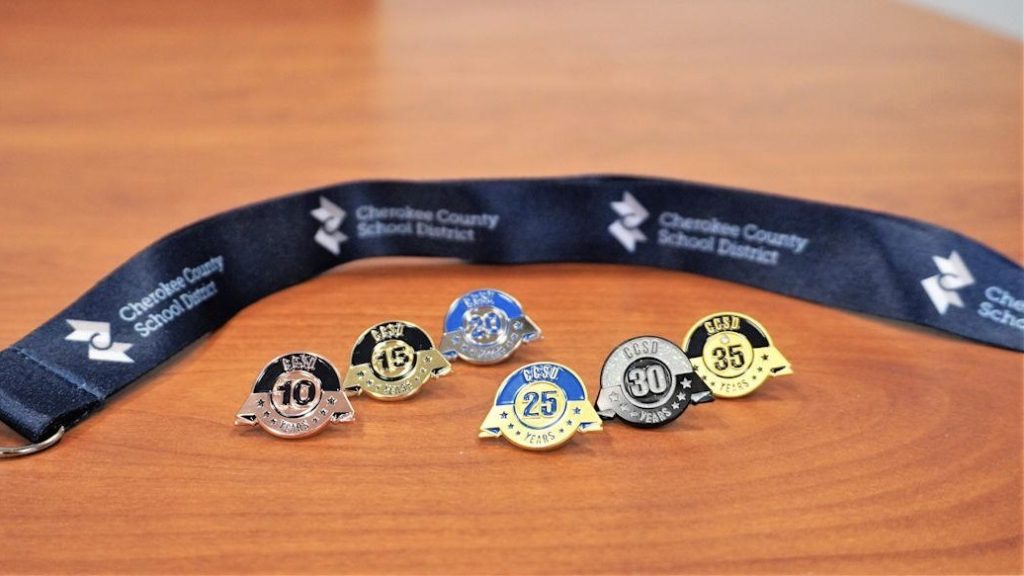
Size, Plating, Backing, and Packaging
Beyond the artwork and enamel style, several product specifications influence how a recognition pin looks and feels.
Size and shape
Small pins are convenient for everyday wear, while slightly larger designs provide more room for numbers, lettering, and detailed symbols. Common shapes include circles, shields, rectangles, stars, and custom outlines based on a company logo.
The final size should be considered during artwork preparation. Fine lettering and narrow spaces may need simplification to remain visible after production.
Metal plating
The plating color affects the overall appearance of the pin and the contrast between metal outlines and enamel colors.
| Plating Option | Appearance | Common Design Use |
|---|---|---|
| Gold | Warm, bright metallic tone | Anniversary and achievement awards |
| Silver | Clean, neutral metallic tone | Corporate and general recognition pins |
| Nickel | Bright silver-like finish | Simple and modern designs |
| Black Nickel | Dark metallic appearance | Strong contrast with lighter enamel colors |
| Antique Gold or Silver | Darkened recessed areas | Designs with a traditional or textured look |
Backing options
The backing should match how employees will wear or display the pin.
Butterfly clutch: A common option for standard lapel pins.
Rubber clutch: Provides a soft backing and is often selected for everyday wear.
Magnetic backing: Allows attachment without making a hole in clothing, which can be useful for certain uniforms or garments.
Safety pin backing: Suitable for some larger or differently shaped badge designs.
Packaging
Individual packaging can make the pin feel more like an award than a general promotional item. Companies may choose individual poly bags, backing cards printed with the award name, or presentation boxes for special milestones.
For service anniversary programs, a small card stating the employee’s milestone or the recognition year can add context and make the award easier to present during a company ceremony.
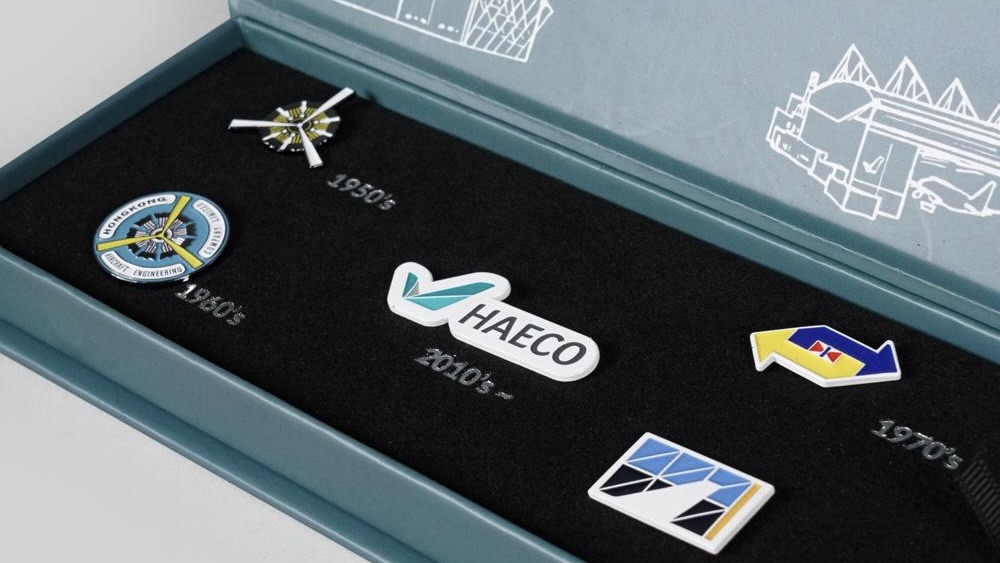
Building a Consistent Recognition Pin Series
A recognition program may continue for several years, so the design should be planned with future production in mind.
Instead of creating a completely different pin for every award, companies can establish a shared visual identity. The company logo, outer shape, border, and basic color palette can remain consistent, while numbers, symbols, or selected colors change to indicate different milestones.
This approach offers several advantages:
Employees can recognize the pins as part of the same program.
New award levels can be added without redesigning the entire series.
Different departments can use coordinated designs.
Repeat orders can follow established artwork and specifications.
Before production, it is helpful to prepare a simple design reference that records the approved dimensions, metal plating, enamel colors, backing type, and artwork versions.
For companies ordering pins across multiple locations or departments, this reference can also help maintain consistency when new batches are required.
Custom Enamel Pin Production and Quality Checks
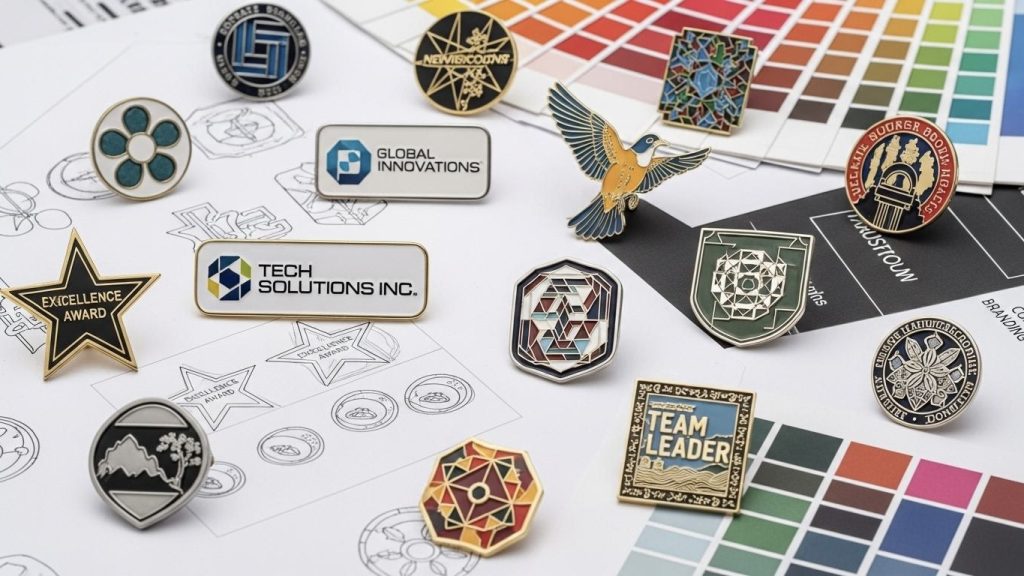
Custom enamel pin production begins with artwork preparation. Buyers usually provide a company logo, reference image, award wording, preferred dimensions, and other design requirements.
The manufacturer then reviews the artwork and prepares a production design. During this stage, small text, narrow lines, and complicated color sections may need adjustments to suit the selected manufacturing method.
After artwork approval, the production process generally includes several stages:
Artwork and design confirmation: Confirm the pin’s shape, size, wording, colors, and metal details.
Tooling or mold preparation: Prepare the required tooling according to the selected production method.
Metal forming: Create the pin body through the appropriate stamping, striking, or other manufacturing process.
Polishing and plating: Refine the metal surface and apply the selected plating finish.
Enamel filling or printing: Add the specified colors or printed graphics.
Assembly and inspection: Attach the backing and check the finished pins against the approved specifications.
Quality checks should cover dimensions, surface finish, enamel color placement, metal outlines, lettering, and backing attachment. For repeat recognition programs, consistency between batches is also important.
Before mass production, buyers should review the digital proof or physical sample when available. This provides an opportunity to confirm that the design remains clear at its actual size and that the selected finish matches the intended appearance.
What Companies Should Prepare Before Ordering
Clear specifications help manufacturers evaluate a project and provide a more accurate quotation. Before requesting custom employee recognition pins, companies should prepare the following information:
| Information | What to Provide |
|---|---|
| Artwork | Company logo, design file, or reference image |
| Purpose | Service award, employee achievement, training, or team recognition |
| Quantity | Total quantity and, if applicable, the number required for each award level |
| Size and Shape | Approximate dimensions and preferred outline |
| Pin Style | Soft enamel, hard enamel, die-struck, or printed |
| Plating | Gold, silver, nickel, black nickel, or another finish |
| Backing | Butterfly clutch, rubber clutch, magnetic backing, or other option |
| Packaging | Individual bags, backing cards, or presentation boxes |
| Delivery Schedule | Required delivery date and shipping destination |
For a multi-level recognition program, it is particularly important to provide the quantity breakdown for each design. A company ordering 500 pins across five service milestones, for example, should specify the required quantity for each milestone rather than providing only the combined total.
Companies should also confirm whether the pins will be worn on everyday clothing, uniforms, or formal event attire. This information helps determine the most appropriate size, backing, and packaging.
Custom Enamel Pins for Meaningful Employee Recognition
Employee recognition does not always require a large award. A carefully designed enamel pin can represent years of service, an important achievement, a completed qualification, or a contribution to a team.
For businesses planning a recognition program, the key is to connect the design with the purpose of the award. Consistent artwork, suitable materials, clear details, and appropriate packaging all contribute to a product employees can keep and wear.
Green Tree Gifts is a China-based manufacturer specializing in custom challenge coins, lapel pins, medals, badges, patches, belt buckles and other metal promotional products. Companies planning custom employee recognition pins can provide their artwork, award categories, quantities, preferred finishes, and packaging requirements for a product review and quotation.
Explore our related products: Custom Challenge Coins | Custom Lapel Pins | Patches | Contact Us
Planning a custom employee recognition pin program? Request a custom quote.