
Table of Contents
The Honor Guard Coin: Restoring Pride in Funeral & Ceremonial Detail
Picture the scene. A cold morning at a cemetery. Rows of graves, a tent set up over the family, chairs filled with people in dark coats. And standing at the back, perfectly still, six people in dress uniforms and white gloves. They don’t speak. They barely seem to breathe. When the casket is carried to the grave, they move — all at once, precise as a machine — and fold the flag from the casket in thirteen silent folds. A rifle volley cracks the air. A bugle plays Taps. One of them kneels before the family, places the folded flag in the hands of a widow, and speaks the same words that have been spoken at military funerals for generations: “On behalf of a grateful nation…”
Those people in the white gloves are the Honor Guard. And here’s the strange thing: everything about their job is designed to make them invisible. The funeral belongs to the veteran being honored and the family grieving. The Honor Guard is there to serve the moment, not to be the moment. They stand so still that people forget they’re there. They train for hundreds of hours so that the ceremony looks effortless. And when it’s over, they pack up and drive to the next funeral, and nobody thinks to ask their names.
This article is about the people nobody sees — and the coin that finally says thank you to them.
Who Are the Honor Guard?
Honor Guard (also called the Ceremonial Detail, or Funeral Honors) is a special duty in the military, and increasingly in police and fire departments too. Members are chosen for one reason above all: composure. They must be able to stand perfectly still through wind, rain, heat, and crying families. They must be able to fold a flag with shaking-hand precision on the worst day of a stranger’s life.
The work is voluntary. Soldiers don’t get drafted into the Honor Guard — they apply, get selected, and then train relentlessly. The Army National Guard’s funeral honors program, which started in 2006 with just a handful of states, now runs in 52 of 54 states and territories and performs about 120,000 funeral missions a year — roughly 85% of the entire Army’s funeral workload. That’s more than 300 funerals a day, every day, performed by teams of a few dozen people per state.
The training is brutal by design. A new member’s first course is 40 hours of drill and ceremony — plus an eight-hour basics class and at least ten live funerals before they even qualify. To become a trainer who teaches others, it’s another 80-hour, two-week course where soldiers must score 100% on some sequences and be able to answer questions about military history while standing at attention for an hour. Air Force honor guard members train for 12 straight days, spend up to 60 hours a week on the job, and must memorize eight basic funeral sequences — each with up to 15 variations depending on the cemetery, the weather, and the size of the family.
Think about that. A typical corporate job gives people an employee handbook. The Honor Guard gives people a task where one wrong step, one trembling hand, is witnessed by a grieving widow and can never be redone. There is no retake. As one trainer put it: “That sound of Taps, the sound of the firing volleys, we can’t get those back. We have one chance to get it right.”
The Weight They Carry
Here’s a number that should stop you: 231,190. That’s how many funeral services one state — Missouri — has performed since its program started in 1999. They expect to do about 3,800 more this year. Individual members have performed 600, 800, even 1,000 funerals in their careers. One state’s coordinator said her team has not missed a single funeral in three years. Only a road closure or an accident could stop them. It’s called a “no-fail mission,” and they mean it literally.
There’s a quiet demographic story behind those numbers. The World War II generation is nearly gone — fewer than 0.5% of the 16.4 million Americans who served in WWII are still alive. The veterans of Korea and Vietnam are the ones filling cemeteries now, and the coming decade will see funeral honors demand rise before it falls. The Honor Guard doesn’t get to choose their workload; they go where the fallen are. On holidays, on weekends, on their personal days off. When the family can’t gather because of weather or illness, the mission waits — and then comes all at once. One coordinator described the “literal flood of missions” that followed pandemic restrictions lifting: dozens of funerals compressed into weeks.
And here’s what the families rarely see: many of these soldiers are doing double duty. They serve in their regular units, then put on the dress uniform and drive three hours to a rural cemetery, perform the ceremony, drive back, and report for duty the next morning. Wyoming’s honor guard members travel about 3,000 miles a month to perform an average of 20 services a month.
The emotional weight is real, too. “When you pass that flag off and you see the eyes of the next-of-kin… it’s tough to present that flag,” one Missouri program director said. “We’re soldiers. We do it. But it hurts.”
Why "Restoring Pride"?
So why would anyone in that job need a coin? Because of the invisibility problem.
The Honor Guard spends its entire service making other people look good — the deceased, the family, the unit, the nation. They stand behind the ceremony, never in front of it. There is no award ceremony for them at the end; the flag goes to the family, not to them. After a thousand funerals, a member might have nothing physical to show for it except the memory of a thousand folded flags.
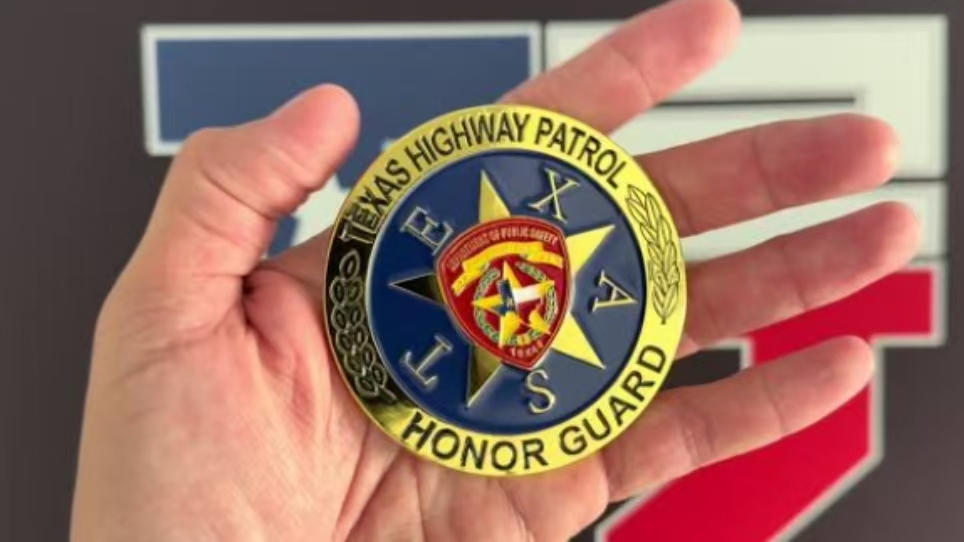
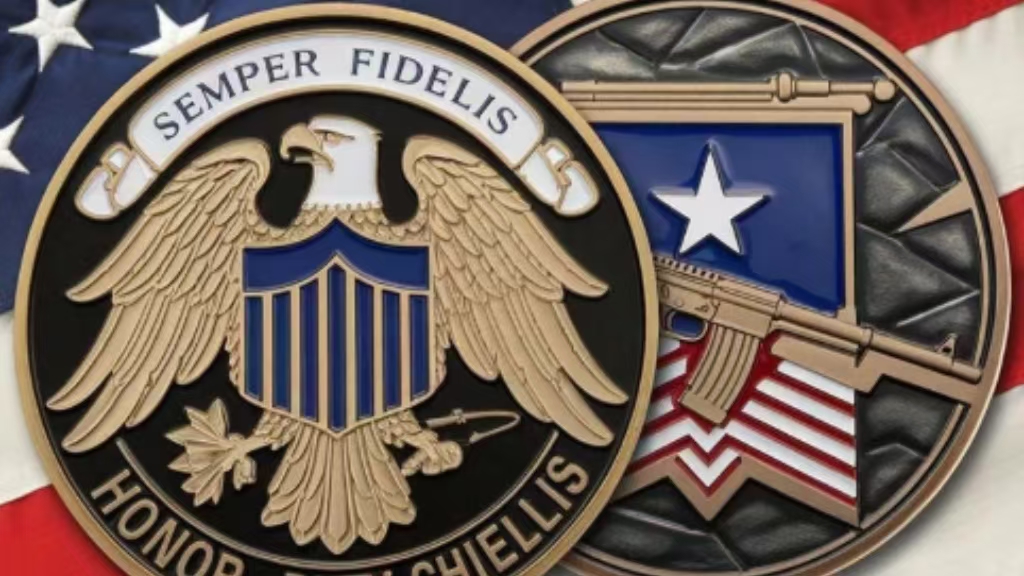
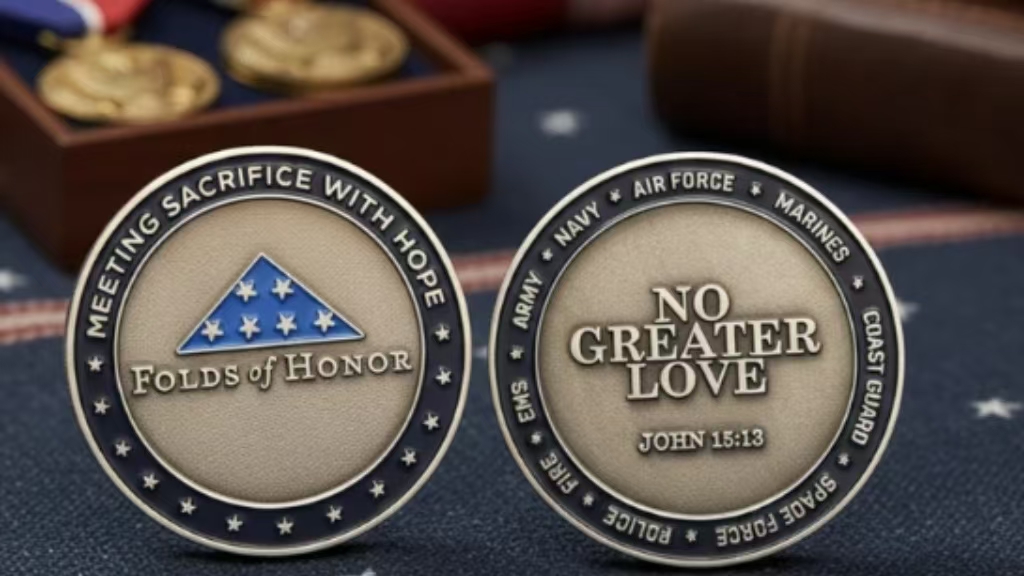
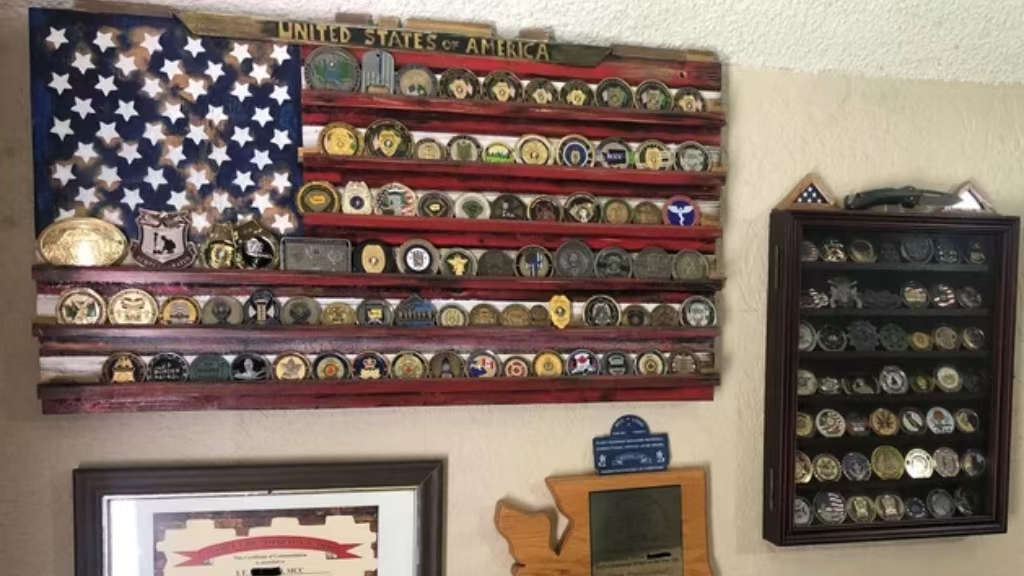
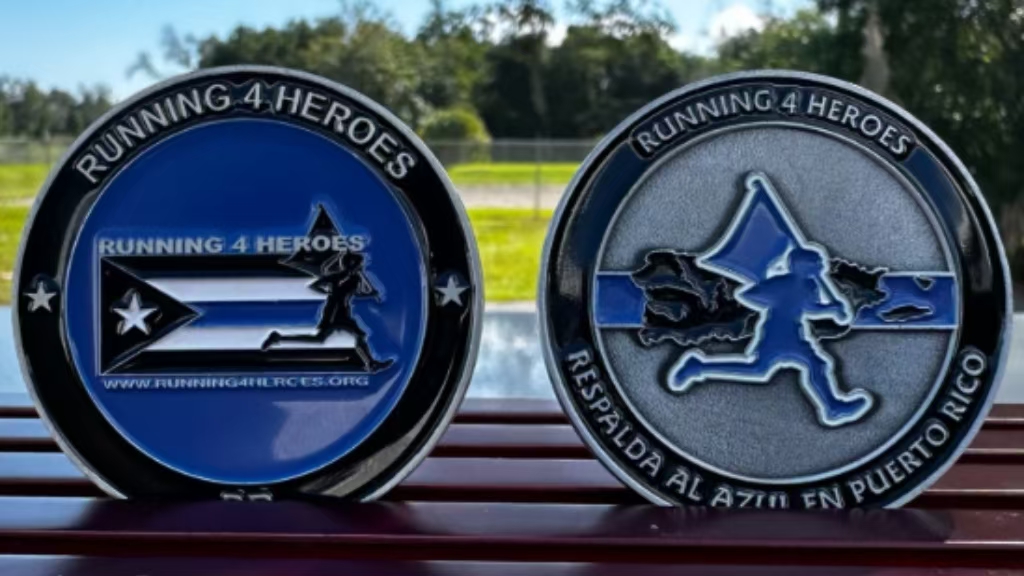
That’s the gap a challenge coin fills. Challenge coins have been a military tradition since World War I — small metal tokens, given to recognize belonging, achievement, and shared experience. An Honor Guard coin is the same idea, pointed at the people who usually give the honors instead of receiving them. It’s a physical “we see you” — something they can carry in a pocket, flip between their fingers, and remember that the work mattered to someone.
Designers who work with honor guard units say the coins carry enormous emotional weight because the symbolism is so specific. A folded flag. A rifle. A bugle. White gloves. A pair of boots. These aren’t decorative images; they’re the actual tools of the member’s trade, the objects they handle daily. A coin bearing those images says: I know what your work actually looks like. And because the recipient knows it too, the coin lands harder than any generic award plaque.
There’s a second layer. Honor guard duty is often described as a way to “correct a country’s errors” — a chance to give Vietnam veterans the welcome home they never received, one funeral at a time. For members, the coin becomes a symbol of that restoration: pride restored to the fallen, and pride restored to themselves.
Designing an Honor Guard Coin
If you’re commissioning coins for an honor guard unit — or for a member who has served years of ceremonies — the design should respect the work’s quiet dignity. Based on what honor guard units and manufacturers have learned, here are the elements that work:
Side of coin | What works | Why |
Front (the symbol) | Folded flag, rifle with bayonet, bugle, boots, helmet on a rifle | Instantly recognizable to anyone in the community; carries the weight of the work |
Back (the message) | Unit motto, years of service, mission dates, “No-Fail Mission” or similar motto | Personalizes it; makes it their coin, not a generic one |
Edge | Rope edge or star border | Adds the ceremonial, dress-uniform feel |
Finish | Antique silver or antique bronze | Matches the solemn mood; hides fingerprints from handling; photographs beautifully |
Color | Hard enamel, 2–4 colors, muted (blues, blacks, gold) | Hard enamel polishes flat and survives decades — appropriate for a keepsake of this seriousness |
Two practical notes. First, hard enamel is the right call here. It polishes perfectly flat and flat is the aesthetic of the dress uniform — crisp, even, nothing catching the light wrong. Soft enamel has a textured feel that’s popular for collectibles, but the dress-uniform world values smoothness. Second, respect the color restraint. Funeral honor work is solemn. A coin with eleven neon colors would feel wrong next to a folded flag. Muted, deliberate colors carry more weight.
For units, there’s also the question of what the coin marks. Many honor guard coins are given for milestones: the first funeral, 100 funerals, a deployment tour, a promotion to trainer, or retirement from the duty. Numbering the coins — “042/250” laser-engraved on the edge — adds another layer of meaning for long-serving members, turning each coin into a unique record of a specific career.
What It Costs and How to Order
Good news: honor guard coins follow the same pricing as any custom challenge coin. A representative order — 100 coins, 1.75 inches, hard enamel, antique silver finish, velvet box — lands around this:
Item | Cost |
100 coins, hard enamel, antique silver | ~$1.90 each |
Die setup (one-time) | ~$120 |
Velvet presentation box | +$0.45 each |
Typical all-in for 100 | ~350–400 |
Ordering more drops the per-coin price fast: 500 units of the same coin lands closer to 1.20–1.40 each, because the setup fee spreads across the whole run. Turnaround is usually 7–15 business days from design approval — and since honors units often order around retirement dates and unit anniversaries, ordering eight weeks out is the safe move.
One more consideration worth mentioning: these coins are also given to families. Some units mint a small run of memorial coins — one presented at the funeral alongside the flag, one kept by the unit — as a way of saying the service member’s final mission is remembered. For a family that has just received a folded flag, a coin engraved with their loved one’s name, rank, and dates of service becomes a second keepsake, one they can touch without the weight of the flag. Units that do this report families holding onto those coins for decades.
The Quietest Thank You
The Honor Guard will never ask for recognition. That’s the point of the job — the ceremony belongs to the fallen, and the people in the white gloves are there to serve it. But recognition isn’t the same as being seen, and the difference matters. A coin doesn’t interrupt the ceremony. It doesn’t put the spotlight on the giver. It’s a small, private object that says, in the same quiet register the Honor Guard works in: I know what you did. I know what it cost. This is yours.
For a unit commander, a chaplain, a fellow veteran, or a family who wants to say thank you to the people who honored their loved one — the coin is the gesture that fits. It has weight, like the work. It lasts, like the memory. And one day, years from now, a former honor guard member will pull it out of a drawer, run a thumb across the folded flag engraved in the metal, and remember that they were seen.