
Table of Contents
The Drawer That Became a Display Case: Why Challenge Coin Collecting Is Booming in 2026
There was a time when a challenge coin lived in a drawer. You received one at the end of a deployment, a retirement ceremony, or a department awards night, and it went into the same junk drawer as your old badges, loose keys, and the watch your father gave you. You knew where it was. You never looked at it. If someone asked, you’d pull it out, hold it for a moment, and put it back.
That drawer is disappearing.
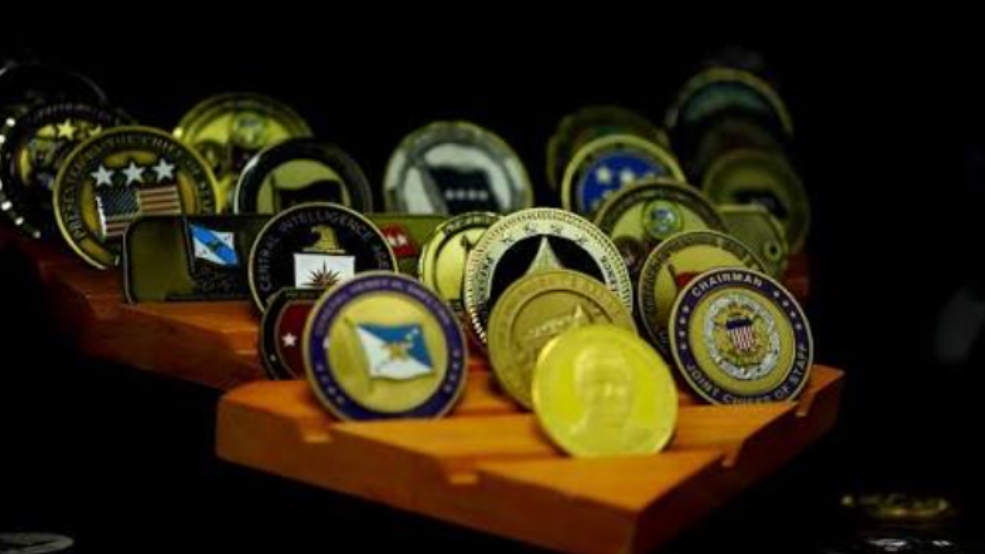
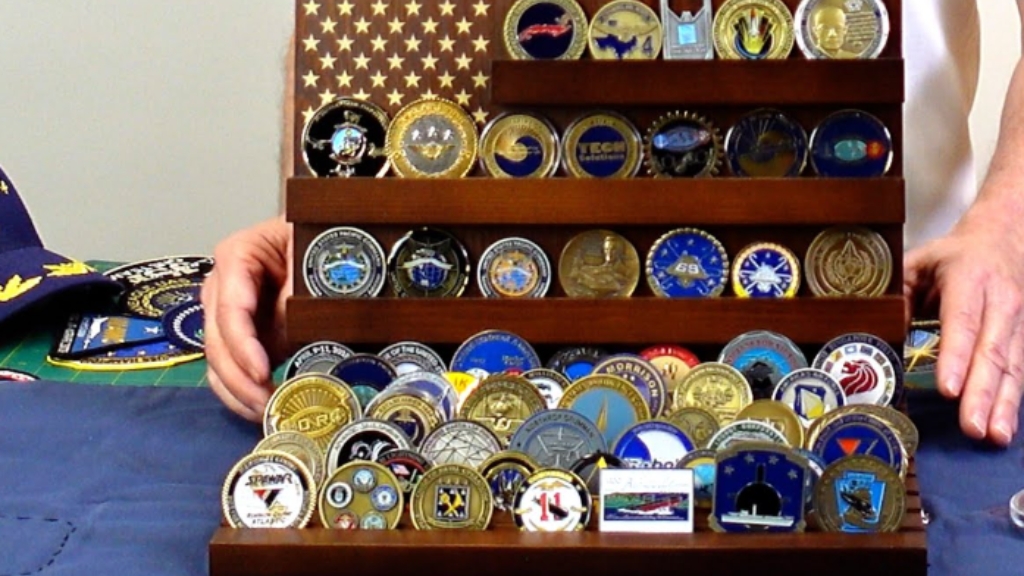
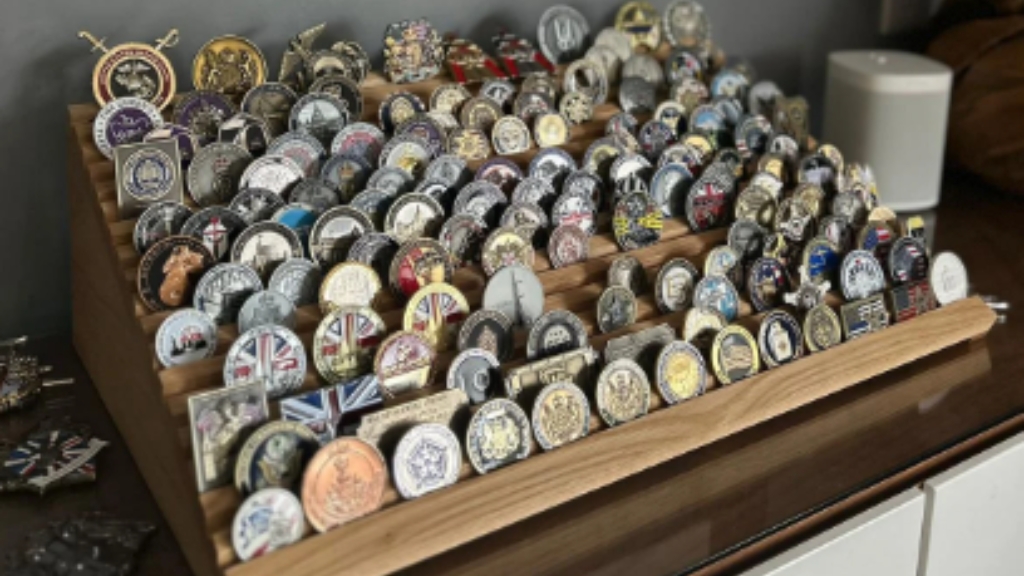
In 2026, challenge coins are migrating from junk drawers to display cases — wall-mounted oak cabinets with lockable acrylic doors, UV-protected acrylic cubes on office desks, felt-lined shadow boxes in hallways. Collectors who once kept their coins in shoeboxes are now buying display cases that hold 88 coins and cost more than the coins themselves. The challenge coin has crossed a threshold: it is no longer just a token of membership. It is a collectible, and the people who collect them are treating them that way.
This article breaks down why challenge coin collecting is booming in 2026, who is driving the growth, what themes are dominating the market, and what the shift from drawer to display case tells us about the future of the hobby.
A Market That Quietly Doubled
The numbers behind the boom are striking. The global promotional products market, which includes custom challenge coins, is projected to reach **22.44 billion in 2026**, growing at an 8.36% CAGR through 2035 to 46.21 billion (Business Research Insights, 2026). Within that market, challenge coins represent one of the fastest-growing segments — not because military and first responder demand has surged, but because the buyer base has expanded dramatically.
The United States accounts for approximately 52% of global challenge coin consumption, followed by Canada at 6% and the United Kingdom at 5%. But the growth is no longer concentrated in traditional military and law enforcement channels. According to industry data, corporate clients now represent 62% of total revenue for major manufacturers, and new categories — esports, university alumni programs, fantasy and mythology collectibles, and meme-driven novelty coins — are creating demand that didn’t exist five years ago.
Year | Estimated Collectors (US) | Avg. Annual Spend Per Collector | Key Growth Driver |
2021 | ~480,000 | $85 | Military & first responder base |
2023 | ~720,000 | $120 | Corporate recognition expansion |
2025 | ~1,100,000 | $165 | Esports, university, fantasy themes |
2026 | ~1,450,000 | $190 | Semiquincentennial & social media virality |
Table: Estimated U.S. challenge coin collector growth. Sources: PPAI industry surveys, manufacturer revenue data, Reddit community growth metrics.
The collector base has roughly tripled in five years. And these new collectors are not behaving like the old ones. They are not content to let a coin sit in a drawer. They want to see it, display it, trade it, and post it.
Who Is Collecting Now
The traditional challenge coin collector was easy to describe: a veteran, a police officer, a firefighter, or a military family member. The coin was personal — it represented a unit, a deployment, a career. You didn’t collect challenge coins the way you collected stamps. You accumulated them through service.
In 2026, that profile has fractured into something far more diverse:
The Veteran Collector is still the backbone of the hobby, but the category has expanded to include active-duty service members in their twenties who discovered coins through TikTok and Reddit before they ever deployed. They collect historical military coins — SAS winged dagger designs, Delta Force challenge coins, the US Marine Corps 250th Anniversary coin — with a focus on units and operations they admire.
The Fantasy & Mythology Collector is an entirely new category. Driven by the explosion of themed challenge coins featuring Viking iconography, Norse runes, dragons, Greek and Egyptian mythology, pirate and nautical designs, and gothic dark art, these collectors have no military background at all. They are drawn to the artistry — high-relief sculpting, antique finishes, intricate enamel work — and treat coins as miniature sculptures. Most collectible challenge coins in this category retail for £10–£30 (12–38), making them one of the most affordable entry points into metal collectibles.
The Corporate Coin Collector accumulates coins from companies they’ve worked for, conferences they’ve attended, or brands they admire. As corporate challenge coin programs have grown 34% between 2023 and 2025 (PPAI), employees are receiving more coins than ever — and some are keeping them.
The Esports & Gaming Collector emerged from the intersection of gaming merchandise culture and challenge coin manufacturing. With gaming merchandise projected to reach $74.24 billion in 2026, commemorative coins from tournaments like the League of Legends World Championship and Dota 2’s The International have become sought-after collectibles among fans who have never served in any military.
The Semiquincentennial Collector is the newest face in the crowd. The United States’ 250th anniversary in 2026 has triggered a wave of patriotic commemorative coins — from official U.S. Mint redesigned circulating coinage to custom challenge coins marking the milestone. Collectors who never previously owned a challenge coin are buying Semiquincentennial pieces as historical artifacts.
What They're Collecting: The Theme Boom
Walk through the inventory of any major challenge coin retailer in 2026 and the breadth of themes is immediately apparent. The market has moved well beyond military unit coins into territory that would have been unimaginable a decade ago.
Theme Category | Popular Subjects | Price Range | Collector Profile |
Military & Patriotic | USMC 250th, SAS, Delta Force, Operation Midnight Hammer | 25–75 | Veterans, military families, history enthusiasts |
Fantasy & Mythology | Vikings, dragons, Greek/Egyptian/Roman gods | 12–38 | Art collectors, fantasy fans, gift buyers |
First Responder | Police, fire, EMS department coins | 15–45 | Active/retired first responders, supporters |
Corporate | Tech companies, project completion, anniversary coins | 20–50 | Employees, corporate gift collectors |
Esports & Gaming | LoL Worlds, Dota 2 TI, team franchise coins | 15–60 | Gaming fans, esports merchandise collectors |
Novelty & Meme | “Heads I Win” decision coins, dumpster fire, gothic skulls | 5–20 | TikTok-driven buyers, desk toy collectors |
Semiquincentennial | America 250th, Washington portraits, Freedom 250 | 15–75 | Patriot collectors, anniversary souvenir buyers |
Table: Major challenge coin collecting themes in 2026. Price ranges reflect typical retail pricing from specialist retailers and online marketplaces.
The fantasy and mythology category deserves special attention. What began as a niche product line from a handful of UK-based collectible coin stores has become one of the fastest-growing segments in the market. These coins appeal to buyers who would never identify as “coin collectors” — they see themselves as art buyers, fantasy enthusiasts, or simply people who saw something beautiful and wanted to own it. The price point is critical: at 12–38, a fantasy challenge coin costs less than a Funko Pop deluxe figure but feels infinitely more substantial.
From Drawer to Display: The Infrastructure of a Real Hobby
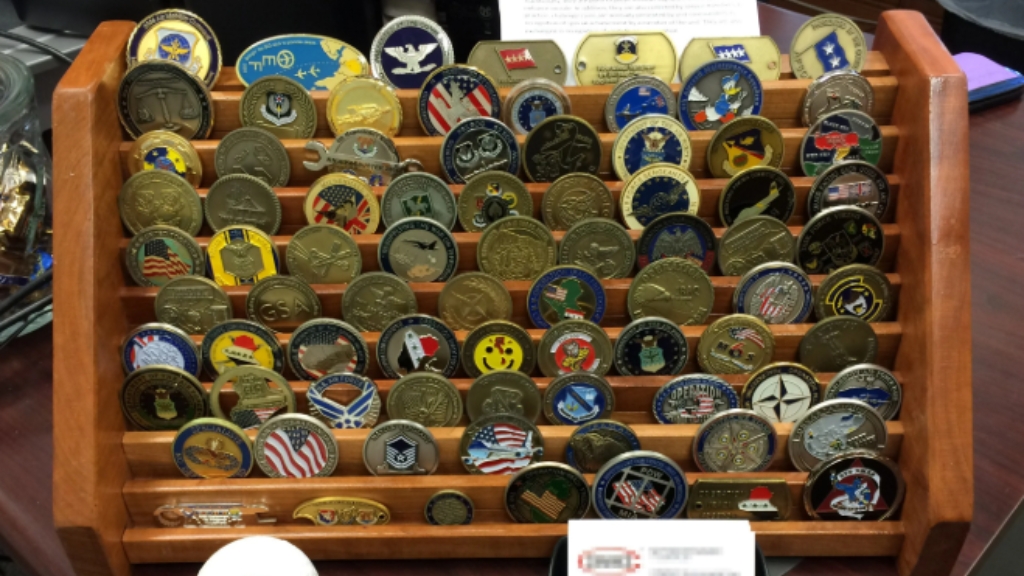
Perhaps the clearest signal that challenge coin collecting has matured is the explosion of the display case market. In 2026, Amazon’s best-selling challenge coin display products include wall-mounted oak cabinets holding 88 coins, UV-protected acrylic wall cases, magnetic hexagonal display capsules, and modular floating shelf systems. Prices range from 10 for a single-coin floating display to 150 for a premium hardwood wall cabinet with lockable acrylic doors and felt lining.
The DisplayGifts Military Challenge Coin Display Case — an 11-row wall cabinet that holds 88 standard 1.75-inch coins behind a lockable acrylic door — has become the de facto standard for serious collectors, consistently ranking as the top-reviewed product in the category. Its popularity tells you something important: collectors are not just accumulating coins. They are building infrastructure around them.
This matters because it signals a psychological shift. A coin in a drawer is a memory. A coin in a display case is a collection. The display case transforms the act of collecting from passive accumulation into active curation — arranging by theme, by date, by unit, by aesthetic. It turns a pile of metal discs into a narrative on a wall.
The secondary market for display accessories has grown alongside it. UV-protective acrylic, once a niche feature for museum-grade numismatic displays, is now standard on mid-range challenge coin cases. LED lighting kits designed specifically for challenge coin cabinets are selling well. Silica gel packets — essential for moisture control in sealed display cases — are now marketed directly to challenge coin collectors alongside the coins themselves.
What Makes a Coin Worth Collecting
Not every challenge coin becomes a collectible. The vast majority are produced in large runs, distributed widely, and hold primarily sentimental value. But certain coins appreciate — sometimes dramatically. Understanding why requires looking at four factors:
Value Factor | High-Value Example | Low-Value Example |
Rarity | Limited run of 50 for a specific unit anniversary | Mass-produced generic coin, 10,000+ units |
Historical Significance | Coin linked to a named operation or major event | Generic “Employee of the Month” coin |
Condition | Mint, never handled, original packaging | Scratched, tarnished, no provenance |
Design Quality | High-relief 3D sculpting, custom shape, premium finish | Flat 2D design, standard round, basic plating |
Rarity is paramount. A coin issued in a limited run of 50 for a specific firehouse anniversary will always be worth more than a mass-produced generic coin. Historical significance amplifies value further — coins linked to named military operations, major anniversaries, or significant institutional milestones carry a narrative premium. Condition matters as it does in all collectibles: mint-condition coins with original packaging command the highest prices. And design quality — the level of sculpting detail, the uniqueness of the shape, the sophistication of the finish — increasingly separates valuable coins from forgettable ones.
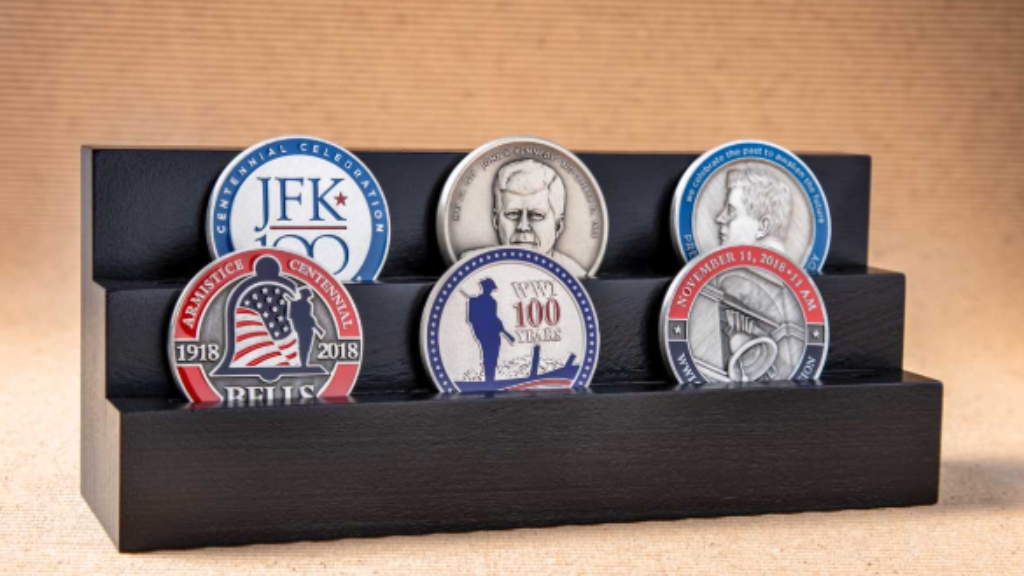
For collectors looking at the 2026 market, the Semiquincentennial coins represent a particularly interesting case. Anniversary commemoratives have a natural relevance window — they are most sought after during the anniversary year itself. The US Marine Corps 250th Anniversary coin, the America 250th Anniversary series, and limited-edition Semiquincentennial challenge coins from individual military units and government agencies are all pieces that are likely to appreciate as the year passes and production ceases.
The Community Engine
None of this growth happens in a vacuum. The challenge coin collecting community has built the infrastructure that makes the hobby accessible to newcomers — and that infrastructure is almost entirely digital.
Reddit’s r/ChallengeCoins community has become the central hub for the hobby. Collectors post photos of new acquisitions, ask for help identifying unknown coins, arrange trades, and share display setups. Facebook groups dedicated to specific niches — fire service challenge coins, military unit coins, fantasy collectible coins — have thousands of active members. YouTube channels unboxing and reviewing challenge coins are growing subscribers at rates that rival traditional numismatic content.
This digital community serves three functions that are critical to the hobby’s growth:
Discovery. New collectors encounter challenge coins through social media — a TikTok video of a fantasy dragon coin, a Reddit post showcasing a military unit display, a YouTube unboxing of a Semiquincentennial commemorative. The visual nature of challenge coins makes them ideal social media content: they are small, detailed, tactile, and photogenic.
Education. Online forums provide free, immediate access to expertise that was previously gatekept by local coin shops and militaria dealers. A new collector can post a photo and receive identification, historical context, and valuation estimates within hours.
Trading. The swap culture within challenge coin collecting is robust. Collectors trade duplicates, regional coins, and coins from their own service for pieces they can’t acquire locally. Online auction platforms — particularly eBay completed listings — provide real-time market pricing data that helps collectors make informed purchase and trade decisions.
How to Start Collecting in 2026
For anyone reading this and feeling the pull, here is a practical starting framework:
- Pick a theme.The most satisfying collections are built around a focus — a military branch, a mythology, a manufacturer, a historical period, or an anniversary event. A focused collection of 20 coins tells a story. A random pile of 50 coins tells nothing.
- Start affordable.Most collectible challenge coins cost 12–38. Begin with 3–5 coins in your chosen theme and build over time. Avoid the temptation to buy expensive rare pieces before you understand the market.
- Join the community.Reddit’s r/ChallengeCoins, relevant Facebook groups, and online collector forums are where you’ll learn the fastest. Lurk first. Ask questions. Post your coins when you’re ready.
- Invest in display early.A $40 acrylic display case will transform how you experience your collection. You will look at your coins more often, appreciate them more deeply, and be more intentional about what you add. The display case is what turns accumulation into collecting.
- Document provenance.Keep a log of every coin: where you got it, what you paid, what it represents. This log becomes the backbone of your collection’s value — both monetary and sentimental.
AThe Bottom Line
The challenge coin was born as a tool of identity — a small piece of metal that proved you belonged to something. In 2026, it has become something more: a collectible that people choose to own, not because they were handed one, but because they wanted one. The drawer has become a display case. The token has become a collection. And a tradition that began in the trenches of World War I has found a second life on the walls, desks, and shelves of people who simply think these coins are worth keeping in plain sight.