
Table of Contents
From Battlefield to LAN Party: How Esports Teams Are Reinventing the Challenge Coin
The challenge coin was born on a battlefield. Legend traces its origins to a World War I pilot who, shot down behind enemy lines, used a bronze medallion bearing his squadron’s insignia to prove his identity to French allies and avoid execution. For over a century since, the challenge coin has belonged to the military — a weighty, metal token exchanged in handshakes, earned through service, and carried as a mark of belonging.
In 2026, that same token is showing up somewhere very different: the merch table at a League of Legends World Championship. The VIP lounge at IEM Cologne. The unboxing video of a Dota 2 collector’s edition. And in the hands of a 19-year-old fan who has never served in the military but understands exactly what it means to carry a piece of something bigger than yourself.
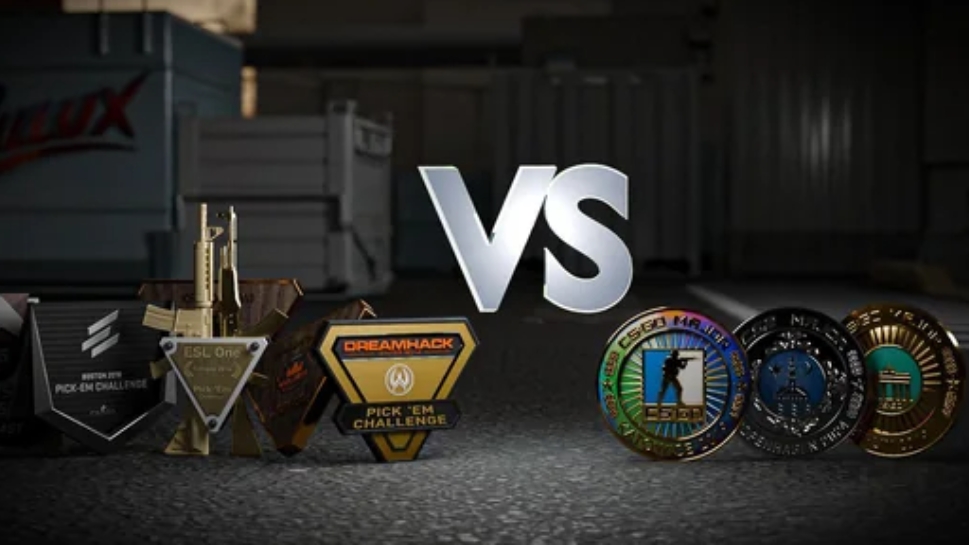
Esports organizations — from tier-one franchises like Team Vitality and T1 to grassroots tournament organizers — are adopting custom challenge coins as a new category of physical merchandise. It’s a shift that’s quietly reshaping both the challenge coin industry and the esports merch landscape, and it’s happening faster than most people realize.
The Numbers: Esports Meets the Challenge Coin Market
The convergence of these two worlds isn’t a coincidence. It’s driven by hard market forces on both sides.
The global gaming merchandise market grew from 67.54 billion in 2025 to 74.24 billion in 2026, a compound annual growth rate of 9.9%, and is projected to reach $109.31 billion by 2030 (The Business Research Company, 2026). Within that booming market, collectibles and figurines represent one of the fastest-growing segments, fueled by fan demand for tangible artifacts that connect them to the games and teams they love.
On the challenge coin side, esports and gaming organizations now account for approximately 8% of the custom challenge coin market, up from just 2% in 2021 — a quadrupling in five years (Business Research Insights, 2026). Major tournaments including the League of Legends World Championship and Dota 2’s The International have introduced commemorative challenge coins as collector’s items, expanding the market well beyond its traditional military and corporate buyer base.
The broader promotional products market that includes challenge coins is projected to reach $22.44 billion in 2026, growing at an 8.36% CAGR through 2035. Esports is one of the key new demand drivers identified in industry reports — not because it’s replacing military buyers, but because it’s creating an entirely new category of customer with different design expectations, purchase motivations, and distribution channels.
Why Esports Organizations Are Embracing Challenge Coins
Esports merch has long been dominated by jerseys, hoodies, and mousepads. So why are organizations now investing in metal coins? Three converging factors explain the shift.
1. The Saturation Problem
Every esports team sells the same product categories. A jersey, a hoodie, a desk mat, maybe a keychain. When a fan walks through the merch area at a major tournament, they see thirty versions of the same thing with different logos. Challenge coins break that pattern. They’re a category that feels fresh in the esports context — tactile, collectible, and visually distinctive in a way that apparel simply isn’t.
2. The Collector Instinct
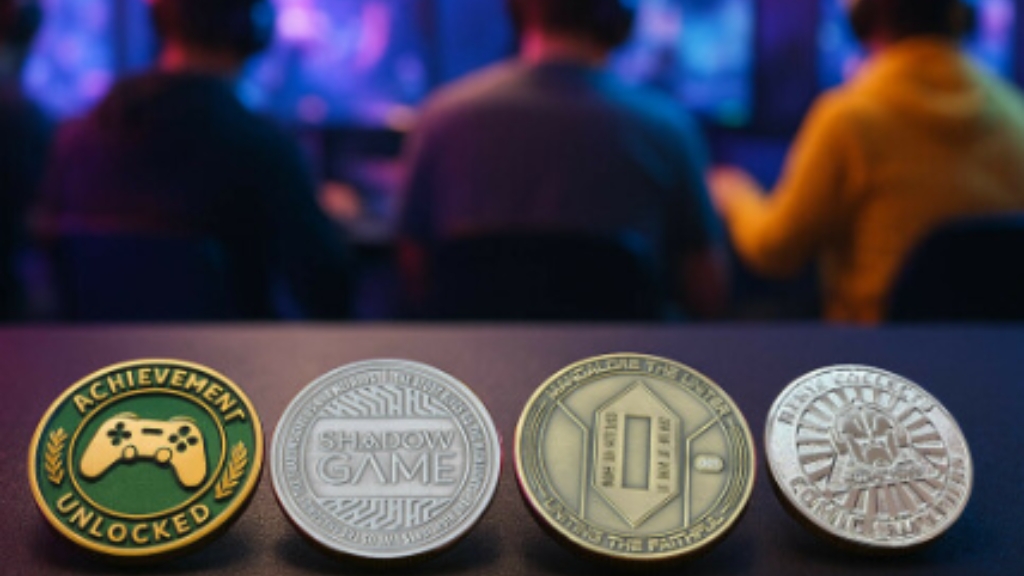
Esports fans are collectors by nature. The same impulse that drives someone to unlock every achievement in a game, collect every skin in a battle pass, or chase a rare drop drives them to seek physical collectibles that feel scarce and meaningful. A limited-edition challenge coin numbered out of 500, stamped with a tournament date and a team’s championship run, satisfies that instinct in a way a t-shirt cannot.
3. The Physical-Digital Bridge
Esports is an inherently digital culture. Fans watch online, interact on Discord, and follow players on social media. Physical merchandise is the rare touchpoint that exists in the real world — and challenge coins, with their weight, texture, and metallic finish, offer a more premium tactile experience than almost any other merch category at a comparable price point. When enhanced with NFC chips or QR codes that link to digital content, they become a bridge between the physical and digital worlds that feels native to gaming culture.
What Makes an Esports Challenge Coin Different
A challenge coin designed for an esports audience looks and feels different from one designed for a military unit. The design language, materials, and functional features all reflect the culture they come from.
Table 1: Military vs. Esports Challenge Coins — Design Comparison
Design Element | Traditional Military Coin | Esports Challenge Coin |
Shape | Round, shield, or badge | Custom shapes echoing team logos, controller silhouettes, hexagonal esports aesthetics |
Color Palette | Antiqued bronze, silver, gold — muted and heraldic | Vibrant soft enamel in team brand colors — neon, gradient, high-contrast |
Finish | Antique or polished metal | Dual-tone plating, glow-in-the-dark enamel, UV-reactive coatings |
Typography | Serif and stencil fonts, unit mottos | Custom display fonts, gamertags, tournament brackets |
Imagery | Crests, eagles, insignia, flags | Team mascots, champion portraits, game logos, trophy replicas |
Functional Features | Bottle openers (social tradition) | NFC/QR integration, spinner elements, magnetic display backs |
Serialization | Occasionally numbered | Frequently serialized with unique IDs and authentication links |
Packaging | Velvet pouch or plastic capsule | Custom acrylic display cases, collector tins, LED-lit presentation boxes |
The design philosophy is fundamentally different. Military coins are about heritage and tradition — they look backward. Esports coins are about energy and identity — they look forward. A military coin wants to feel like it’s been carried for twenty years. An esports coin wants to feel like it was just unlocked as a championship reward.
Real-World Playbook: How Top Organizations Are Using Coins
The adoption of challenge coins in esports isn’t theoretical. It’s already happening across multiple tiers of the industry.
Tournament Commemoratives. Major tournaments are issuing challenge coins as VIP and press gifts, creating an instant secondary collector market. A coin stamped with the tournament name, dates, and host city becomes a timestamped artifact — the kind of item that appreciates in value as the event recedes into history. Fans who attend the event in person receive a physical souvenir that validates their presence; those who didn’t attend seek it out on resale platforms.
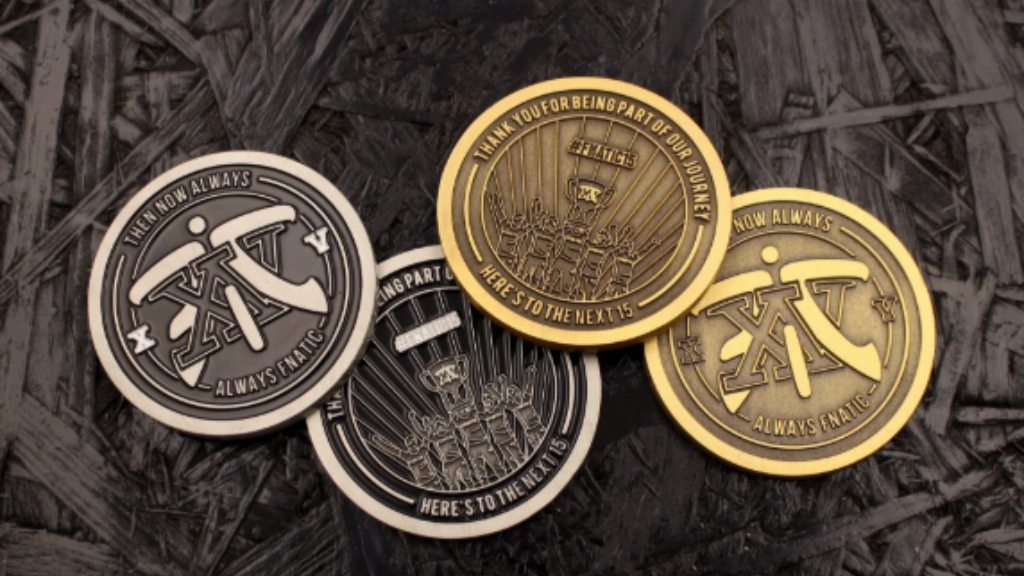
Team Championship Coins. When a team wins a major championship, a limited-edition challenge coin commemorating the victory serves double duty: it’s a celebration artifact for the organization and its players, and it’s a high-demand collector’s item for the fanbase. The serialization model — coins numbered 1 through 500, with lower numbers commanding premium prices — mirrors the scarcity mechanics that gamers already understand from limited skins and drops.
Player Retirement Coins. As the first generation of esports professionals begins to retire, organizations are issuing commemorative coins honoring legendary players’ careers. These coins, featuring the player’s gamertag, signature, career statistics, and team history, function as the esports equivalent of a military retirement coin — a tangible acknowledgment of years of service and achievement.
Sponsorship Activation Coins. Esports organizations are increasingly using co-branded challenge coins as premium sponsorship deliverables. A coin featuring both the team logo and a sponsor’s brand, distributed at a tournament fan zone or through a limited online drop, creates a physical artifact that keeps the sponsor’s brand in the fan’s possession long after the event ends.
The Collector Economy: Scarcity, Serialization, and Secondary Markets
One of the most significant differences between esports challenge coins and traditional merch is the collector economy that has emerged around them.
Esports fans are already fluent in scarcity mechanics. They understand limited-time skins, battle pass exclusives, and ranked reward thresholds. Challenge coins tap directly into this mindset. When an organization announces a limited run of 250 coins for a championship victory, the fanbase responds the same way they would to a rare in-game drop — with urgency, FOMO, and a willingness to pay premium prices.
Table 2: Esports Challenge Coin Pricing & Edition Strategy
Edition Type | Typical Run Size | Price Range (USD) | Target Audience | Secondary Market Behavior |
Mass Retail | 1,000–5,000 | 8–15 | General fanbase | Minimal premium; steady availability |
Tournament Exclusive | 250–1,000 | 15–30 | Event attendees, hardcore fans | 20–50% premium post-event |
Championship Limited | 100–500 | 25–50 | Collectors, superfans | 50–150% premium within 6 months |
Player Retirement / Legacy | 50–250 | 40–80 | Veteran collectors, nostalgia buyers | 100–300% premium; long-term appreciation |
Sponsor Co-Branded | 100–500 | 20–40 | Brand partners, VIP recipients | Variable; driven by sponsor visibility |
The secondary market for esports challenge coins mirrors the dynamics of sneaker collecting and trading card markets. Coins from historic championship runs, player retirements, or discontinued tournament series can appreciate significantly — especially when they’re serialized, authenticated, and tied to a specific narrative moment in esports history.
This collector economy creates a virtuous cycle for organizations. Each successful coin drop builds anticipation for the next one. Each appreciating coin on the secondary market validates the brand’s cultural currency. And each coin in a fan’s collection is a permanent, physical advertisement for the team — one that sits on a desk or in a display case for years, not a jersey that gets worn out and donated.
ADesigning for the Discord Generation: Best Practices
Designing challenge coins for an esports audience requires a different approach than designing for military or corporate clients. Here’s what organizations and manufacturers need to know.
Lead With the Brand, Not the Tradition
Military coins often lead with heritage elements — crests, mottos, dates of establishment. Esports coins should lead with the visual identity that fans already recognize: the team logo, the signature colors, the mascot. The design should feel like an extension of the team’s brand system, not a departure from it.
Embrace Bold Color and Finish
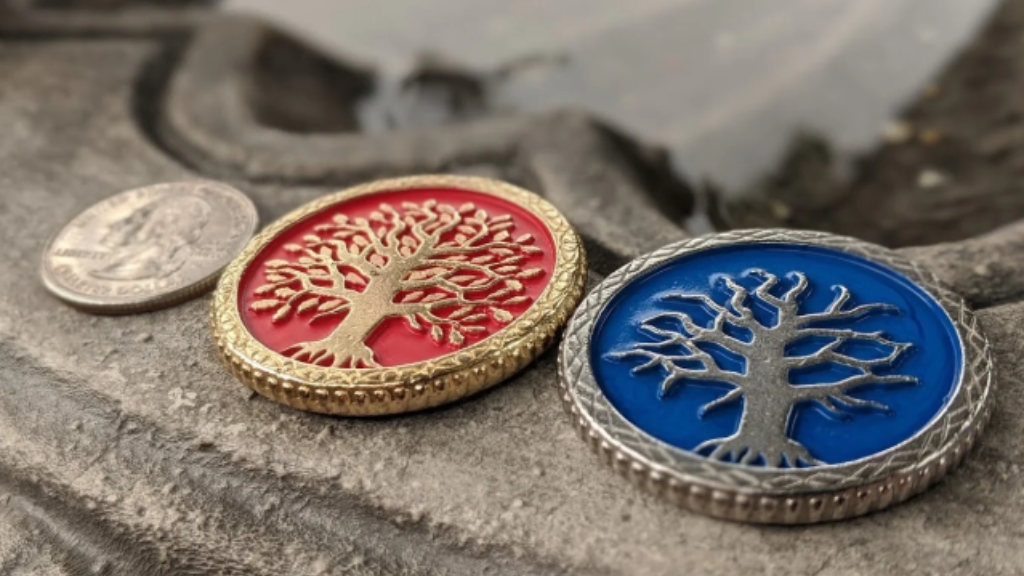
Esports audiences expect vibrant, high-contrast design. Soft enamel in saturated brand colors is the baseline. Dual-tone plating — combining, for example, a bright gold field with black nickel accents — creates visual drama that photographs well and stands out in a display case. Glow-in-the-dark enamel and UV-reactive finishes resonate particularly well with gaming audiences who associate those effects with in-game achievements.
Make It Shareable
An esports challenge coin should be designed for Instagram, TikTok, and Discord unboxing videos. That means considering how it looks on camera — the way light catches the metallic finish, the pop of enamel color, the satisfying weight when placed on a desk. Packaging matters here too: a custom acrylic case or a collector’s tin elevates the unboxing experience and makes the coin more likely to be shared on social media.
Serialize and Authenticate
Every limited-edition esports coin should be serialized. A number stamped on the edge or reverse — “075/250” — transforms the coin from a product into a collectible. Pairing the serialization with a QR code that links to an authentication page adds a layer of trust and digital interaction that’s native to gaming culture.
Table 3: Esports Challenge Coin Design Checklist
Consideration | Recommendation | Why It Matters |
Shape | Match the team’s visual identity — logo outline, hexagon, or custom geometry | Differentiates from traditional round coins; reinforces brand recognition |
Size | 1.75″–2.25″ standard; up to 3″ for premium display pieces | Balances detail resolution with collectible display proportions |
Material | Zinc alloy for retail; brass for premium/limited editions | Brass offers weight, durability, and superior plating for high-end runs |
Enamel | Soft enamel with vibrant brand colors; consider glow or UV-reactive for special editions | Visual impact drives social sharing and perceived value |
Plating | Dual-tone (gold + silver, or black nickel + gold) for depth | Creates visual hierarchy and highlights key design elements |
Serialization | Edge-stamped numbers on all limited runs | Establishes scarcity and drives collector behavior |
Digital Integration | QR code or NFC chip linking to authentication or exclusive content | Bridges physical and digital; appeals to tech-native audience |
Packaging | Custom acrylic case or collector tin with branded insert | Elevates unboxing experience; increases social media shareability |
The Future: Where Esports Challenge Coins Are Headed
The trajectory is clear. As the gaming merchandise market races toward $109 billion by 2030, challenge coins will carve out an increasingly visible niche within the collectibles segment. Several developments are likely to accelerate the trend.
Smart Coins Go Mainstream. NFC-embedded challenge coins — already emerging as a 2026 design trend — will become standard for premium esports editions. Tapping a coin against a phone to unlock exclusive video content, verify authenticity, or access a private Discord channel creates a layer of interactivity that no other merch category can match.
Cross-Tournament Collections. As more tournaments issue commemorative coins, collectors will begin assembling sets — a “Worlds 2026” coin, an “IEM Cologne 2026” coin, a “The International 2026” coin — creating a collecting ecosystem that mirrors trading card sets. Organizations that design their coins with collection compatibility in mind (consistent sizing, display-compatible packaging) will benefit from this behavior.
Player-Signed Editions. The model of player retirement coins will expand to include active player signature series — limited runs signed by star players, released alongside roster announcements or career milestones. These coins will function as the esports equivalent of signed sports memorabilia, with prices reflecting the player’s market value and career trajectory.
Regional and Grassroots Expansion. While tier-one organizations are leading the adoption, the accessibility of custom coin manufacturing — with minimum orders as low as 50–100 pieces and 24–48 hour digital proofing — means that grassroots tournament organizers, college esports clubs, and community gaming groups can participate. This democratization will expand the market beyond the top of the pyramid.
The Bottom Line
The challenge coin’s journey from World War I trenches to esports tournament stages isn’t as unlikely as it seems. At its core, the challenge coin has always been about the same thing: belonging. It’s a physical token that says I was there. I’m part of this. This matters.
Esports culture understands that impulse intuitively. Fans who deck out their setups in team colors, who queue for hours for a player meet-and-greet, who celebrate a championship win as if they were on the stage themselves — they’re expressing the same need for belonging that drove a WWI pilot to carry his squadron’s coin into enemy territory.
The organizations that recognize this — that invest in coins designed with the same care and cultural fluency as their jerseys and digital content — aren’t just selling merchandise. They’re minting artifacts. And in a market growing at double-digit rates with no sign of slowing, the teams that give their fans something worth keeping will be the ones worth following.
The challenge coin was born on a battlefield. Its future might just be on a stream.